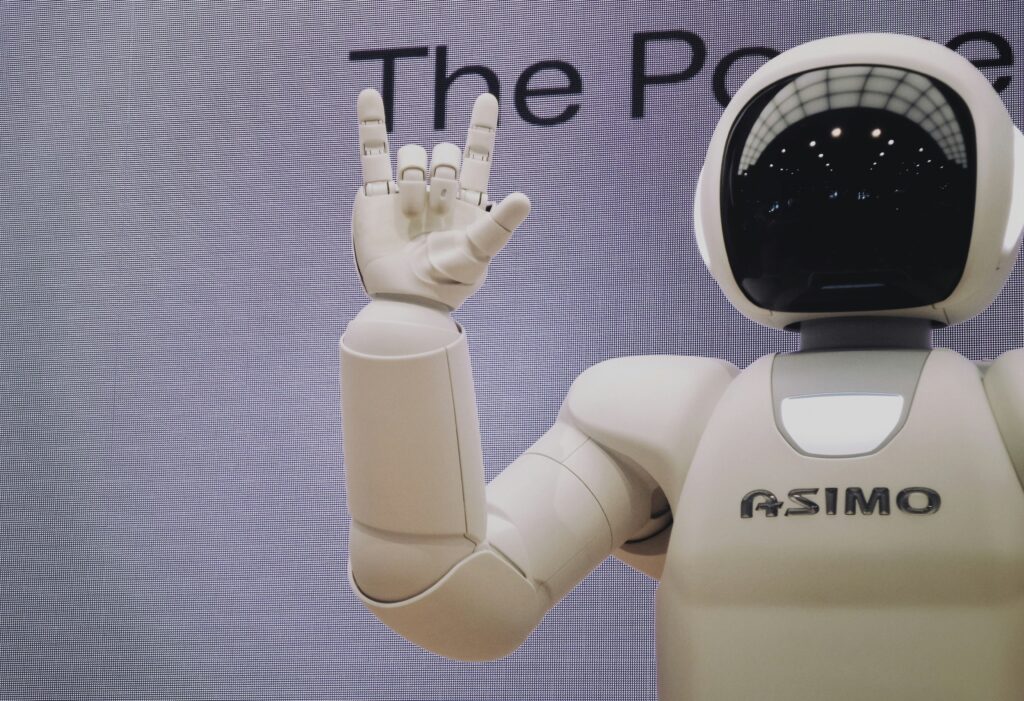
Artificial Intelligence is no longer confined to screens, code, or virtual assistants. It is steadily moving into the physical world, reshaping how machines interact with humans, environments, and complex real-life situations. This evolution has given rise to what experts call Physical Artificial Intelligence (Physical AI)—a new frontier where intelligence meets action.
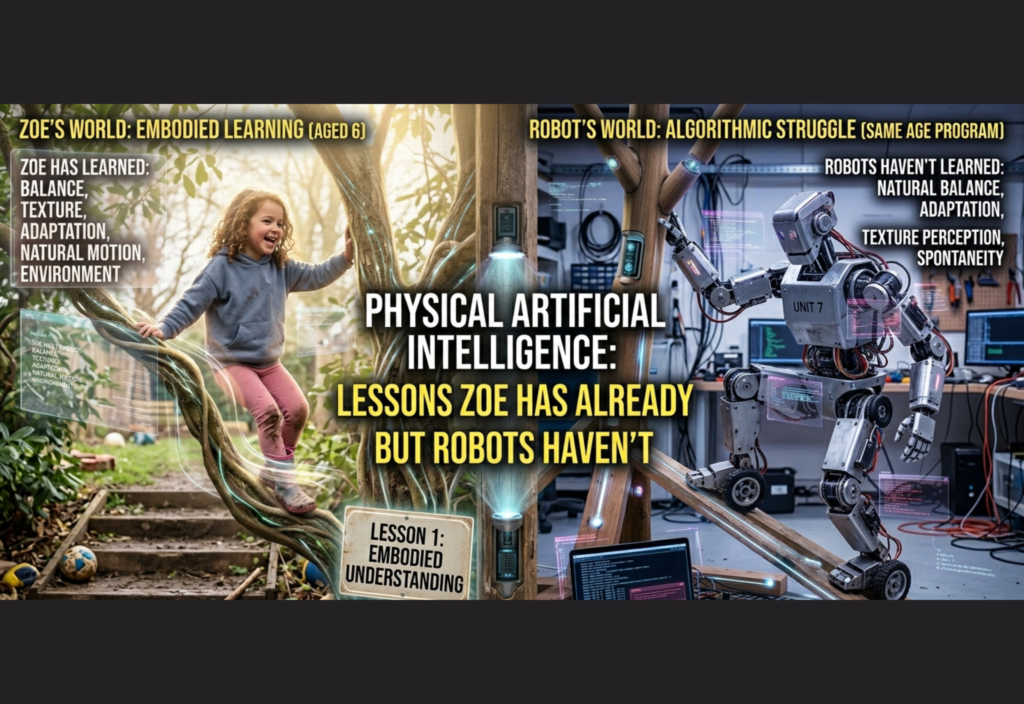
While robots have existed for decades and are widely used in industries like manufacturing and logistics, they still struggle with flexibility, understanding, and real-world adaptability. Meanwhile, newer AI systems like Zoe represent a fundamentally different approach. Zoe is not just programmed—it learns, adapts, and evolves.
This difference is not small. It represents a shift in how intelligence itself is built and applied. And it highlights a growing gap between what modern AI systems can do and what traditional robots are still trying to achieve.
The Evolution from Digital AI to Physical Intelligence
In its early stages, AI was focused on solving digital problems—analyzing data, recognizing patterns, and automating simple decisions. Over time, advancements in machine learning and neural networks allowed AI to perform more complex tasks such as language understanding, image recognition, and predictive analysis.
However, these capabilities were mostly limited to controlled digital environments.
Physical AI changes that completely. It allows systems to:
- Observe the real world through sensors
- Interpret complex, unpredictable environments
- Make decisions in real time
- Act physically or influence physical systems
This transition from “thinking” to “doing” is what makes Physical AI so powerful—and so challenging.
Zoe: A New Kind of Intelligence
Zoe represents a new generation of AI systems built with adaptability at their core. Unlike traditional robots that follow predefined instructions, Zoe operates using a learning-first model.
Instead of asking:
“What should I do in this situation?”
Zoe asks:
“What can I learn from this situation?”
This subtle shift leads to massive improvements in performance, flexibility, and long-term efficiency.
Zoe’s capabilities include:
- Continuous learning from new data
- Understanding context rather than just inputs
- Adjusting behavior based on experience
- Interacting naturally with humans
These traits make Zoe fundamentally different from most robotic systems in use today.
Lesson 1: Adaptability Is More Valuable Than Precision
Traditional robots are designed for precision. In a factory, a robotic arm can assemble parts with incredible accuracy—but only under specific conditions.
Change the environment slightly, and performance can drop significantly.
Zoe, however, prioritizes adaptability:
- It can handle unexpected changes
- It adjusts strategies based on new information
- It improves over time without manual intervention
This makes Zoe far more suitable for real-world environments, where unpredictability is the norm rather than the exception.
Lesson 2: Understanding Context Changes Everything
One of the biggest limitations of robots is their lack of contextual awareness. They can identify objects or execute commands, but they often fail to understand the broader situation.
For example:
A robot may recognize a cup, but it doesn’t understand whether the cup is being used, cleaned, or about to fall.
Zoe goes beyond recognition:
- It understands relationships between objects
- It interprets human intent
- It evaluates situations before acting
This ability to understand context allows Zoe to make smarter, safer, and more efficient decisions.
Lesson 3: Continuous Learning vs Static Programming
Robots are typically programmed with a fixed set of instructions. If improvements are needed, engineers must manually update the system.
Zoe eliminates this limitation through continuous learning:
- It learns from past experiences
- It refines its behavior over time
- It adapts without needing constant human updates
This creates a system that becomes more intelligent the longer it operates.
In contrast, many robots remain static unless actively modified.
Lesson 4: Natural Interaction Is the Future
Human interaction is a critical part of many industries, from healthcare to customer service. While robots can follow commands, they often struggle with natural communication.
Zoe excels in this area by:
- Understanding natural language
- Responding in context-aware ways
- Adjusting tone and behavior dynamically
This makes interactions feel more intuitive and less mechanical.
As a result, Zoe can be integrated into environments where trust, communication, and user experience are essential.
Lesson 5: Intelligence Can Replace Complexity
Many robotic systems rely on complex and expensive hardware to function effectively. Precision sensors, advanced motors, and specialized components increase both cost and maintenance requirements.
Zoe demonstrates that smarter software can reduce the need for overly complex hardware:
- Better decision-making reduces errors
- Efficient processes minimize wasted effort
- Intelligent adaptation reduces system strain
This shift from hardware-heavy solutions to intelligence-driven systems is likely to define the next phase of AI development.
Where Robots Still Struggle
Despite significant advancements, traditional robots still face several challenges:
1. Difficulty Handling Uncertainty
Robots are optimized for structured environments. In unpredictable settings, their performance declines.
2. Limited Learning Ability
Most robots cannot learn effectively from real-world experiences without external updates.
3. Poor Contextual Understanding
They struggle to interpret complex situations or human intentions.
4. High Costs
Developing and maintaining advanced robotic systems can be expensive.
5. Integration Challenges
Combining perception, reasoning, and action into a seamless system remains difficult.
The Real Opportunity: Integration
Rather than replacing robots, systems like Zoe can enhance them.
The future lies in combining:
- The physical strength and precision of robots
with - The intelligence and adaptability of systems like Zoe
This integration could lead to:
- Smarter manufacturing systems
- More responsive healthcare technologies
- Efficient logistics and supply chains
- Advanced personal assistants
Industries That Will Transform First
The impact of Physical AI will be felt across multiple sectors:
Healthcare
AI systems can assist doctors, monitor patients, and provide real-time insights.
Manufacturing
Adaptive robots can handle variable tasks instead of repetitive ones.
Retail and Customer Service
AI-powered assistants can provide personalized and efficient support.
Logistics
Smart systems can optimize delivery routes, warehouse operations, and inventory management.
Education
AI can create personalized learning experiences based on individual needs.
Challenges Ahead
While the potential is enormous, several challenges remain:
- Ethical concerns about decision-making
- Data privacy and security
- Reliability in critical situations
- Balancing automation with human oversight
Addressing these issues will be essential for the responsible development of Physical AI.
Final Thoughts
Zoe represents more than just an advanced AI system—it represents a new philosophy of intelligence. One that values learning over programming, adaptability over rigidity, and understanding over simple execution.
Robots, while powerful, are still catching up in these areas.
The lessons Zoe has already learned highlight a critical truth:
The future of AI is not just about building machines that can act—it’s about building systems that can think, learn, and evolve in the real world.
As Physical AI continues to develop, the gap between static machines and intelligent systems will continue to grow. And eventually, the most successful technologies will be those that combine the best of both worlds.