
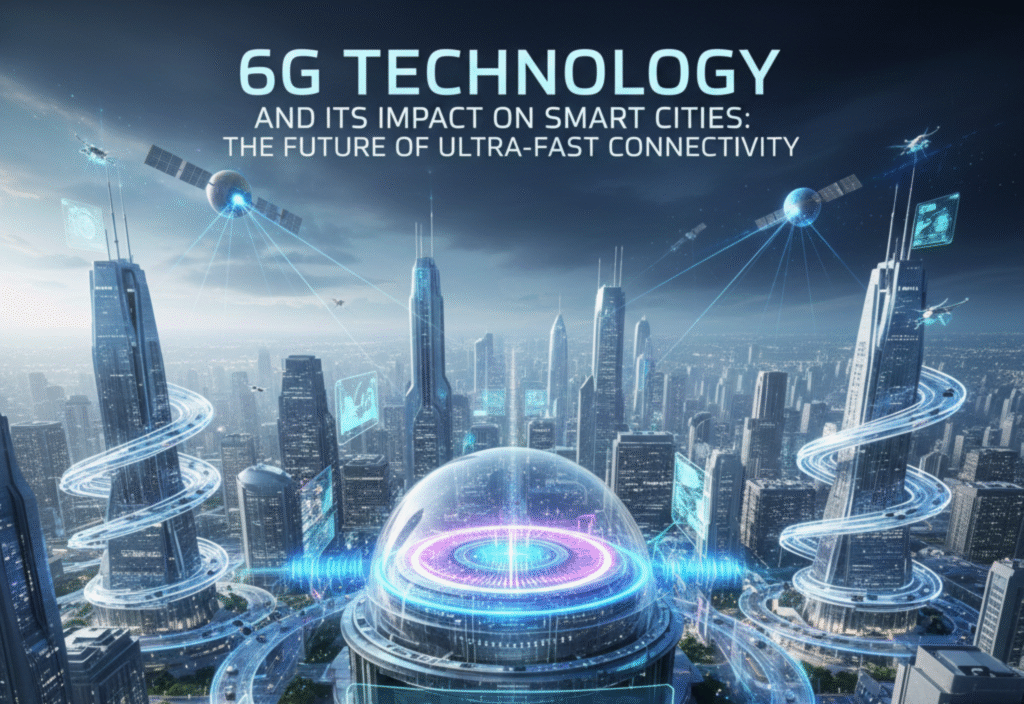
As urban populations continue to grow, the concept of smart cities has become a central focus for governments, urban planners, and technology innovators worldwide. Smart cities integrate information and communication technology (ICT) to improve the quality of urban life, optimize resource management, and enhance citizen services. One of the key enablers of these developments is the evolution of mobile communication technology. While 5G has already transformed connectivity, 6G technology promises to take smart cities to a new level with ultra-fast, low-latency, and highly reliable connectivity.
This article explores how 6G can shape the future of smart cities, the technologies involved, the potential benefits, and the ethical considerations necessary to ensure a responsible and sustainable deployment.
Understanding 6G Technology
6G, or the sixth generation of wireless networks, is the next evolution after 5G. While 5G has brought faster speeds and reduced latency, 6G is expected to revolutionize connectivity in the following ways:
Data Speeds: Expected to reach up to 1 terabit per second (Tbps), significantly faster than 5G.
Ultra-Low Latency: Latency may reduce to as low as 1 millisecond, enabling real-time responsiveness for critical applications.
Massive Device Connectivity: 6G will support the Internet of Things (IoT) on an unprecedented scale, connecting billions of devices simultaneously.
Intelligent Networks: Integration of AI and machine learning will allow networks to self-optimize, self-heal, and predict maintenance needs.
Unlike previous generations, 6G is designed to handle extreme data requirements, enabling technologies like holographic communication, autonomous transport, and real-time environmental monitoring.
The Role of 6G in Smart Cities
Smart cities rely on the seamless exchange of data between devices, infrastructure, and citizens. 6G will enhance this ecosystem in several key areas:
1. Urban Mobility and Transportation
6G will enable fully autonomous vehicles, drones, and public transport systems to communicate in real time. Ultra-low latency ensures vehicles can react instantly to traffic conditions, reducing accidents and optimizing traffic flow.
2. Energy Management
Smart grids will leverage 6G to balance energy production and consumption efficiently. Real-time data from renewable energy sources, IoT sensors, and smart meters will allow cities to reduce waste, lower costs, and support sustainable practices.
3. Healthcare Services
Telemedicine, remote diagnostics, and real-time patient monitoring will benefit from 6G’s high-speed connectivity. Hospitals can share large medical datasets instantly, supporting faster and more accurate healthcare delivery.
4. Environmental Monitoring
6G-enabled IoT sensors can monitor air quality, water usage, and waste management in real time. This data helps city authorities respond proactively to environmental challenges, enhancing sustainability.
5. Public Safety
Smart surveillance systems powered by AI and 6G will improve crime detection, emergency response, and disaster management. Faster communication between emergency services ensures quicker interventions.
Technologies Enabling 6G in Smart Cities
The deployment of 6G requires an ecosystem of advanced technologies:
Terahertz Communication (THz): Higher frequency bands that allow faster data transmission.
AI-Driven Networks: Machine learning optimizes network performance, predicts failures, and manages traffic intelligently.
Edge Computing: Processing data closer to the source reduces latency and enables real-time applications.
Massive MIMO & Beamforming: Antenna technologies that increase network capacity and reliability.
Together, these technologies will provide the backbone for ultra-fast, reliable, and intelligent connectivity in urban environments.
Benefits of 6G for Smart Cities
Enhanced Efficiency: Real-time monitoring and automated decision-making optimize city operations.
Improved Quality of Life: Faster, smarter services in healthcare, transportation, and utilities.
Economic Growth: New business opportunities in AI, IoT, and high-tech infrastructure.
Environmental Sustainability: Efficient resource usage and pollution monitoring support greener cities.
Resilience and Safety: Advanced surveillance and predictive analytics enhance security and disaster preparedness.
Ethical and Societal Considerations
While 6G offers remarkable opportunities, ethical deployment is critical:
Data Privacy: Massive connectivity requires responsible handling of personal and environmental data.
Digital Divide: Equitable access must be ensured so that all citizens benefit.
Sustainability: Infrastructure deployment should minimize environmental impact.
Security: Ultra-connected systems must be resilient against cyber threats and misuse.
Smart cities must balance innovation with human rights, ethics, and social responsibility to ensure technology serves society positively.
Challenges in Implementing 6G for Smart Cities
Despite its promise, 6G deployment faces several challenges:
High Costs: Building 6G infrastructure and upgrading existing networks require significant investment.
Technical Complexity: Integrating AI, THz communication, and edge computing is highly complex.
Regulatory Hurdles: Spectrum allocation, safety standards, and privacy laws must be addressed.
Cybersecurity Risks: Increased connectivity may lead to new vulnerabilities if not managed proactively.
Successful 6G adoption will depend on careful planning, investment, and collaboration among governments, businesses, and technology providers.
The Future Outlook
6G is expected to become commercially available in the late 2020s. Its impact on smart cities will be transformative, enabling truly connected urban ecosystems where infrastructure, services, and citizens interact seamlessly. From autonomous vehicles to smart energy grids and AI-driven healthcare, the ultra-fast connectivity provided by 6G will redefine urban living.
As cities prepare for this transition, responsible deployment, ethical oversight, and sustainable planning will ensure that the benefits of 6G are maximized without compromising societal well-being.
Conclusion
6G technology represents the next frontier in wireless connectivity, promising ultra-fast speeds, low latency, and massive device integration. For smart cities, it offers unprecedented opportunities to improve mobility, healthcare, energy management, environmental monitoring, and public safety.