Customer support is changing rapidly as businesses adopt smarter technologies to improve communication. One of the biggest changes in recent years is the rise of AI voice agents. These intelligent systems are helping companies automate phone conversations, reduce support costs, and provide faster customer service.
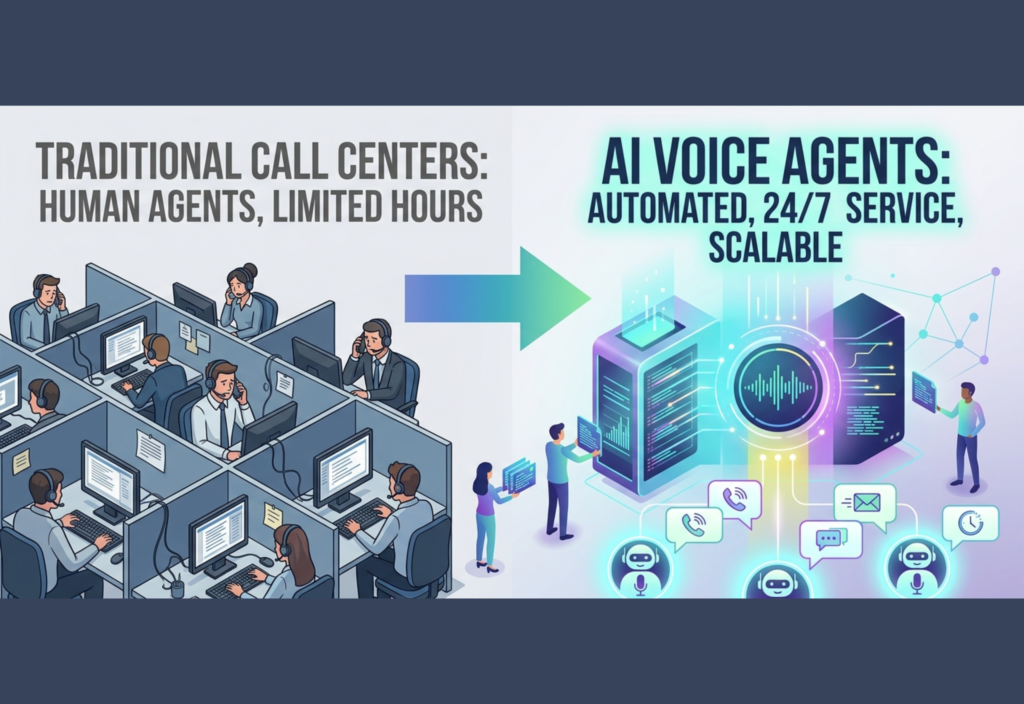
Traditional call centers have been used for decades to handle customer inquiries, complaints, bookings, and technical support. However, managing large support teams can be expensive and time-consuming. Long waiting times and inconsistent service quality have also become common problems for many businesses.
To solve these challenges, companies are increasingly turning to AI-powered voice technology. Modern AI calling systems can answer customer questions, manage requests, and hold natural conversations without human involvement in every interaction.
As artificial intelligence continues to improve, AI voice technology is becoming a major part of customer support across many industries.
What Are AI Voice Agents?
AI voice agents are software systems designed to communicate with people through spoken conversations. They use technologies such as:
- Natural Language Processing (NLP)
- Speech Recognition
- Machine Learning
- Conversational AI
- Text-to-Speech Systems
These technologies allow AI systems to understand human speech, process customer intent, and provide accurate responses in real time.
Unlike traditional automated phone menus that require users to press buttons, modern voice automation tools allow customers to speak naturally. For example, a customer can simply say:
“I want to track my order.”
The AI system understands the request and responds instantly with the required information.
Problems With Traditional Call Centers
Traditional call centers helped businesses manage customer communication for many years, but they also created several operational challenges.
High Operating Costs
Running a call center requires significant spending on:
- Employee salaries
- Training programs
- Office infrastructure
- Equipment and software
- Staff management
Large support teams can become costly, especially for businesses handling thousands of daily calls.
Long Waiting Times
Customers often experience frustration when placed on hold for long periods. During peak hours, support teams may struggle to answer calls quickly.
Slow response times can reduce customer satisfaction and negatively affect a company’s reputation.
Limited Availability
Human agents cannot work continuously without breaks. Many traditional support centers only operate during business hours, which limits customer access to assistance.
Human Errors
Even experienced agents can make mistakes when handling repetitive tasks or managing large amounts of information. Stress and fatigue may also affect performance quality.
Difficult Scaling
When customer demand increases, businesses usually need to hire and train additional staff. Expanding a traditional call center takes time and resources.
Why Businesses Use AI Voice Technology
Many companies are replacing traditional support systems with AI-powered communication tools because they offer greater speed, flexibility, and efficiency.
24/7 Customer Support
AI calling systems can operate day and night without interruptions. Customers can receive assistance anytime, regardless of location or time zone.
Faster Response Times
Voice automation tools can answer calls instantly and handle many conversations simultaneously. This reduces waiting times and improves the customer experience.
Lower Operational Costs
Businesses can automate routine customer interactions and reduce the need for large support teams. Over time, this can significantly lower operational expenses.
Consistent Communication
AI systems provide consistent responses based on company guidelines and programmed workflows. Unlike humans, they do not become tired or distracted.
Easy Scalability
AI-powered support systems can manage thousands of calls at the same time. Businesses can expand customer service operations without hiring large numbers of additional employees.
Benefits of AI Voice Agents
Modern AI voice technology offers several advantages for both businesses and customers.
Personalized Customer Interactions
Advanced conversational AI systems can analyze customer history and provide more personalized responses.
For example, returning customers may receive customized support based on previous interactions or purchases.
Multilingual Communication
AI voice technology can support multiple languages, helping international businesses communicate with global customers more effectively.
Faster Problem Resolution
AI systems can quickly access customer data and solve common problems in seconds.
Better Customer Accessibility
Voice-based systems make customer support easier for users who may prefer speaking over typing.
Industries Using AI Voice Systems
Many industries now use AI-powered communication tools to improve customer support and business operations.
Healthcare
Hospitals and clinics use voice automation for:
- Appointment scheduling
- Patient reminders
- General inquiries
- Prescription information
Banking and Finance
Banks use conversational AI systems to help customers with:
- Account information
- Payment updates
- Fraud alerts
- Transaction history
E-Commerce
Online businesses use AI calling systems for:
- Order tracking
- Delivery updates
- Refund requests
- Product support
Travel and Hospitality
Hotels and airlines use AI voice technology to manage:
- Reservations
- Booking changes
- Travel assistance
- Customer inquiries
Telecommunications
Telecom providers use virtual voice assistants for:
- Billing support
- Internet troubleshooting
- SIM activation
- Service upgrades
AI Voice Agents vs Human Support
Although AI-powered support systems are becoming more advanced, human agents still play an important role in customer service.
Emotional Understanding
Human representatives are generally better at handling emotional or sensitive conversations. Customers facing serious issues may prefer speaking with a real person.
Complex Decision-Making
Some customer problems require creative thinking and detailed analysis that AI systems may not fully handle.
Building Customer Trust
Many people still feel more comfortable discussing financial, healthcare, or legal concerns with human agents.
Because of this, many businesses now use a hybrid support model where AI handles routine tasks while humans manage more complex interactions.
Challenges of AI Voice Technology
Despite its advantages, AI voice technology also comes with certain limitations.
Privacy and Data Security
AI systems process large amounts of customer information, making data protection extremely important.
Accent and Speech Recognition Issues
Some systems may struggle to understand strong accents, unclear pronunciation, or background noise.
Initial Investment Costs
Implementing advanced AI communication systems may require significant upfront investment.
Customer Frustration
Poorly designed voice automation tools can frustrate customers if responses feel robotic or inaccurate.
Businesses must carefully train and optimize these systems to create smooth customer experiences.
Future of AI Voice Agents
The future of AI-powered communication looks highly promising. As artificial intelligence continues evolving, voice systems are expected to become even more natural and intelligent.
Future improvements may include:
- Better emotional understanding
- Real-time language translation
- More human-like conversations
- Advanced personalization
- Predictive customer support
Many experts believe future customer service operations will combine AI efficiency with human expertise to create faster and more reliable support experiences.
Final Thoughts
AI voice agents are transforming customer support by making communication faster, smarter, and more efficient. Businesses are increasingly replacing traditional call center operations with AI-powered systems that provide continuous support and handle large numbers of customer interactions.
Although human support remains important for complex situations, AI voice technology is already changing how companies interact with customers. Organizations that successfully combine automation with human expertise will likely deliver the best customer experiences in the future.