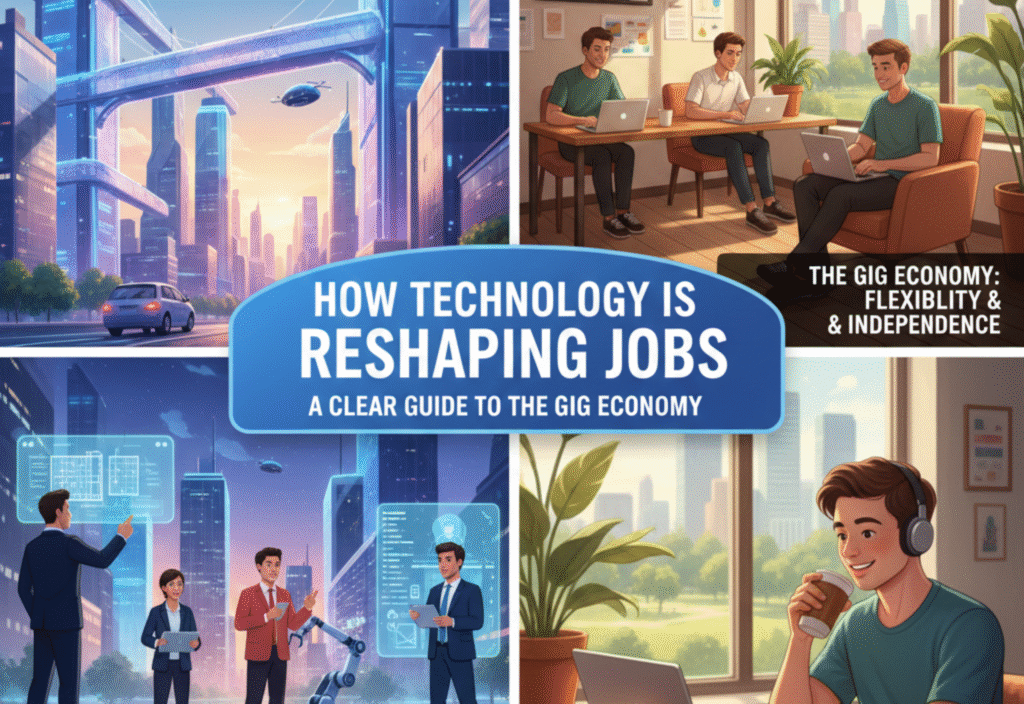
The world of work is undergoing a major transformation. Traditional nine-to-five jobs, long-term contracts, and fixed career paths are no longer the only options available to workers. Advances in technology have given rise to the gig economy, a flexible employment model where individuals offer services on a task-by-task or project basis. From freelance designers and software developers to ride-sharing drivers and online tutors, technology is reshaping how people find work and how businesses operate.
This article provides a clear and balanced guide to the gig economy, explaining how technology is changing jobs, what opportunities it creates, and what challenges it brings—without promoting anything unethical or harmful.
Understanding the Gig Economy
The gig economy refers to a labor market characterized by short-term contracts, freelance work, or on-demand tasks rather than permanent employment. Workers, often called “gig workers,” are typically paid per project, per task, or per hour.
Technology plays a central role in this system. Digital platforms connect workers directly with clients or customers, removing traditional intermediaries. As a result, work becomes more flexible, accessible, and global.
The Role of Technology in Reshaping Employment
Technology is the foundation of the gig economy. Several key innovations have contributed to its rapid growth:
Digital Platforms and Marketplaces
Online platforms allow individuals to offer services globally. Freelancers can find clients, negotiate terms, and receive payments through secure digital systems. This has expanded job opportunities beyond geographic boundaries.
Mobile Connectivity
Smartphones and high-speed internet enable people to work from almost anywhere. This flexibility allows individuals to choose when and where they work, making employment more adaptable to personal needs.
Automation and AI Tools
Technology has simplified many tasks such as scheduling, invoicing, communication, and project management. These tools help gig workers operate efficiently without the need for large organizations.
Cloud Computing
Cloud-based tools allow teams and individuals to collaborate remotely. This has made short-term and project-based work more practical and scalable.
Types of Jobs in the Gig Economy
The gig economy includes a wide range of professions and industries, such as:
Freelance writing, design, and software development
Online education and tutoring
Ride-sharing and delivery services
Digital marketing and consulting
Creative and media-related work
This diversity shows that the gig economy is not limited to one skill level or industry.
Benefits of the Gig Economy
Flexibility and Independence
One of the main advantages is flexibility. Workers can choose projects that match their skills, interests, and schedules. This independence is especially appealing to students, parents, and professionals seeking work-life balance.
Access to Global Opportunities
Technology allows individuals to work with clients from around the world. This global access increases earning potential and exposure to diverse projects.
Lower Entry Barriers
Many gig roles require minimal upfront investment. With basic skills and internet access, individuals can start offering services relatively quickly.
Business Efficiency
For companies, the gig economy provides access to specialized talent without long-term commitments. Businesses can scale their workforce based on demand.
Challenges and Limitations
Despite its advantages, the gig economy also presents challenges:
Income Instability
Gig work does not always provide a steady income. Earnings may vary depending on demand, competition, and market conditions.
Lack of Traditional Benefits
Many gig workers do not receive benefits such as health insurance, paid leave, or retirement plans. This places greater responsibility on individuals to manage their own security.
Job Security Concerns
Since work is contract-based, long-term job security is limited. Workers must continuously seek new opportunities.
Skill Competition
As gig platforms grow, competition increases. Workers must regularly update their skills to remain relevant.
Ethical and Social Considerations
Technology-driven employment must be guided by ethical responsibility. Fair pay, transparency, and respect for workers’ rights are essential. Platforms and employers should avoid exploitation and ensure clear communication regarding terms and expectations.
Additionally, governments and institutions are increasingly exploring ways to adapt labor laws to protect gig workers while maintaining flexibility.
The Future of Work in the Gig Economy
The gig economy is expected to continue growing as technology evolves. Hybrid work models, where individuals combine traditional jobs with freelance work, are becoming more common.
Future trends may include:
Improved digital protections for workers
Greater emphasis on skill development
Ethical use of AI in hiring and task allocation
More balanced regulations supporting both workers and businesses
Technology will continue to shape employment, but human values and responsibility must guide its use.
Conclusion
Technology is reshaping jobs by redefining how work is created, distributed, and performed. The gig economy offers flexibility, opportunity, and innovation, but it also requires careful consideration of stability, fairness, and ethics.