In digital marketing, three terms are used again and again: SEO, PPC, and GEO targeting. Many beginners think these strategies are the same. However, in reality, each one works in a completely different way.
When you understand the difference between SEO, PPC, and GEO targeting, you can choose the right strategy for your business, reach the correct audience, and avoid wasting time and money. Let’s explain everything in simple words.
What Is SEO? (Search Engine Optimization)
SEO is the process of getting free, organic traffic from search engines like Google. You don’t pay for clicks. Instead, you improve your website so search engines rank it higher in search results.
How SEO Works
-
Using relevant keywords naturally in your content
-
Writing helpful, original, and high-quality articles
-
Improving website speed and mobile usability
-
Making the site easy to navigate
-
Getting backlinks from trusted websites
Example
If a bakery optimizes its website for “fresh cakes near me”, customers can find it on Google without the bakery paying for ads.
Why SEO Is Important
-
Brings long-term traffic
-
Builds trust and credibility
-
Cost-effective over time
-
Improves website authority
SEO takes time, but once you rank, traffic continues to come consistently.
What Is PPC? (Pay-Per-Click Advertising)
PPC is a paid marketing strategy where you pay only when someone clicks on your ad.
Common PPC platforms include:
-
Google Ads
-
Facebook Ads
-
Instagram Ads
How PPC Works
-
Choose keywords related to your business
-
Set a daily or monthly budget
-
Your ad appears at the top of search results
-
You pay only when users click
Example
A skincare brand can run ads for “buy moisturizer online” and appear instantly at the top of Google search results.
Why PPC Is Useful
-
Immediate traffic
-
Fast results
-
Easy to track performance
-
Ideal for promotions and product launches
-
Advanced audience targeting
PPC works quickly, but traffic stops as soon as you stop paying.
What Is GEO Targeting?
GEO targeting means showing content or ads to users based on their geographical location, such as a city, region, or country.
How GEO Targeting Works
-
Select the location of your target audience
-
Show ads only to users in that area
-
Customize offers for local users
Example
A coffee shop in Karachi can run ads that only people living in Karachi see.
Why GEO Targeting Matters
-
Reaches the most relevant audience
-
Increases chances of conversions
-
Saves advertising budget
-
Perfect for local businesses
Main Differences Between SEO, PPC, and GEO Targeting
| Feature | SEO | PPC | GEO Targeting |
|---|---|---|---|
| Type | Organic | Paid | Location-based |
| Cost | Free clicks | Pay per click | Used with SEO/PPC |
| Speed | Slow but long-term | Fast results | Depends on campaign |
| Best For | Long-term growth | Quick leads/sales | Local audiences |
| Result Duration | Long-lasting | Short-term | Ongoing if active |
How SEO, PPC, and GEO Targeting Work Together
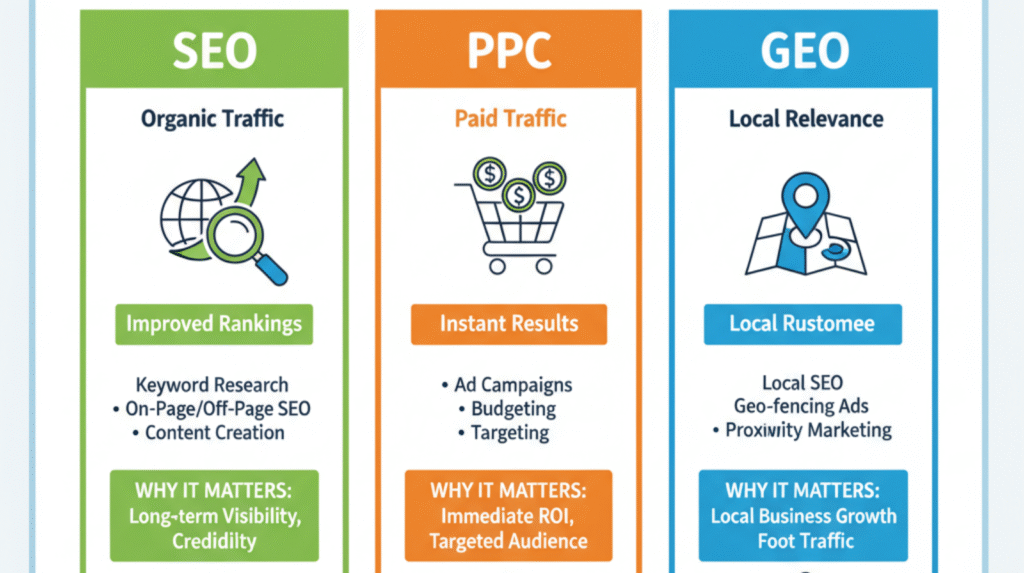
The smartest businesses don’t rely on just one strategy — they combine all three.
-
SEO brings long-term organic visitors
-
PPC delivers instant traffic and leads
-
GEO targeting ensures the right local audience sees your offer
Example Strategy
A gym can:
-
Use SEO for “fitness center near me”
-
Run PPC ads for membership discounts
-
Use GEO targeting to show ads only in its city
This creates a powerful and balanced digital marketing system.
Conclusion
Understanding the difference between SEO, PPC, and GEO targeting helps businesses grow faster online.
-
SEO = Free, long-term traffic
-
PPC = Paid, instant traffic
-
GEO = Location-based audience targeting
When used together, these strategies increase visibility, attract the right visitors, and improve conversions effectively.