
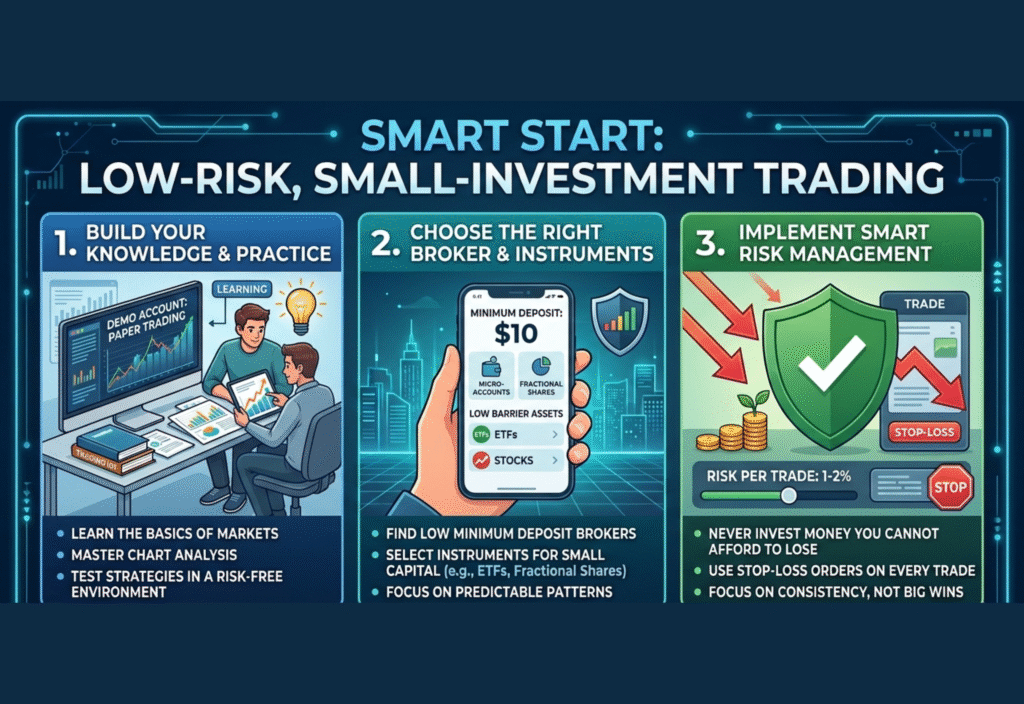
Small investment trading is a smart way to start trading with low risk. Beginners can learn how to trade with limited capital while focusing on proper risk management and simple strategies.
Many beginners enter trading with the expectation of quick profits, but without proper knowledge and discipline, losses can occur quickly. The key to success is not just making profits, but protecting your capital and managing risk effectively.
This article provides a complete guide on how to start trading with a small investment while keeping risk low and maintaining a responsible approach.
What is Trading and How Does It Work
Trading is the process of buying and selling financial assets such as stocks, currencies, commodities, or cryptocurrencies with the aim of making a profit.
The basic idea is simple:
-
Buy at a lower price
-
Sell at a higher price
However, the real challenge lies in predicting market movements and managing uncertainty. Markets are influenced by many factors including news, economic data, and global events.
Understanding Risk in Trading
Risk is an unavoidable part of trading. Every trade carries the possibility of loss.
Types of Risks:
-
Market risk (price fluctuations)
-
Liquidity risk (difficulty in buying or selling assets)
-
Emotional risk (decisions driven by fear or greed)
Why Risk Management Matters
Successful traders focus on limiting losses rather than chasing profits. By controlling risk, you protect your capital and stay in the market longer.
Choosing the Right Market
Before starting, you need to decide which market to trade in.
Popular Options:
-
Stock market
-
Forex market
-
Cryptocurrency market
-
Commodities market
Each market has different characteristics. For beginners with small investments, markets with higher liquidity and clear trends are usually easier to understand.
Start with a Small Investment
One of the most important rules in trading is to start small.
Why Start Small:
-
Reduces financial pressure
-
Minimizes emotional stress
-
Allows gradual learning
-
Limits potential losses
You should only invest money that you can afford to lose. This mindset helps you make rational decisions instead of emotional ones.
Education is the Foundation
Before placing any trades, it is essential to learn the basics of trading.
Key Areas to Study:
-
How financial markets operate
-
Basic technical analysis
-
Chart patterns and indicators
-
Fundamental analysis
The more you learn, the better your decisions will be.
Practice with a Demo Account
Most trading platforms offer demo accounts where you can trade with virtual money.
Benefits:
-
No financial risk
-
Real market conditions
-
Practice strategies safely
-
Build confidence
Using a demo account is one of the best ways to gain experience without losing real money.
Develop a Simple Trading Strategy
A clear strategy is necessary for consistent trading.
Examples of Simple Strategies:
-
Trend following
-
Support and resistance trading
-
Breakout strategies
Avoid complex systems in the beginning. Simplicity is often more effective for beginners.
Risk Management Techniques
Risk management is the most critical part of trading.
Important Rules:
-
Risk only 1–2% of your capital per trade
-
Always use stop-loss orders
-
Avoid overtrading
-
Maintain a risk-to-reward ratio
These techniques help you protect your account from large losses.
Position Sizing and Capital Management
Position sizing determines how much money you allocate to each trade.
Best Practices:
-
Keep trade sizes small
-
Diversify your trades
-
Avoid putting all capital in one position
Proper position sizing ensures long-term survival in trading.
Emotional Discipline in Trading
Emotions can negatively impact trading decisions.
Common Emotional Mistakes:
-
Fear of losing money
-
Greed for higher profits
-
Panic selling
-
Revenge trading
Solution:
-
Follow your strategy strictly
-
Stick to your plan
-
Avoid impulsive decisions
Discipline is a key factor in successful trading.
Keeping a Trading Journal
A trading journal is a powerful tool for improvement.
What to Record:
-
Trade entry and exit points
-
Reason for the trade
-
Outcome (profit or loss)
-
Lessons learned
Over time, this helps you identify patterns and improve your strategy.
Avoid Common Beginner Mistakes
Many beginners fail due to avoidable mistakes.
Common Mistakes:
-
Trading without a plan
-
Ignoring risk management
-
Overleveraging
-
Chasing quick profits
Avoiding these mistakes significantly improves your chances of success.
Use Reliable Trading Platforms
Choosing a secure and reliable platform is essential.
What to Look For:
-
Strong security features
-
User-friendly interface
-
Good reputation
-
Educational resources
A reliable platform provides a safer trading environment.
Start Slow and Be Patient
Trading is not a shortcut to wealth. It requires time, patience, and continuous learning.
-
Start with small steps
-
Focus on consistency
-
Avoid rushing into big trades
-
Improve gradually
Build a Long-Term Mindset
Successful traders focus on long-term growth rather than short-term gains.
-
Think in terms of months and years
-
Focus on learning, not just earning
-
Accept losses as part of the process
-
Stay consistent
Conclusion
Starting trading with a small investment and low risk is possible if you follow the right approach. By focusing on education, discipline, and risk management, you can gradually build your skills and confidence.
Trading should always be approached with caution and responsibility. Instead of focusing on quick profits, focus on learning and protecting your capital. With patience and proper strategy, trading can become a valuable and rewarding skill over time.