Automation tools have become an important part of modern digital workflows. The demand for the best OpenClaw alternatives is also rapidly increasing because businesses and developers want to use smarter automation platforms. These tools automate repetitive tasks, improve productivity, and help connect different apps. If you are using OpenClaw or looking for a better automation solution, there are several powerful alternatives available that offer advanced features and strong integrations.
However, as technology continues to evolve, many users are now exploring other automation tools that offer more integrations, advanced features, and better scalability. Finding the right automation platform can significantly improve efficiency and help organizations build smarter digital workflows. For this reason, many professionals are searching for powerful alternatives to OpenClaw that provide stronger automation capabilities.
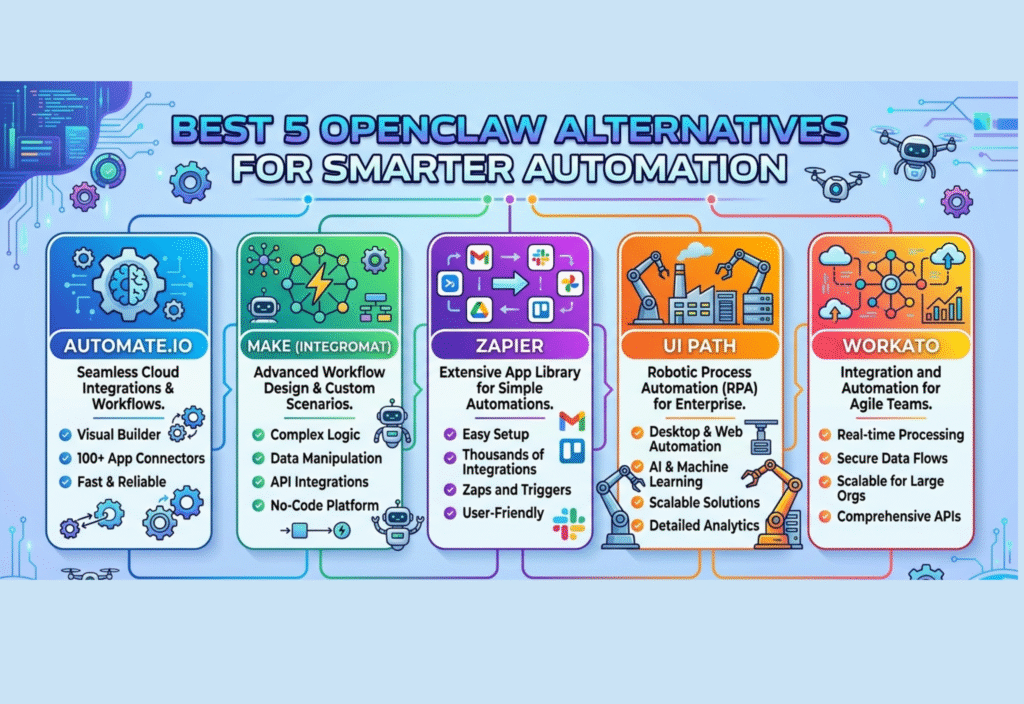
In this article, we will explore the best five OpenClaw alternatives for smarter automation. These tools offer powerful features for developers, businesses, and creators who want to automate tasks more effectively and build efficient workflows.
Why Look for OpenClaw Alternatives?
OpenClaw can be a useful automation tool, but it may not always meet the needs of every user. Some individuals require deeper integrations with apps and services, while others prefer platforms with visual workflow builders or stronger cloud infrastructure.
There are several reasons why users explore alternative automation tools:
First, many people want platforms that support a larger number of integrations with popular apps and services. Automation tools become much more powerful when they can connect multiple platforms together.
Second, ease of use is another important factor. Some users prefer visual automation tools that allow them to build workflows using simple drag-and-drop interfaces rather than complex coding.
Third, scalability is also essential. As businesses grow, they need automation systems that can handle larger workflows and more complex processes.
Finally, modern automation platforms often include artificial intelligence features that help optimize tasks and improve decision-making. These advanced capabilities are attracting many users who want smarter automation solutions.
1. n8n
One of the most powerful alternatives to OpenClaw is n8n. This open-source automation platform allows users to connect different applications and create automated workflows easily. It is particularly popular among developers and startups because it offers both flexibility and control.
n8n provides a visual workflow editor that helps users build automation systems without needing to write complex code. At the same time, developers can still add custom scripts when they need advanced functionality.
Another major advantage of n8n is that it can be self-hosted. This means organizations can run the platform on their own servers and maintain full control over their data. For businesses that prioritize privacy and customization, this feature is extremely valuable.
With hundreds of integrations and a growing community of users, n8n has become one of the most trusted automation platforms available today.
2. Zapier
Zapier is one of the most widely known automation tools in the world. It allows users to connect thousands of apps and create automated workflows known as “Zaps.” These workflows are triggered by specific events and perform actions automatically.
The biggest strength of Zapier is its simplicity. Users do not need technical expertise to start automating tasks. With just a few clicks, they can connect services such as email platforms, cloud storage tools, and marketing software.
Zapier supports thousands of integrations, making it extremely useful for businesses that rely on multiple online tools. For example, a company could automatically send new customer data from a form into a CRM system and trigger follow-up emails without manual effort.
Although Zapier is a cloud-based platform, it offers strong reliability and excellent documentation. This makes it one of the best alternatives for individuals and businesses looking for easy automation solutions.
3. Make
Make, previously known as Integromat, is another powerful automation platform that provides advanced workflow automation features. It is known for its visual interface, which allows users to see how data flows between different applications.
Make offers a drag-and-drop system where users can design complex workflows step by step. This makes it easier to understand automation processes and adjust them when necessary.
One of the most impressive features of Make is its ability to handle advanced data processing. Users can filter, transform, and manipulate data within workflows, which allows for highly customized automation systems.
Make is often preferred by businesses that require more advanced automation capabilities than simple tools provide. Its flexibility and visual workflow builder make it a strong competitor to many other automation platforms.
4. Pipedream
Pipedream is a modern automation platform designed especially for developers. It focuses on event-driven workflows and allows users to connect APIs and automate processes with powerful coding support.
Unlike many no-code automation tools, Pipedream combines automation with a full development environment. Developers can write code, trigger workflows from events, and connect multiple APIs within a single automation system.
Another advantage of Pipedream is its serverless infrastructure. Users do not need to manage servers or complex configurations. The platform automatically handles scaling and execution, allowing developers to focus on building powerful integrations.
Because of its strong technical capabilities, Pipedream is an excellent option for teams that want deep control over their automation systems.
5. Microsoft Power Automate
Microsoft Power Automate is a comprehensive automation platform that is part of the Microsoft ecosystem. It enables users to automate workflows across Microsoft services as well as many third-party applications.
One of the biggest advantages of Power Automate is its integration with Microsoft products such as Office tools, cloud storage, and collaboration platforms. Organizations that already use Microsoft services can easily automate tasks between different applications.
Power Automate also includes advanced features such as robotic process automation (RPA). This technology allows users to automate repetitive tasks performed on desktop applications.
In addition, Microsoft continues to integrate artificial intelligence capabilities into the platform. These features allow automation systems to analyze data, recognize patterns, and improve efficiency.
For businesses that rely heavily on Microsoft technology, Power Automate is one of the most powerful automation solutions available.
How to Choose the Best Automation Tool
Choosing the right automation platform depends on your needs, technical skills, and workflow complexity. While all the tools mentioned above are powerful, each one serves a slightly different purpose.
If you prefer open-source tools and full control over your automation environment, n8n is an excellent option. For beginners who want simple automation without coding, Zapier provides a user-friendly solution.
Make is ideal for users who want advanced visual workflows and powerful data processing features. Developers who need coding flexibility and API integrations may prefer Pipedream. Meanwhile, organizations already using Microsoft products will benefit from the seamless integration offered by Power Automate.
Before choosing a platform, it is important to consider integration options, pricing, scalability, and ease of use.
The Future of Automation
Automation technology is evolving rapidly, and new tools are emerging every year. Artificial intelligence is now being integrated into automation platforms, allowing systems to make smarter decisions and optimize workflows automatically.
In the future, automation tools will likely become even more accessible. Non-technical users will be able to build complex workflows without writing code, while developers will gain access to even more powerful customization features.
As businesses continue to adopt digital systems, automation will play a critical role in improving productivity, reducing operational costs, and enabling innovation.
Conclusion
Automation tools are essential for modern digital workflows. While OpenClaw offers useful capabilities, several alternatives provide more advanced features, better integrations, and greater flexibility.
Platforms like n8n, Zapier, Make, Pipedream, and Microsoft Power Automate offer powerful solutions for automating tasks and building smarter workflows. By selecting the right tool, individuals and organizations can streamline processes, save time, and focus on more important work.