
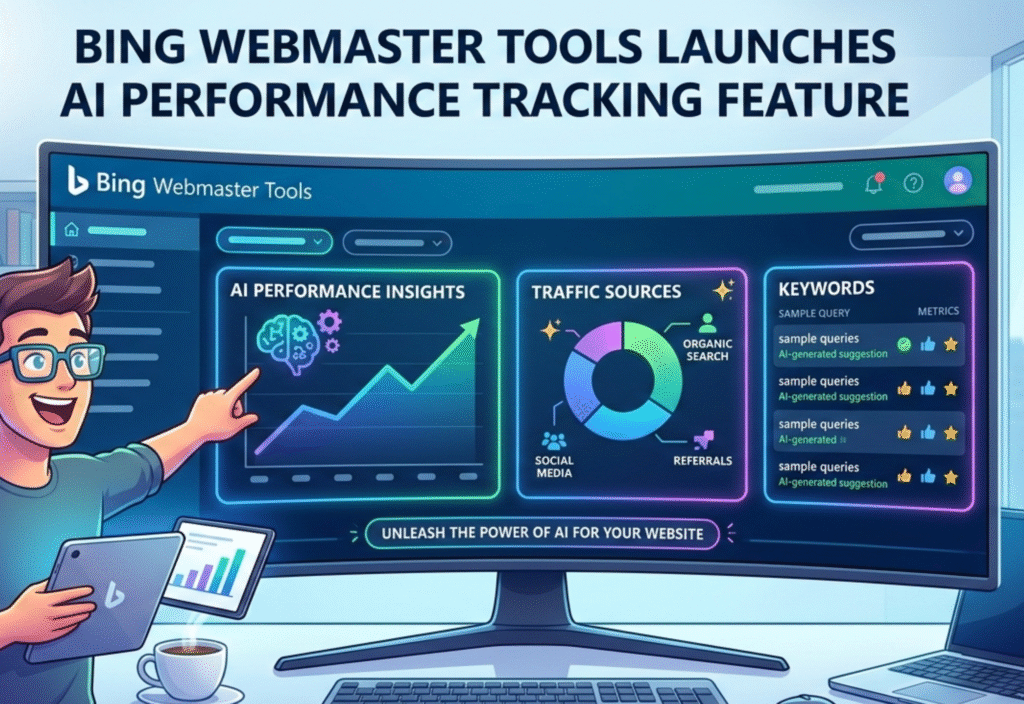
In today’s fast-evolving digital landscape, artificial intelligence (AI) is changing the way users interact with search engines. To help website owners understand how their content performs in AI-driven search results, Bing Webmaster Tools has introduced a new AI Performance Tracking feature. This addition provides detailed insights into how websites appear in AI-generated responses and how users engage with that content.
Developed by Microsoft, Bing Webmaster Tools has long been a trusted platform for monitoring search performance, indexing issues, and technical SEO metrics. With AI becoming a crucial part of search, this feature ensures that publishers have the data they need to adapt their content strategy effectively.
Why AI Performance Tracking Matters
Search engines are no longer limited to displaying a simple list of links. AI-powered search experiences now provide summaries, direct answers, and content recommendations based on multiple sources. Understanding how your content is being used in these AI-generated experiences is critical for modern SEO.
With AI performance tracking, website owners can now:
See how often their content appears in AI-powered search results
Monitor user interactions with AI-generated summaries
Identify topics that perform best in AI-driven search
Gain insights to improve content strategy
Traditional analytics platforms focus primarily on clicks and rankings, but AI requires new metrics that measure visibility, engagement, and content relevance in AI-powered results.
Key Features of AI Performance Tracking
The AI Performance Tracking feature in Bing Webmaster Tools offers several unique capabilities:
1. AI Visibility Metrics
Website owners can now track how often their content appears in AI-generated results, giving them a clear picture of visibility beyond traditional search rankings.
2. Engagement Insights
Beyond visibility, the tool shows how users interact with AI-powered responses, including clicks, time spent, and engagement patterns.
3. Query-Level Data
The feature provides data on the specific search queries that trigger AI-generated content involving your pages, helping you optimize for the right audience.
4. Competitive Benchmarking
Publishers can compare their AI performance against competitors to identify areas of improvement and refine their content strategy.
Benefits for Website Owners
Better Content Optimization
By understanding how AI systems interpret content, website owners can restructure articles, add clarity, and ensure key points are easily understood by AI algorithms.
Improved SEO Performance
With insights into AI-driven search visibility, site owners can prioritize high-performing topics and optimize underperforming content to increase reach.
Enhanced Strategic Decisions
Data-driven insights allow marketers to focus on content areas that maximize engagement and maintain authority in their niche.
Staying Ahead of Competitors
Early adoption of AI tracking helps businesses adapt faster to evolving search trends, giving them a competitive edge.
How This Changes SEO
The integration of AI into search fundamentally changes traditional SEO practices:
Prioritize high-quality, accurate content: AI favors reliable sources.
Use structured, clear content: Headings, lists, and concise paragraphs make content more readable by AI.
Answer questions directly: AI-generated summaries prefer content that clearly addresses queries.
Maintain authority: Trustworthy websites are more likely to appear in AI results.
SEO is no longer just about keywords—it’s about how effectively your content can be understood and used by AI systems.
Comparing Bing With Other SEO Tools
Platforms like Google Search Console provide valuable search data, but Bing’s AI Performance Tracking is unique in its focus on AI-driven search insights. This reflects the broader trend of search engines adapting to AI, and the importance for publishers to stay informed.
Practical Tips for Using AI Performance Tracking
Monitor AI Impressions Regularly – Track which pages are showing up in AI-generated responses.
Analyze Engagement Patterns – Understand how users interact with AI-powered summaries.
Refine Content Structure – Use headings, bullet points, and concise explanations to improve AI comprehension.
Focus on High-Value Topics – Prioritize content that AI frequently references.
Evaluate Competitor AI Performance – Learn from what works for similar websites.
The Future of AI in Search
As AI becomes more embedded in search engines, analytics tools will continue to evolve. Future trends may include:
Advanced AI visibility reports
Insights into AI-generated answer summaries
Data on conversational search interactions
Deeper analysis of AI-driven user behavior
Website owners who adapt early will be better positioned to maintain strong online visibility in an AI-driven web ecosystem.
Conclusion
The introduction of AI Performance Tracking in Bing Webmaster Tools is a significant milestone for SEO in 2026 and beyond. Website owners now have access to actionable insights about how AI interacts with their content, enabling better optimization, improved engagement, and a competitive edge.
By leveraging this tool effectively, businesses, bloggers, and digital marketers can stay ahead in the ever-evolving search landscape and ensure their content continues to reach the right audience.