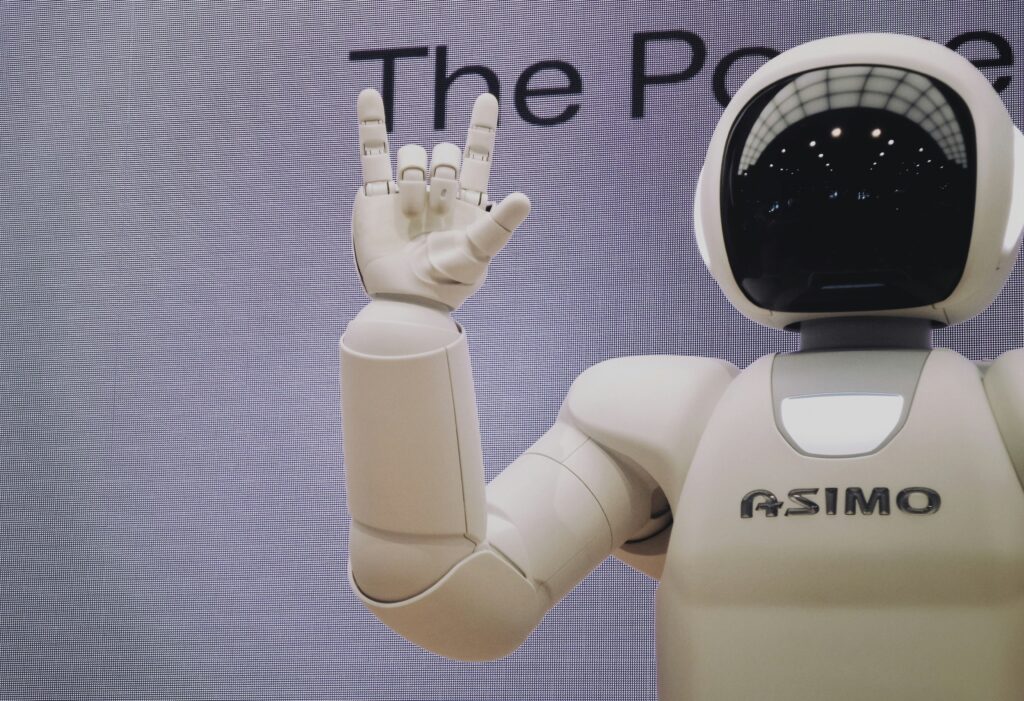
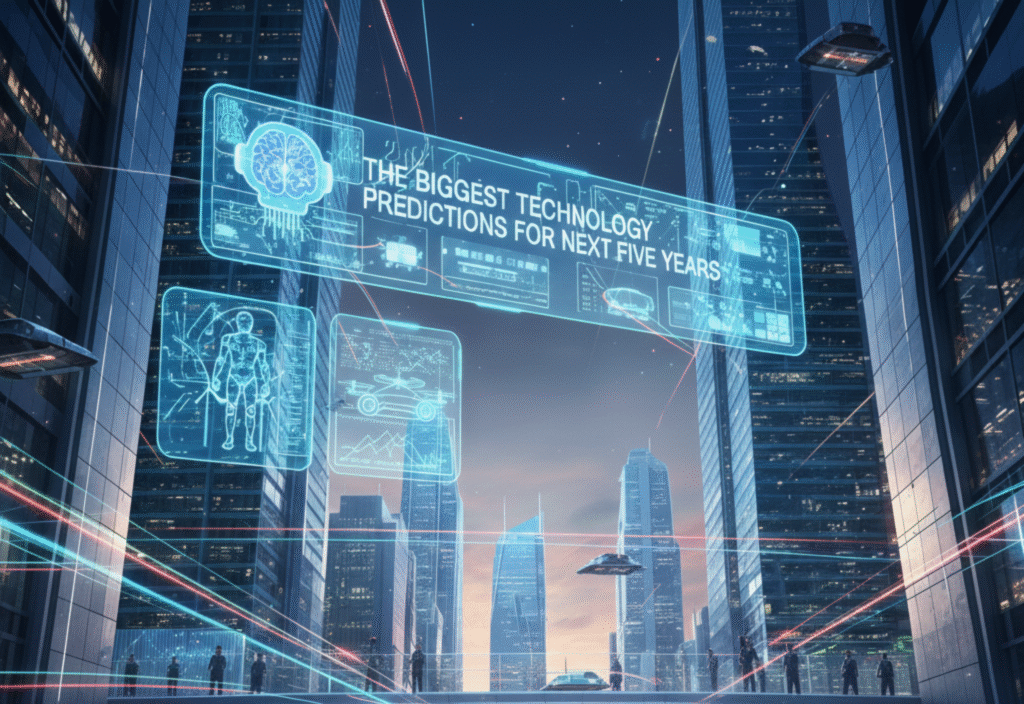
Future technology predictions show that the next five years will bring rapid changes in artificial intelligence, automation, smart cities, and digital infrastructure. Technology is evolving quickly and transforming how people work, communicate, and solve problems. Businesses and individuals must understand these emerging innovations to stay competitive in the digital world. The coming years will introduce smarter systems that improve efficiency, productivity, and everyday life
Artificial Intelligence Will Become an Everyday Assistant
Artificial Intelligence (AI) is already influencing many industries, but in the next five years it will become even more deeply integrated into daily life. AI will not only power chatbots or recommendation systems; it will help manage schedules, analyze business data, assist in healthcare diagnostics, and automate complex tasks.
Businesses will increasingly rely on AI-powered tools to improve decision-making. Instead of spending hours analyzing data, companies will use intelligent systems that can instantly provide insights and predictions. In healthcare, AI systems will help doctors detect diseases earlier and recommend more personalized treatments.
Education will also benefit from AI-driven learning platforms that adapt to each student’s pace and learning style. These technologies will make education more accessible and effective for people around the world.
Automation and AI Agents Will Transform Workplaces
The workplace of the future will look very different from today. Intelligent automation and AI agents will handle repetitive tasks such as scheduling, data entry, customer service responses, and workflow management.
Rather than replacing human workers entirely, automation will change the nature of jobs. Employees will focus more on creative thinking, strategic planning, and problem-solving, while machines handle routine operations.
Businesses that adopt automation early will gain a competitive advantage because they will be able to operate faster and more efficiently. Workers who develop digital and analytical skills will find new opportunities in this evolving job market.
The Rise of Smart Cities and Connected Infrastructure
Urban areas are becoming smarter thanks to advanced sensors, data analytics, and connected technologies. Over the next five years, many cities will implement systems that monitor traffic, energy use, public safety, and environmental conditions in real time.
Smart traffic systems will reduce congestion by adjusting traffic signals based on current road conditions. Energy grids will become more efficient by automatically balancing supply and demand. Waste management systems will optimize collection routes using real-time data.
These innovations will improve the quality of life in cities by making them more efficient, sustainable, and environmentally friendly.
Growth of the Internet of Things
The Internet of Things (IoT) refers to the network of devices connected to the internet that can collect and share data. Smart homes, wearable devices, and connected industrial machines are already part of this ecosystem.
In the coming years, billions of additional devices will be connected. Homes will feature intelligent appliances that learn user preferences and optimize energy usage. Factories will use connected machines to monitor production processes and predict equipment failures before they occur.
This interconnected world will create vast amounts of data that organizations can use to improve services and products.
Advancements in Cybersecurity
As technology becomes more integrated into daily life, cybersecurity will become increasingly important. With more devices connected to the internet, the risk of cyber threats will grow as well.
Organizations will invest heavily in advanced security systems that use artificial intelligence to detect unusual activity and prevent attacks before they occur. Multi-layered security approaches will become standard, combining encryption, identity verification, and continuous monitoring.
Individuals will also become more aware of digital privacy and security practices, leading to stronger protection of personal information.
Expansion of Cloud and Edge Computing
Cloud computing has already transformed how companies store data and run applications. Over the next five years, cloud technology will continue to evolve alongside edge computing.
Edge computing allows data to be processed closer to where it is generated rather than relying entirely on centralized cloud servers. This reduces latency and improves performance for applications that require real-time responses, such as autonomous vehicles and smart infrastructure.
Businesses will increasingly adopt hybrid systems that combine cloud and edge technologies to achieve both scalability and speed.
Breakthroughs in Renewable and Sustainable Technology
Sustainability is becoming a global priority, and technology will play a major role in addressing environmental challenges. Advances in renewable energy, energy storage, and smart grid technology will help reduce dependence on fossil fuels.
Solar and wind energy systems will become more efficient and affordable. Improved battery technology will allow energy to be stored and used when needed. Smart grids will distribute electricity more effectively and reduce energy waste.
Technology companies are also exploring ways to reduce the environmental impact of data centers and electronic devices.
The Evolution of Virtual and Augmented Reality
Virtual Reality (VR) and Augmented Reality (AR) are moving beyond gaming and entertainment. In the coming years, these technologies will be widely used in education, training, healthcare, and remote collaboration.
Students may attend immersive virtual classrooms where they can interact with digital environments. Medical professionals can practice complex procedures using realistic simulations. Businesses will use AR tools to assist technicians in repairing equipment or assembling products.
These immersive technologies will create new ways for people to learn, communicate, and work together.
The Emergence of Quantum Computing
Quantum computing is still in its early stages, but significant progress is expected in the next five years. Unlike traditional computers, quantum computers use quantum bits that can process multiple possibilities simultaneously.
This technology has the potential to solve complex problems that are currently impossible for classical computers, such as advanced material discovery, complex financial modeling, and large-scale scientific simulations.
Although widespread commercial use may still be years away, early breakthroughs will begin to reshape scientific research and innovation.
The Future of Human–Technology Collaboration
One of the most important technology trends will be the closer collaboration between humans and intelligent machines. Instead of viewing technology as a replacement for human work, organizations will use it as a tool to enhance human capabilities.
AI systems will assist professionals in fields such as law, medicine, engineering, and research. By analyzing massive datasets quickly, these tools will help experts make better decisions and develop innovative solutions to complex challenges.
The key to success will be balancing technological advancement with ethical considerations and responsible use.
Conclusion
The next five years will bring remarkable technological progress that will transform industries, cities, and everyday life. Artificial intelligence, automation, connected devices, and sustainable technologies will drive a new wave of innovation across the globe.