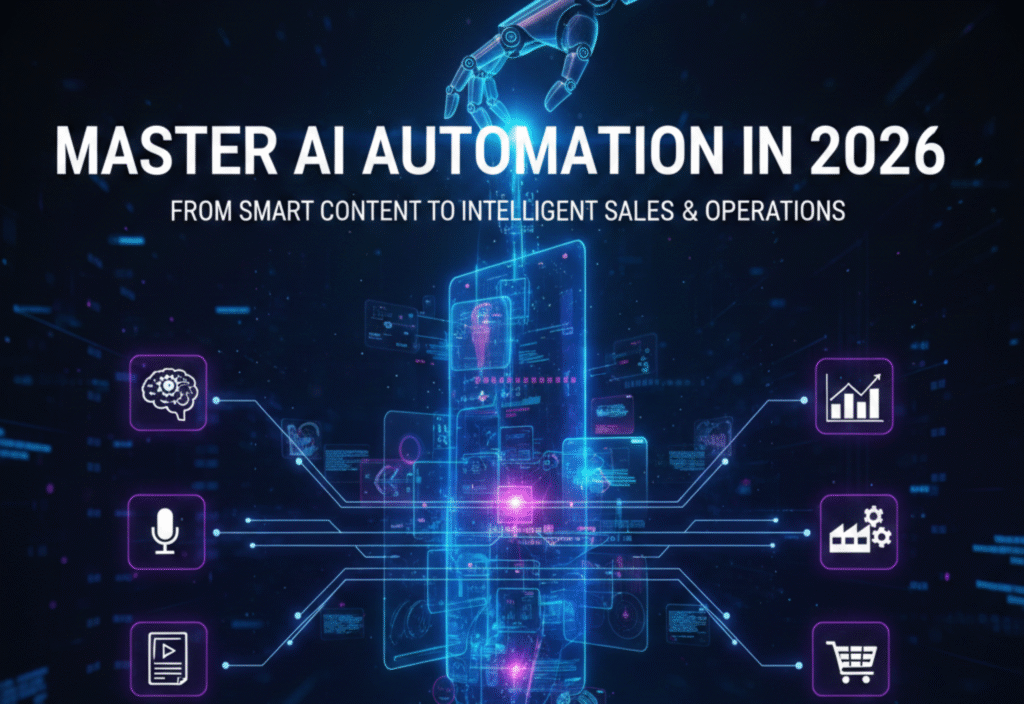
AI Automation 2026 is transforming the way businesses create content, manage sales, and streamline operations. By using AI tools like n8n, companies can save time, reduce costs, and improve efficiency across all workflows. Organizations that implement AI effectively gain a strong advantage over competitors and can focus on growth and innovation.
Revolutionizing Content with AI Engines
Content creation has always been time-consuming. Fortunately, AI-powered tools now help businesses create, manage, and share content automatically. As a result, teams can focus on strategy rather than repetitive tasks.
Automated Content Workflow
AI monitors RSS feeds and news sources in real-time. Then, it summarizes key insights and checks for duplicate content using smart search tools. After that, the summaries can be turned into scheduled posts for WordPress, LinkedIn, and Twitter. This creates an automated content workflow that ensures posts remain consistent and high-quality.
Voice-Based Appointment Booking
AI is not limited to text. By using voice-generation tools like ElevenLabs along with Cal.com or Google Calendar, companies can build AI agents that answer calls and schedule appointments automatically. Consequently, customers experience faster service, and employees save time on manual tasks.
Repurposing Long-Form Video
Webinars, tutorials, and YouTube videos can be automatically converted into short clips for platforms like TikTok or Instagram Reels. AI identifies key moments, generates captions, and creates highlights. This way, businesses can expand their reach without additional effort.
AI Social Listening and Engagement
AI tools can track brand mentions across social media and analyze public sentiment. Next, they draft personalized replies automatically. As a result, engagement improves, and brands build stronger trust with their audience.
Intelligent CRM and Sales Automation
AI is transforming lead management and sales pipelines. Integrating AI into CRM systems allows companies to qualify leads, personalize outreach, and boost conversion rates automatically.
AI-Powered Lead Qualification
AI can analyze lead submissions, enrich the data, and score leads for potential. Then, it routes them to the right sales representative and creates tailored emails. In turn, leads receive timely, relevant attention without human intervention.
Automated Prospecting with RAG
AI can scan a prospect’s website and recent news to create customized talking points. These points are stored in CRMs like HubSpot or Salesforce. As a result, sales teams can approach leads with personalized messaging that increases success rates.
Smart Job Tracking
For platforms like Upwork, AI agents can detect new jobs, filter by keywords and budget, and summarize requirements in a spreadsheet. Consequently, businesses save hours of manual work while keeping opportunities organized and actionable.
Smart Operations and Document Processing
AI improves internal operations and document management. By automating repetitive tasks, businesses reduce errors and increase efficiency.
AI Document and Invoice Processing
AI agents can automatically read invoices and other documents. They extract relevant data, compare it with purchase orders, and update accounting systems. This ensures faster processing, fewer mistakes, and accurate records.
Automated Hiring Pipeline
Recruiting takes time, but AI can parse resumes, compare candidates to job descriptions, and schedule interviews automatically. In addition, HR teams can focus on decision-making instead of administrative tasks.
Intelligent IT Incident Response
AI monitors IT systems in real-time. When an issue arises, it creates a Jira ticket, analyzes logs, and notifies engineers with a clear summary in Slack. Then, teams can respond faster and reduce downtime.
Seamless Data Sync and Unified AI Management
Managing data from multiple sources can be complicated. AI simplifies this process and brings everything together.
Mini-ETL (Extract, Transform, Load)
AI agents can pull data from APIs, transform it using code or JSON nodes, and load it into databases or spreadsheets. This approach eliminates the need for complex ETL tools while keeping workflows flexible.
Unified AI Support Assistant
AI can gather messages from email, WhatsApp, Slack, and other platforms into a single assistant. It checks documentation to answer questions automatically or escalates to humans when needed. As a result, support becomes faster, more consistent, and efficient.
Why n8n is the Ideal AI Automation Platform in 2026
n8n stands out as a platform for building complex AI workflows because of several key advantages:
No Per-Task Fees – You pay for workflow executions, not individual steps, which reduces costs for multi-step automation by up to 90%.
Self-Hosting and Security – Host workflows on your own servers to comply with GDPR, HIPAA, or other regulations.
Advanced Logic and Flexibility – With JavaScript and Python nodes, n8n supports advanced workflows that other no-code tools cannot handle.
Conclusion
AI automation is essential for businesses in 2026. From content creation and sales pipelines to internal operations and data management, AI helps companies reduce manual work, increase accuracy, and improve customer experience. Tools like n8n make it simple to deploy AI agents safely and efficiently, helping organizations master automation across all areas.