
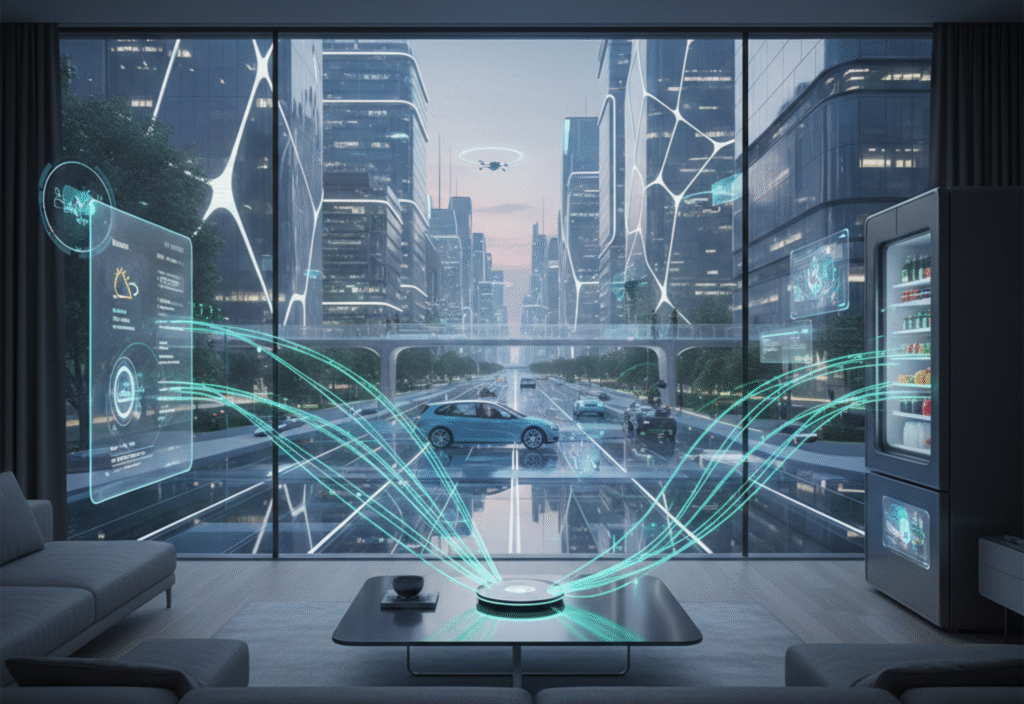
Artificial Intelligence (AI) has gradually become part of our daily life, from voice assistants to smart devices. A new frontier, Ambient AI, is now reshaping our environments. Unlike traditional AI that requires manual interaction, Ambient AI works seamlessly in the background, making homes and cities intelligent, adaptive, and responsive. From smart homes to urban landscapes, this invisible intelligence is changing how we live, work, and interact with our surroundings, improving safety, efficiency, and sustainability.
What is Ambient AI?
Ambient AI refers to AI systems embedded in the environment, rather than functioning as standalone apps. Using sensors, edge computing, and machine learning, these systems monitor and respond to behavior and surroundings without active user input.
Core characteristics include:
Context awareness: Adjusts lighting, temperature, or other environmental conditions automatically.
Predictive intelligence: Anticipates user needs based on behavior patterns.
Seamless integration: Embedded into appliances, furniture, and infrastructure.
Adaptive learning: Improves over time by learning from feedback.
Autonomous functionality: Acts proactively with minimal manual intervention.
Ambient AI in Smart Homes
Smart homes leverage Ambient AI to create responsive, intuitive living spaces.
Energy Management:
Smart thermostats optimize heating and cooling.
Lighting automatically dims or turns off in empty rooms.
Appliances operate during off-peak hours to save electricity.
Security Enhancements:
AI cameras detect unusual activity and differentiate residents from strangers.
Smart locks adapt to authorized users.
Sensors monitor hazards like smoke, fire, or gas leaks and alert homeowners instantly.
Health and Wellness Monitoring:
Wearables track sleep, heart rate, and other vital signs.
Alerts remind users about medication, hydration, or exercise.
Falls or emergencies are detected and reported to caregivers immediately.
Personalized Living Experiences:
Temperature, lighting, and music adjust automatically.
Smart mirrors display schedules, news, and weather updates.
Voice and gesture commands are recognized naturally.
Ambient AI in Smart Cities
Urban environments benefit greatly from Ambient AI, creating cities that are efficient, safe, and sustainable.
Traffic and Transportation Optimization:
Real-time monitoring adjusts traffic signals dynamically.
Public transit adapts to demand patterns.
Smart parking guides drivers to available spots, reducing congestion.
Public Safety and Emergency Response:
Detects accidents, fires, and unusual activity.
Monitors environmental hazards such as floods and pollution.
Optimizes allocation of emergency services.
Environmental Sustainability:
Sensors monitor air and water quality.
Street lighting adjusts based on pedestrian activity to save energy.
Waste collection is scheduled efficiently using AI.
Infrastructure Management:
Predictive maintenance reduces unexpected failures in roads, bridges, and buildings.
Smart energy grids balance demand and integrate renewable sources efficiently.
Benefits of Ambient AI
Convenience: Automation reduces manual effort.
Efficiency: Optimizes resources and services.
Safety: Proactive monitoring lowers risks.
Sustainability: Minimizes environmental impact.
Personalization: Systems adapt to user habits and preferences.
Economic Advantage: Reduces operational costs.
Challenges and Ethical Considerations
Privacy: Continuous monitoring requires strong encryption, anonymization, and user control over data.
Bias and Fairness: AI systems can inherit biases; regular auditing and diverse datasets are necessary.
Interoperability: Multiple devices and platforms need standard protocols for seamless integration.
Implementation Costs: Scaling Ambient AI requires investment in sensors, infrastructure, and maintenance, but long-term benefits often outweigh costs.
The Future of Ambient AI
Ambient AI promises fully autonomous homes, city-wide intelligent systems, continuous health monitoring, and environmentally optimized urban infrastructure. The vision is invisible intelligence that enhances human life seamlessly.
Conclusion
Ambient AI is not just a technological trend; it is a revolution in how we live and interact with our environments. By creating responsive homes and intelligent cities, it improves convenience, safety, efficiency, and sustainability. When combined with strong ethical frameworks and privacy protections, this invisible intelligence will quietly become an essential part of modern life.