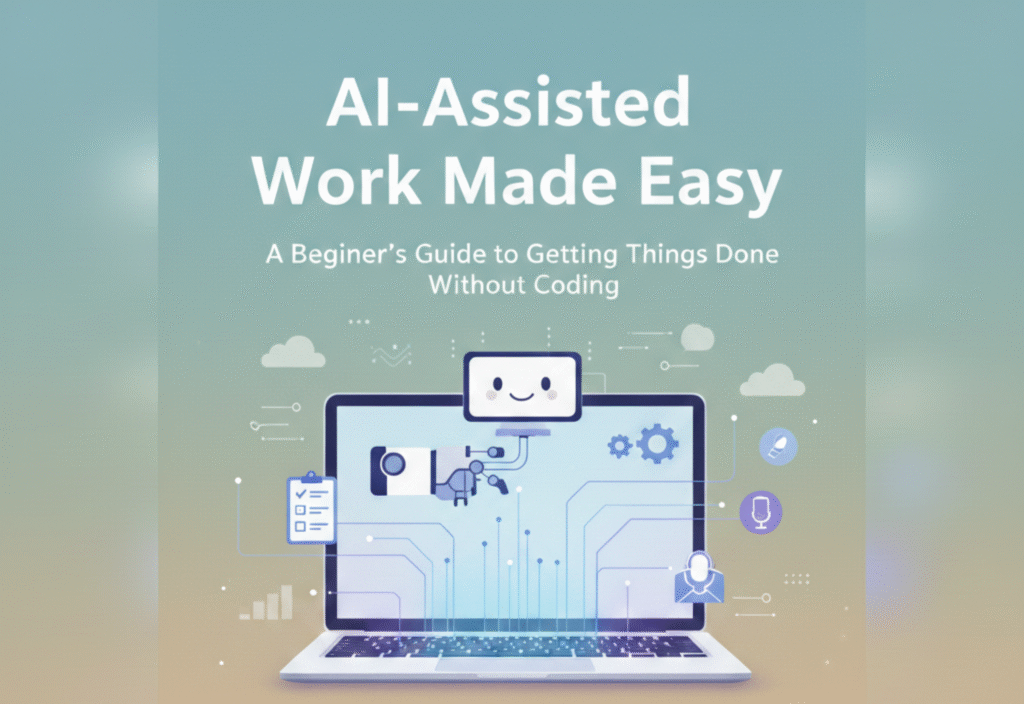
AI-assisted work without coding is transforming productivity in today’s digital era. Even beginners can now manage writing, task automation, research, and business workflows without any programming skills. With the help of simple AI tools, work becomes faster, more efficient, and better organized, saving time and improving output quality. Even if you’re not a tech expert, AI-assisted work without coding can make your daily tasks much easier.
Understanding AI-Assisted Work
AI-assisted work refers to using software powered by artificial intelligence to help complete tasks such as writing, research, planning, customer communication, and creative design. These tools often work through simple chat interfaces or easy dashboards, making them accessible to non-technical users.
Modern platforms like OpenAI, whose chatbot ChatGPT assists with writing and research, show how AI has moved beyond coding environments into everyday productivity tools. Similarly, design platforms such as Canva and automation services like Zapier allow users to complete professional work with minimal technical knowledge.
Why AI Makes Work Easier for Beginners
Time Efficiency
AI can generate drafts, summaries, or ideas within seconds. Tasks that once required hours of effort can now be completed quickly while maintaining quality.
Improved Productivity
Automation reduces repetitive tasks like data entry, email responses, or scheduling, allowing people to focus on creative or strategic work.
Accessibility
Most AI tools are designed with user-friendly interfaces. You don’t need programming experience — clear instructions are usually enough.
Consistency and Accuracy
AI tools help maintain consistent tone, formatting, and organization, reducing common mistakes.
Common Tasks You Can Do Without Coding
Writing and Content Creation
AI can assist with articles, emails, reports, captions, and brainstorming ideas. It helps generate structure while you refine the final content.
Task Management and Organization
Productivity platforms such as Notion provide AI features for note-taking, summarizing meetings, and planning projects efficiently.
Graphic Design and Visual Content
AI design tools can generate social media posts, presentations, thumbnails, and simple branding elements without professional design skills.
Business Automation
Tools like Microsoft Copilot integrate AI into office software, assisting with documents, spreadsheets, and communication workflows.
How Beginners Should Start Using AI
Start Small
Choose one task — writing, scheduling, or design — and experiment with an AI tool specifically for that purpose.
Give Clear Instructions
AI performs best when instructions are simple and specific. Instead of vague prompts, describe what you need clearly.
Review and Customize
AI output should always be reviewed. Human judgment ensures accuracy, originality, and relevance.
Learn Through Practice
Regular use improves your ability to guide AI effectively.
Ethical and Responsible Use
AI should always be used responsibly. Important principles include:
Avoid copying content blindly; personalize your work
Respect privacy and sensitive data
Use AI for lawful and beneficial purposes
Maintain honesty and transparency
Responsible use builds trust and long-term credibility.
Benefits for Students, Freelancers, and Businesses
Students
AI helps with research summaries, study notes, and writing improvement, saving time during academic work.
Freelancers
Content creation, marketing tasks, client communication, and workflow automation become faster and more manageable.
Businesses
AI enhances customer support, marketing analysis, internal documentation, and productivity across teams.
Challenges to Keep in Mind
Despite its advantages, AI is not perfect. Users should remain aware of:
Occasional inaccuracies
Over-dependence on automation
Data security concerns
Need for human creativity and critical thinking
Balancing AI assistance with human expertise ensures the best results.
The Future of AI-Assisted Work
AI will likely become even more integrated into everyday tools. Future developments may include:
More personalized AI assistants
Voice-based workflows
Smarter automation systems
Better collaboration between humans and machines
Those who understand AI early will have a strong advantage in productivity and career opportunities.
Conclusion
AI-assisted work is transforming how tasks are completed across education, freelancing, and business. The biggest benefit is accessibility — you no longer need coding skills to use powerful technology. By starting with simple tools, practicing clear communication with AI systems, and using them responsibly, anyone can enhance productivity and creativity.
Rather than replacing human effort, AI works best as a supportive partner — helping you work smarter, save time, and focus on what truly matters.