
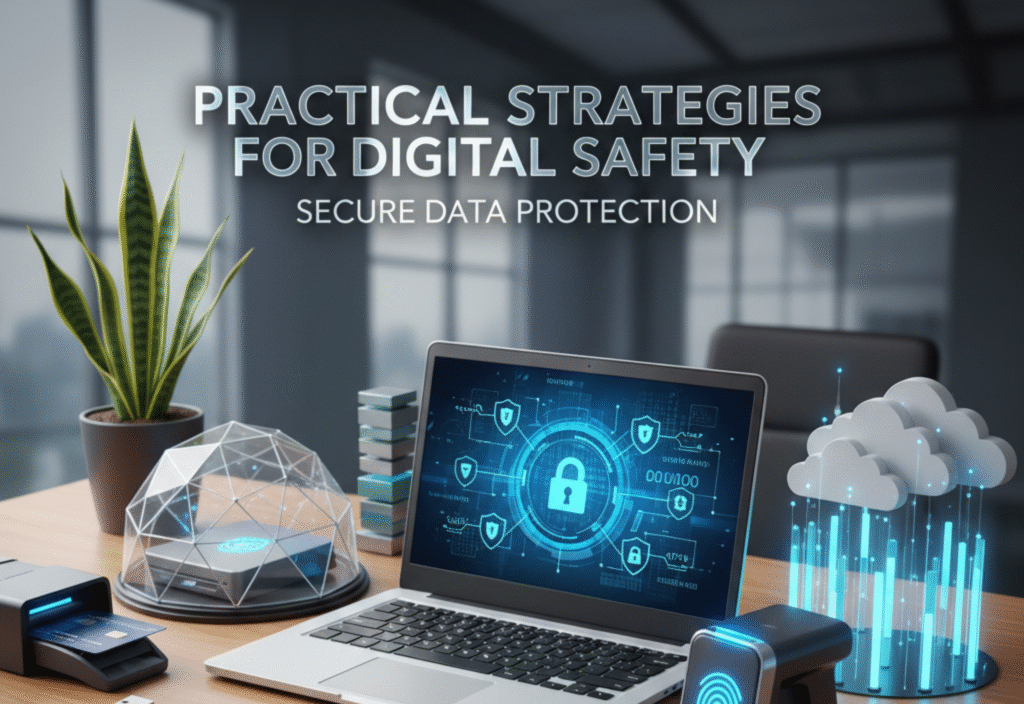
Digital data safety has become extremely important in today’s technology-driven world. People store personal, financial, and professional information online, which makes secure data protection essential. Understanding practical safety strategies helps individuals and organizations protect their digital assets, maintain privacy, and reduce cybersecurity risks.
Digital safety is not just about installing antivirus software — it requires awareness, good habits, and responsible technology use. By adopting practical strategies, people can protect their personal information, maintain privacy, and reduce exposure to online risks. This article explains effective, ethical, and realistic approaches to digital safety and secure data protection.
Understanding Digital Risks
Before applying security strategies, it is important to understand the types of risks present online. Some common digital threats include:
Phishing attacks where fake emails or messages attempt to steal sensitive data
Malware and ransomware designed to damage systems or hold data hostage
Weak passwords that allow unauthorized access
Public Wi-Fi vulnerabilities exposing data to interception
Social engineering tactics manipulating people into sharing private information
Awareness is the first step toward prevention. Knowing how threats work helps users stay cautious and make informed decisions.
Strong Password Practices
Passwords remain the primary defense for most online accounts. Weak or repeated passwords increase vulnerability.
Recommended practices include:
Use long, unique passwords for each account
Combine letters, numbers, and symbols
Avoid personal information like birthdays or names
Enable two-factor authentication (2FA) whenever possible
Consider using a trusted password manager
Regular password updates also help maintain account security.
Safe Internet Browsing Habits
Careful browsing behavior significantly reduces online risks.
Some safe practices include:
Only visit trusted websites with secure connections (HTTPS)
Avoid clicking suspicious links or unknown attachments
Verify website authenticity before entering sensitive information
Keep browsers updated for the latest security protections
Developing cautious browsing habits protects both personal and professional data.
Protecting Personal Devices
Digital safety starts with the devices we use daily.
Key protection steps:
Install reliable security software
Keep operating systems and apps updated
Use device lock features such as PIN, password, or biometric security
Backup important data regularly
Avoid installing software from unverified sources
Updates often include security patches that fix vulnerabilities, so ignoring them increases risk.
Responsible Social Media Use
Social media platforms encourage sharing, but oversharing can expose private details.
Smart social media safety tips:
Limit personal information shared publicly
Review privacy settings regularly
Be cautious about accepting unknown friend requests
Avoid posting sensitive location or financial information
Maintaining digital boundaries protects identity and reputation.
Data Backup and Encryption
Even with strong security, unexpected incidents can occur. Data backup ensures important information is not lost.
Effective backup strategies include:
Cloud backups for convenience and accessibility
External hard drive backups for offline security
Regular scheduled backup routines
Encryption adds another layer of protection by converting data into unreadable form without proper authorization.
Cybersecurity Awareness and Education
Technology evolves quickly, so continuous learning is essential. Individuals and organizations should stay informed about:
New cyber threats
Updated privacy regulations
Secure communication practices
Ethical technology use
Education helps prevent mistakes that often lead to security breaches.
Ethical and Responsible Technology Use
Digital safety is not only technical — it also involves ethics. Respecting privacy, avoiding harmful online behavior, and using technology responsibly contribute to a safer digital environment for everyone.
Promoting honesty, transparency, and respect online strengthens trust and reduces misuse of digital systems.
Conclusion
Digital safety and data protection require consistent effort, awareness, and responsible habits. Strong passwords, cautious browsing, device protection, regular backups, and cybersecurity education form the foundation of secure digital living.