In the modern technological era, industries are evolving rapidly thanks to the integration of sensors and artificial intelligence (AI). Sensors collect real-time data from the physical world, while AI interprets this data, enabling systems to make intelligent decisions. Together, they create connected systems that are efficient, adaptive, and smarter than ever before.
From manufacturing and healthcare to smart cities and autonomous vehicles, intelligent and connected systems are transforming how we live and work. This article explores how sensors and AI work together, their benefits, applications, and future trends.
Understanding Sensors in Modern Technology
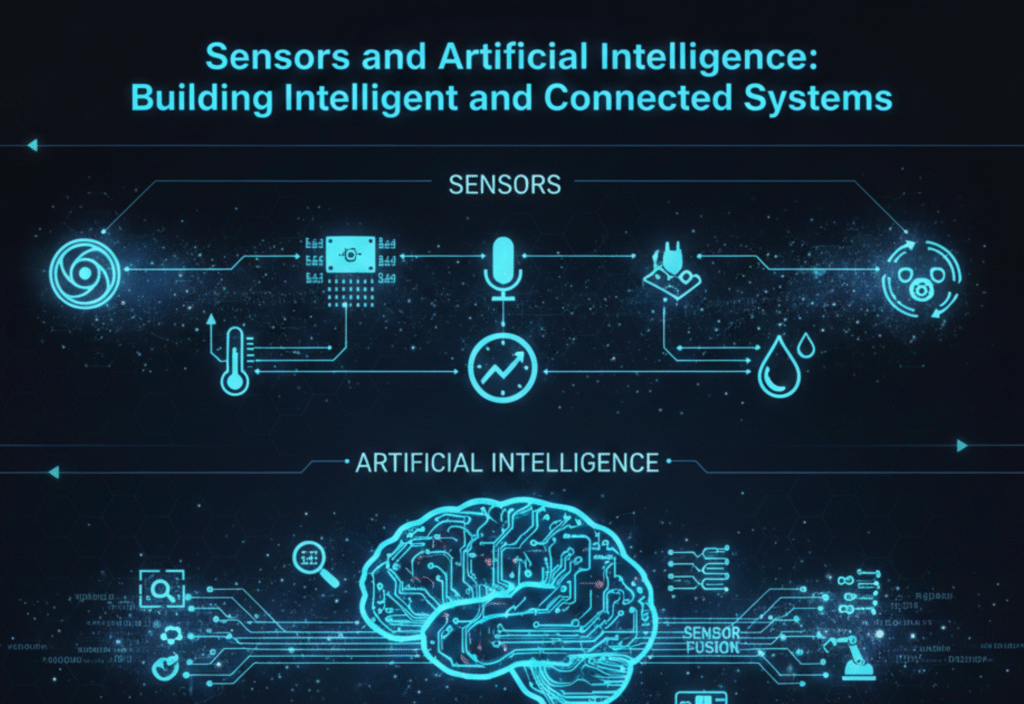
Sensors are devices that detect and measure changes in the environment. They convert physical inputs such as light, temperature, motion, or pressure into digital signals that machines can understand.
Common types of sensors include:
Temperature sensors – monitor heat for climate control and industrial processes
Proximity sensors – detect the presence or absence of objects
Motion sensors – track movement in robotics and security systems
Pressure sensors – used in manufacturing, aviation, and healthcare
Optical and image sensors – capture visual data for analysis
Sensors form the backbone of connected systems, providing accurate and timely data for AI-driven decision-making.
The Role of Artificial Intelligence
Artificial Intelligence allows systems to analyze data, predict outcomes, and make informed decisions without human intervention. When combined with sensor data, AI can:
Detect patterns and anomalies
Predict maintenance needs
Optimize processes for efficiency
Enable automation in real time
For example, in a factory, AI can analyze sensor data from machines to predict a malfunction before it happens, reducing downtime and saving costs.
Building Intelligent and Connected Systems
An intelligent and connected system combines sensors, AI algorithms, and communication networks to perform tasks autonomously and efficiently. Key components include:
Data Collection – Sensors capture data from the environment.
Data Processing – AI analyzes the data, identifies trends, and makes decisions.
Communication – Systems share information with other devices or cloud platforms.
Action – Machines or devices act based on AI-driven decisions.
This integration allows systems to learn from experience, adapt to changing conditions, and operate more effectively over time.
Key Benefits of Sensor-AI Systems
1. Efficiency and Productivity
AI-driven systems can optimize workflows, reduce energy consumption, and improve operational efficiency.
2. Predictive Maintenance
Sensors detect early signs of wear or malfunction, and AI predicts failures before they occur.
3. Safety and Risk Reduction
AI-enabled systems can monitor environments for hazards, alert humans, or take autonomous preventive actions.
4. Data-Driven Decision Making
Businesses and industries can make smarter decisions based on real-time insights from sensor data.
5. Scalability and Flexibility
Connected systems can easily scale, integrating new devices, sensors, or AI modules to meet growing needs.
Real-World Applications
Manufacturing
Sensors track machinery, AI predicts downtime, and robotic systems automate production, improving productivity.
Healthcare
Wearable sensors monitor patient health, and AI interprets the data to provide early warnings or treatment suggestions.
Smart Cities
AI and sensors optimize traffic flow, manage energy consumption, and improve public safety.
Agriculture
Soil sensors, weather sensors, and AI algorithms help optimize crop yields, irrigation, and pest management.
Autonomous Vehicles
Sensors detect the environment, while AI enables vehicles to navigate safely and efficiently.
Challenges and Considerations
While sensor-AI systems bring many benefits, they require careful planning:
Data Privacy – Sensitive information must be protected.
System Security – Connected devices can be targets for cyberattacks.
Cost – Advanced sensors and AI infrastructure may require significant investment.
Integration – Ensuring compatibility between sensors, AI, and communication networks is crucial.
Addressing these challenges ensures reliable, safe, and ethical intelligent systems.
The Future of Intelligent and Connected Systems
The future is moving toward more autonomous, adaptive, and collaborative systems. With AI advancements, sensor networks will:
Provide better predictive insights
Enable smarter decision-making
Support human workers rather than replace them
Create more sustainable and efficient environments
The combination of sensors and AI will continue to shape industries, cities, and daily life in innovative and ethical ways.
Conclusion
Sensors and artificial intelligence are the building blocks of intelligent and connected systems. Together, they enable real-time insights, smarter decision-making, and efficient automation. By integrating these technologies responsibly, industries can improve productivity, safety, and sustainability while maintaining ethical standards.