Digital freelancing has changed the way people work, earn, and collaborate across the world. With the growth of remote work and online marketplaces, freelancers and clients can now connect beyond borders. However, traditional freelancing platforms often struggle with problems such as irrelevant job matches, time-consuming searches, and unfair competition.
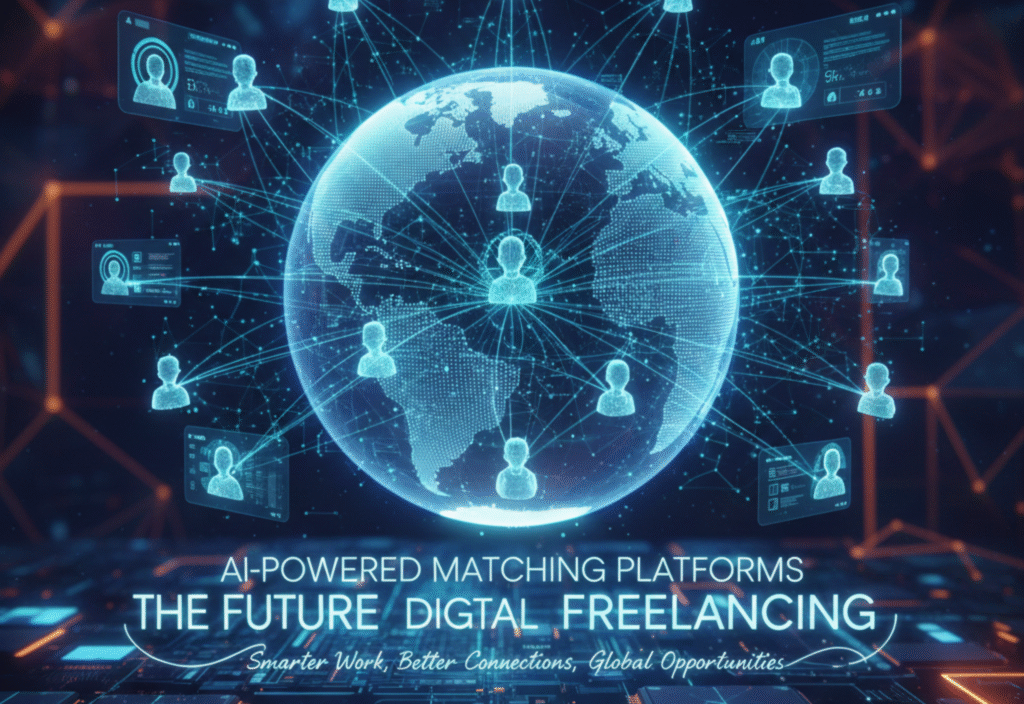
This is where AI-powered matching platforms are shaping the future of digital freelancing. By using artificial intelligence and data-driven systems, these platforms enable smarter, faster, and more meaningful connections between freelancers and clients.
Understanding Digital Freelancing
Digital freelancing refers to offering professional services online without long-term employment contracts. Common freelancing fields include:
Writing and content creation
Graphic and web design
Software development
Digital marketing
Data analysis and virtual assistance
Freelancers enjoy flexibility and independence, while businesses benefit from access to global talent. Yet, efficiency and trust remain major challenges.
What Are AI-Powered Matching Platforms?
AI-powered matching platforms use artificial intelligence algorithms to connect freelancers with suitable projects. Instead of relying only on manual searches or basic filters, AI analyzes multiple factors such as:
Skills and experience
Past project performance
Client requirements
Work history and availability
Communication preferences
This intelligent approach ensures that the right freelancer meets the right project at the right time.
How AI Improves Freelance Matching
Skill-Based Precision
AI systems deeply analyze freelancer profiles to understand real capabilities rather than just keywords. This reduces mismatches and increases project success.
Time Efficiency
Both clients and freelancers save time as AI suggests relevant opportunities instantly, removing the need for endless browsing.
Fair Opportunities
AI can help reduce bias by focusing on skills, performance, and reliability rather than location or popularity alone.
Learning and Improvement
With continuous data input, AI systems learn from successful projects and improve future recommendations.
Benefits for Freelancers
AI-powered platforms empower freelancers in multiple ways:
Access to projects that match their expertise
Reduced competition for irrelevant jobs
Improved income stability through better matches
Enhanced professional growth through skill-aligned work
Freelancers can focus more on quality work instead of constant job hunting.
Benefits for Clients and Businesses
For clients, intelligent matching delivers:
Faster hiring decisions
Higher quality outcomes
Reduced project risks
Better long-term freelancer relationships
Businesses can scale efficiently without compromising quality or ethical standards.
Ethical and Responsible AI in Freelancing
The future of digital freelancing must be ethical and transparent. Responsible AI practices include:
Clear and explainable algorithms
Data privacy and security
Human oversight in critical decisions
Fair treatment of freelancers
When implemented responsibly, AI supports trust, fairness, and sustainable digital work environments.
Real-World Use Cases
Freelance Marketplaces
Platforms use AI to recommend projects and freelancers based on real performance data.
Talent Clouds
Companies build AI-driven talent pools for long-term freelance collaboration.
Skill Development Systems
AI identifies skill gaps and suggests learning paths for freelancers to grow professionally.
Challenges and Limitations
Despite its advantages, AI-powered freelancing platforms face challenges such as:
Over-dependence on algorithms
Data bias if training data is limited
Need for transparent evaluation systems
Addressing these challenges is essential for a balanced and inclusive freelancing ecosystem.
The Future of Smarter Work
The future of digital freelancing lies in collaboration between humans and intelligent systems. AI will not replace freelancers; instead, it will support them by simplifying processes, improving visibility, and enabling smarter work decisions.
As AI technology advances, freelancing platforms will become more personalized, adaptive, and fair—creating sustainable opportunities for individuals and businesses alike.
Conclusion
AI-powered matching platforms are redefining the future of digital freelancing. By connecting talent with opportunity more intelligently, they promote efficiency, fairness, and professional growth. When guided by ethical principles, these platforms enable a smarter, more inclusive digital work environment that benefits freelancers, clients, and the global economy.