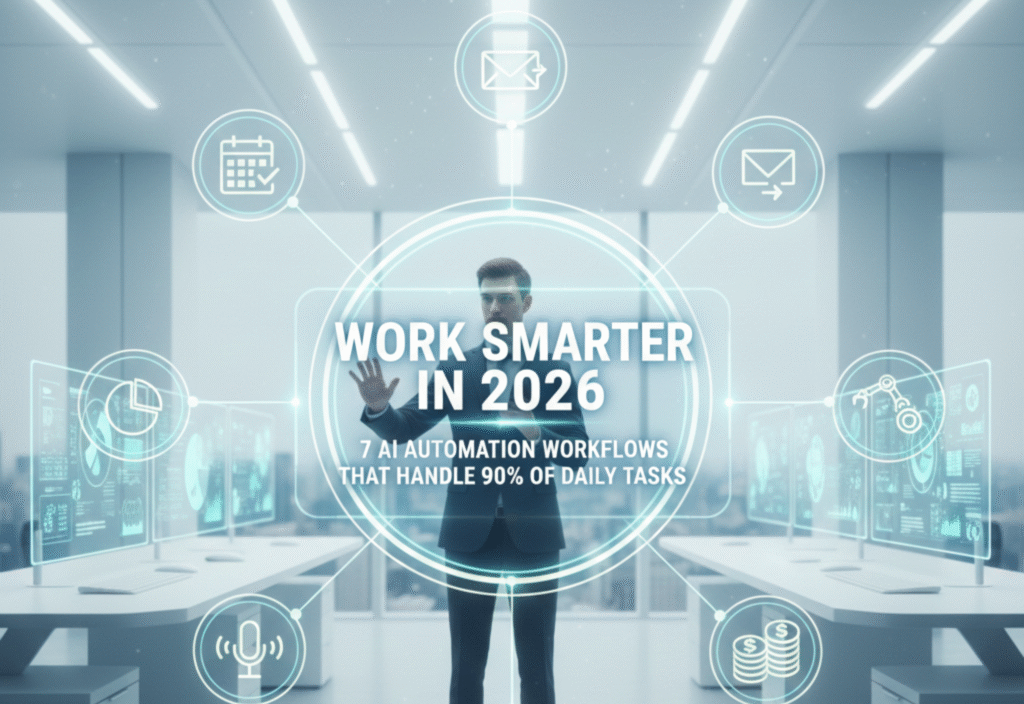
In 2026, professionals are finding smarter ways to get more done with less effort. AI automation workflows are revolutionizing the way we work by handling repetitive tasks, managing emails, scheduling meetings, and even generating reports. By using these AI-powered workflows, you can automate up to 90% of your daily tasks, freeing time for more strategic and creative work.
1. AI-Powered Email Management
Emails are the bane of modern professionals. According to research, the average office worker spends nearly 2.5 hours per day managing emails. AI tools can now categorize, prioritize, and even draft responses, effectively acting as a personal email assistant.
Automated Sorting: AI scans incoming emails and separates them into categories such as urgent, newsletters, or informational.
Smart Replies: Based on your writing style, AI can draft personalized responses. You can review, edit, or send them automatically.
Follow-Up Reminders: AI monitors threads and reminds you to follow up on important emails.
Popular Tools: Gmail Smart Compose, Superhuman, and Front AI.
2. Calendar and Meeting Optimization
Scheduling meetings often feels like solving a puzzle. AI-powered calendar assistants can now handle this with precision, saving hours every week.
Automatic Scheduling: AI finds the best time slots for all participants, avoiding conflicts.
Agenda Preparation: AI generates concise agendas from previous communications.
Meeting Summaries: After the meeting, AI creates a summary with actionable points and deadlines.
Popular Tools: x.ai, Clockwise, and Microsoft Copilot for Outlook.
3. Task and Project Automation
Project management can be overwhelming, especially when juggling multiple deadlines. AI can help by tracking tasks, predicting delays, and automating routine updates.
Task Prioritization: AI ranks tasks based on urgency and potential impact.
Deadline Predictions: AI predicts which projects may face delays and notifies teams in advance.
Automated Reporting: Weekly progress reports can be generated automatically and shared with stakeholders.
Popular Tools: Asana AI, Monday.com AI, ClickUp AI.
4. Document Drafting and Summarization
Creating documents, reports, and presentations often consumes hours of your day. AI can accelerate content creation and summarization without compromising quality.
Content Drafting: AI generates initial drafts for reports, proposals, or emails based on a few prompts.
Summarization: Lengthy documents can be condensed into key takeaways in seconds.
Consistency Checks: AI ensures uniform tone, style, and grammar across documents.
Popular Tools: Jasper AI, Grammarly, Notion AI, ChatGPT for enterprise use.
5. Data Analysis and Visualization
Data-driven decisions are crucial, but analyzing raw data can be tedious. AI can automate complex data processing and produce actionable insights.
Data Cleaning: AI identifies and corrects inconsistencies in datasets.
Trend Analysis: AI detects patterns and trends faster than traditional methods.
Visualizations: Charts, dashboards, and reports are generated automatically, ready for presentations.
Popular Tools: Tableau AI, Power BI with Copilot, DataRobot.
6. Customer Support Automation
Customer support is often repetitive, involving answering similar questions daily. AI-powered workflows can handle most queries autonomously, improving response times and customer satisfaction.
Chatbots: AI interacts with customers 24/7, providing instant answers.
Ticket Categorization: AI assigns tickets to the right department or agent.
Feedback Analysis: AI interprets customer feedback and suggests improvements.
Popular Tools: Zendesk AI, Intercom AI, Drift.
7. Social Media Management
Maintaining an active social media presence requires constant monitoring and content creation. AI tools can manage posting, engagement, and analytics, taking over most of the workload.
Content Scheduling: AI posts content at optimal times for maximum engagement.
Trend Analysis: AI identifies trending topics and suggests relevant posts.
Engagement Automation: AI replies to comments and messages in a human-like manner.
Popular Tools: Buffer AI, Hootsuite AI, Later AI.
Why AI Automation Matters in 2026
By integrating these AI workflows, professionals can reclaim hours lost to repetitive tasks, reduce human error, and make decisions backed by real-time insights. The goal isn’t to replace humans but to enhance human efficiency. Businesses that adopt AI-driven automation gain a competitive edge, improved employee satisfaction, and greater overall productivity.
Final Thoughts
The future of work is smart, not harder. By 2026, AI is no longer a luxury—it’s a necessity for anyone who wants to stay productive and competitive. Whether it’s managing emails, automating project workflows, or handling customer interactions, AI can now take care of the mundane so you can focus on what truly matters.