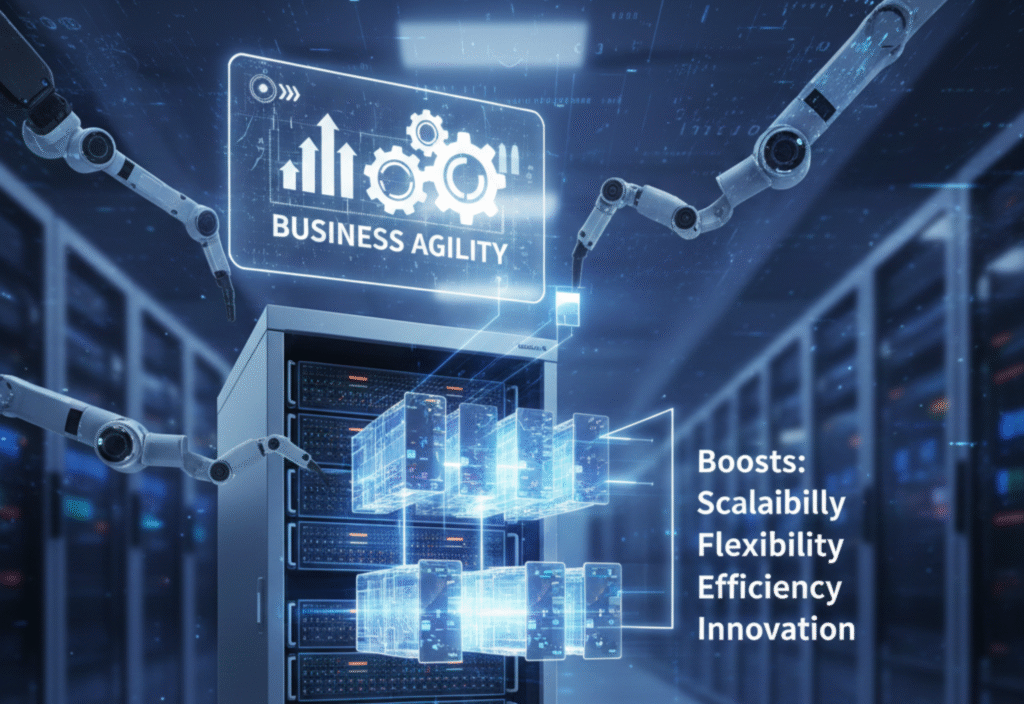
In today’s rapidly evolving digital landscape, businesses must respond quickly to changing market demands, customer expectations, and technological advancements. Agility is no longer optional—it is a necessity for survival and growth. One of the key enablers of this agility is a modern IT foundation. Modular server architecture provides organizations with the flexibility, scalability, and efficiency required to adapt faster and operate smarter.
What Is Modular Server Architecture?
Modular server architecture is an infrastructure approach where server systems are built using independent, interchangeable modules. These modules may include compute, storage, networking, cooling, and power components. Instead of relying on a single, fixed server setup, businesses can modify or upgrade individual modules without disrupting the entire system. This design makes IT environments more adaptable and future-ready.
Why Modular Server Design Improves Business Flexibility
Traditional server systems are often rigid and difficult to modify. In contrast, modular server design allows organizations to adjust their infrastructure based on changing business needs. Companies can reconfigure resources to support new applications, workflows, or departments. This flexibility enables faster decision-making and allows businesses to respond quickly to market changes.
Scalable Server Infrastructure for Growing Businesses
Growth often brings unpredictable demands on IT resources. A scalable server infrastructure allows businesses to expand capacity gradually instead of making large upfront investments. New modules can be added as workloads increase, ensuring consistent performance during peak demand. This scalability supports business agility by removing technical limitations on growth.
Reduced Downtime Through Modular IT Infrastructure
Downtime can disrupt operations and impact customer trust. Modular IT infrastructure minimizes this risk by allowing maintenance or upgrades on individual components without shutting down the entire system. Faulty modules can be replaced quickly, ensuring business continuity and smoother operations. Reduced downtime helps organizations remain agile and reliable.
Cost Efficiency and Smarter IT Investments
Modular server systems support a pay-as-you-grow model, which improves cost control. Businesses only invest in additional resources when required, avoiding unnecessary spending on unused capacity. This approach aligns IT budgets with real business needs and frees up resources for innovation, marketing, and strategic initiatives.
Supporting Hybrid and Cloud-Ready Environments
Many organizations operate in hybrid environments that combine on-premises infrastructure with cloud services. Flexible server infrastructure integrates seamlessly with cloud platforms and supports cloud-native applications. This compatibility allows businesses to adopt new technologies faster and shift workloads easily, enhancing overall agility.
Enhancing Security and System Reliability
Security is a critical concern in modern IT environments. Modular server systems allow for better isolation of workloads and quicker deployment of security updates. Individual modules can be secured and monitored independently, reducing the risk of widespread vulnerabilities. Improved reliability strengthens trust in IT operations and supports rapid innovation.
Enabling Innovation and Digital Transformation
Agile businesses need the freedom to experiment and innovate. Modular infrastructure allows IT teams to test new solutions, deploy emerging technologies, and support digital transformation initiatives without affecting core systems. Faster experimentation leads to shorter development cycles and quicker time-to-market.
Conclusion
Modular server architecture plays a vital role in boosting business agility by providing scalable, flexible, and cost-efficient IT infrastructure. Through reduced downtime, improved flexibility, and better support for innovation, businesses can respond faster to change and stay competitive. Organizations that adopt modular server architecture position themselves for long-term growth and success in an increasingly dynamic digital world.