Artificial intelligence has dominated global attention for years. It transformed industries, reshaped the economy, and sparked one of the most aggressive investment waves in modern history.
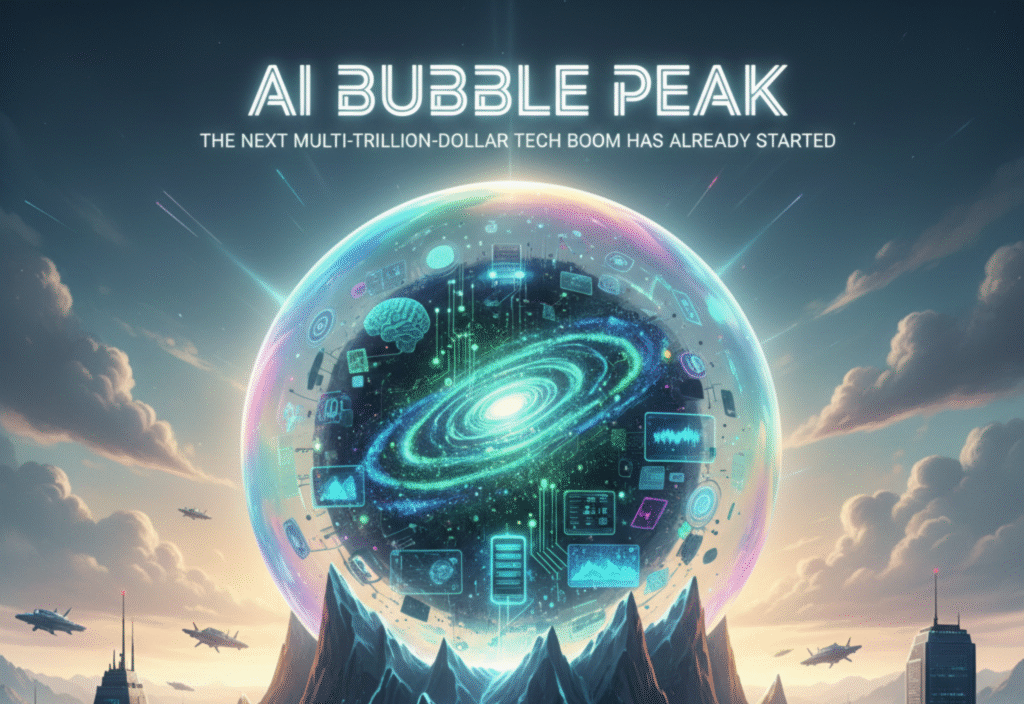
But as we move into 2025, something unusual is happening: the AI hype is starting to plateau, and signs of a bubble peak are becoming harder to ignore.
Yet this isn’t a collapse—it’s a transition.
While the world focuses on the “AI bubble,” something even more powerful is rising underneath it. A new multi-trillion-dollar technology boom has already begun—and the smartest investors, founders, creators, and companies are quietly positioning themselves for what’s coming next.
This shift will define the next decade.
The AI Bubble: How We Reached the Peak
AI has grown faster than any previous technology cycle. But the speed that pushed it forward is now the same force causing instability. Let’s break down the clear indicators that AI has hit its peak hype stage.
1. Extreme Valuations Without Real Revenue
Startups with no customers, no business model, and barely functional prototypes are being valued at billions of dollars simply because they use “AI.”
It mirrors:
-
the Dot-com bubble
-
the 2017 crypto ICO wave
-
the 2021 NFT frenzy
Markets always correct unrealistic valuations.
2. Slowing Innovation at the Top
Early AI breakthroughs were massive:
-
From GPT-3 to GPT-4
-
From early image models to hyper-realistic generation
-
From chatbot-style AI to agentic systems
But now:
-
Model upgrades feel incremental
-
Improvements are marginal
-
Costs are rising
-
Capabilities approach practical limits
We’re no longer doubling capabilities every few months.
3. Unsustainable Compute & Energy Costs
Training frontier AI models now requires:
-
Thousands of GPUs
-
Gigawatts of electricity
-
Massive cooling infrastructures
-
Billions of dollars of investment
This is pushing AI firms toward a cost wall.
When a technology becomes too expensive to scale, the hype cycle slows dramatically.
4. Market Saturation in Consumer AI
Consumers are starting to feel AI fatigue:
-
Too many chatbots
-
Repetitive features
-
High subscription prices
-
Minimal differentiation
People want AI that does, not just AI that talks.
This is where the next boom enters.
The Next Multi-Trillion-Dollar Tech Boom Has Already Begun
While hype around AI models cools down, several new industries—each fueled by AI—are rising at enormous speed.
These will form the core technology wave of 2025–2035.
Let’s break down the coming giants.
1. AI Infrastructure & Energy Technology (The Biggest Opportunity)
AI growth is hitting physical limits, and solving those limits is creating the largest tech opportunity since the birth of the internet.
This includes:
-
Hyper-scale data centers
-
Advanced chip manufacturing
-
Liquid cooling systems
-
Quantum-inspired compute
-
Energy-efficient server architectures
-
Nuclear microreactors for AI demand
-
Grid-level energy storage
As AI grows, energy becomes the new gold.
Why this is multi-trillion-dollar territory:
-
AI will consume 10x more electricity by 2030
-
Countries are rewriting energy laws for AI companies
-
Firms like Microsoft, OpenAI, and Nvidia are investing in private power plants
This sector will dwarf even the AI software market.
2. Agentic AI & Autonomous Digital Workers
We are moving from AI that “answers questions” to AI that takes actions on its own.
These agentic systems can:
-
Build websites
-
Run marketing campaigns
-
Manage operations
-
Handle customer support
-
Automate business processes
-
Operate tools and software
Soon, companies will hire AI employees alongside real ones.
Market size:
Projected to reach $1–2 trillion before 2032.
This is not hype—this is the next stage of AI utility.
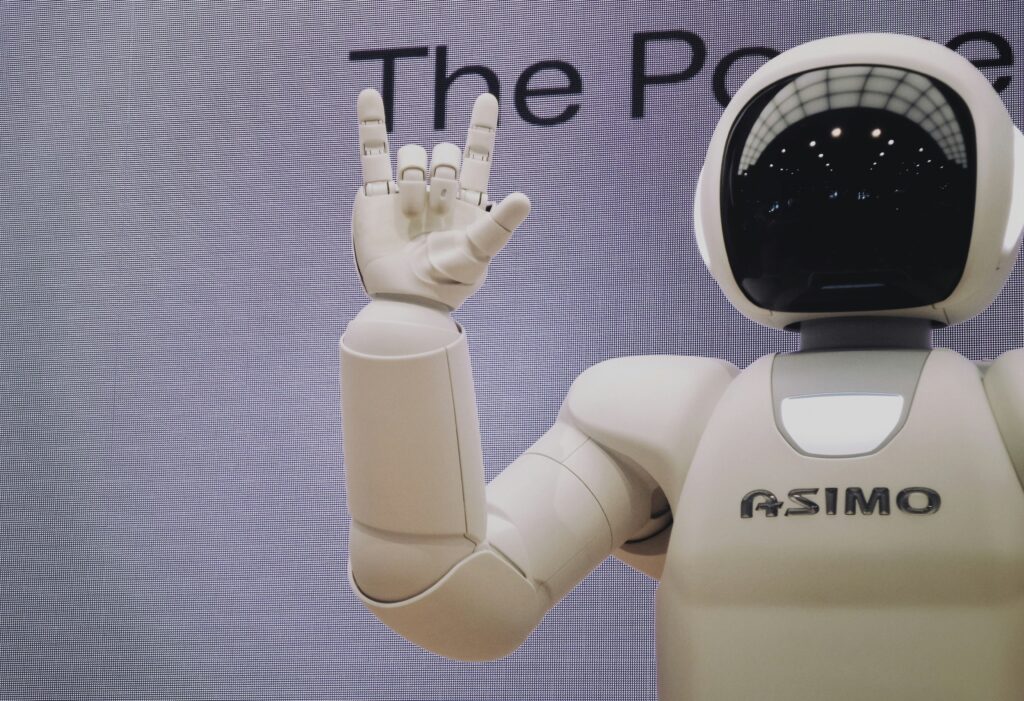
3. Robotics and Automation 2.0
The combination of robotics + AI = a revolution.
Humanoid robots are entering:
-
Factories
-
Warehouses
-
Construction
-
Elderly care
-
Restaurants
-
Retail stores
-
Homes
Robotics companies backed by major corporations are now creating robots that can:
-
Move autonomously
-
Recognize objects
-
Learn in real time
-
Perform complex tasks
-
Replace repetitive labor
This is expected to become a multi-trillion-dollar market globally.
4. The Fusion of AI + Biology (BioTech Renaissance)
AI is accelerating biological science faster than any human project in history.
Breakthroughs include:
-
AI-designed medicine
-
Genetic engineering
-
Personalized treatment systems
-
Lab automation
-
DNA-editing tools
-
Longevity research
Within the next decade:
-
Disease discovery will be AI-driven
-
Drug creation will be automated
-
Human lifespan technologies will mature
This sector may surpass the entire pharmaceutical industry combined.
5. Spatial Computing + AI (The Next Platform Shift)
With Apple Vision Pro and upcoming competitors, AI is merging with:
-
AR
-
VR
-
Holography
-
Real-world object recognition
-
3D interaction
This will bring:
-
AI-powered workplaces
-
Virtual assistants in real space
-
Mixed-reality commerce
-
AI-driven digital environments
A new digital economy is forming here.
Why This New Tech Cycle Matters More Than the AI Bubble
The AI bubble does not mean AI is fading—it means AI is evolving.
In every tech cycle:
-
Hype comes first
-
Real infrastructure follows
-
Then practical products change the world
We are entering phase two, the real transformation phase.
Those who understand this shift will gain:
-
Competitive business advantage
-
Higher-paying opportunities
-
Better investments
-
Early access to future markets
The next decade belongs to:
-
Builders
-
Innovators
-
Early adopters
-
Smart investors
Not spectators.
Conclusion: The Future Begins Where the Hype Ends
The peak of the AI bubble isn’t a danger—
it’s a signal that a much bigger wave is forming.
We’re moving into the era of:
-
AI infrastructure
-
Agentic automation
-
Robotics
-
Bio-AI fusion
-
Energy revolutions
-
Spatial computing
These will create multi-trillion-dollar industries, reshape global work, and redefine human progress.
AI is not ending.
AI is expanding—into something far larger than anyone expected.
The next decade will belong to those who understand this shift now.