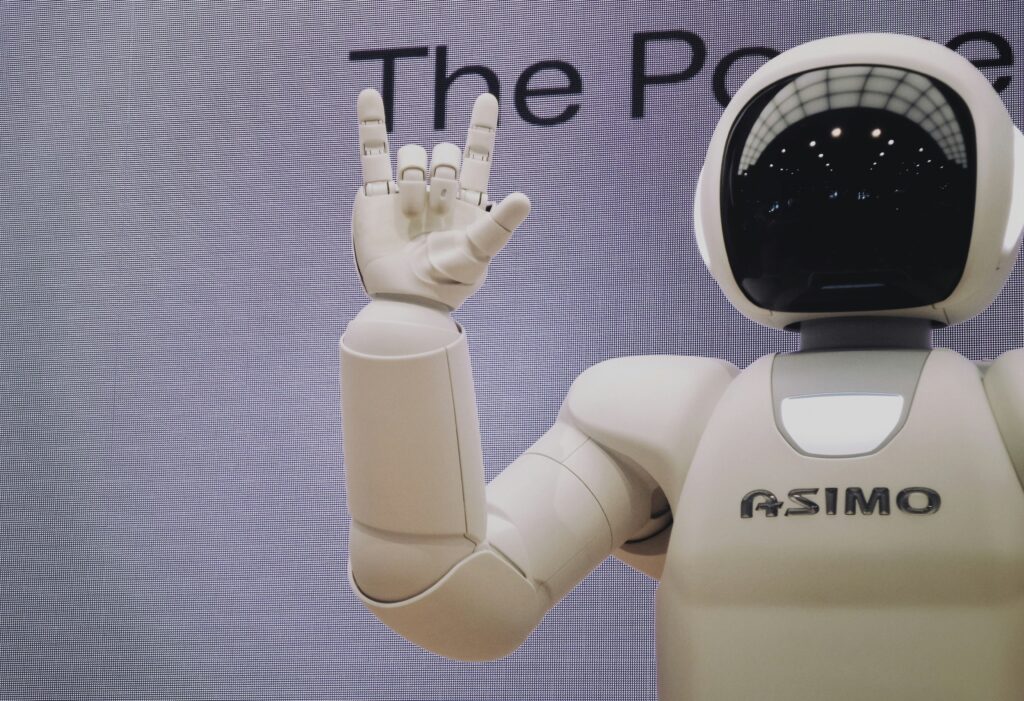
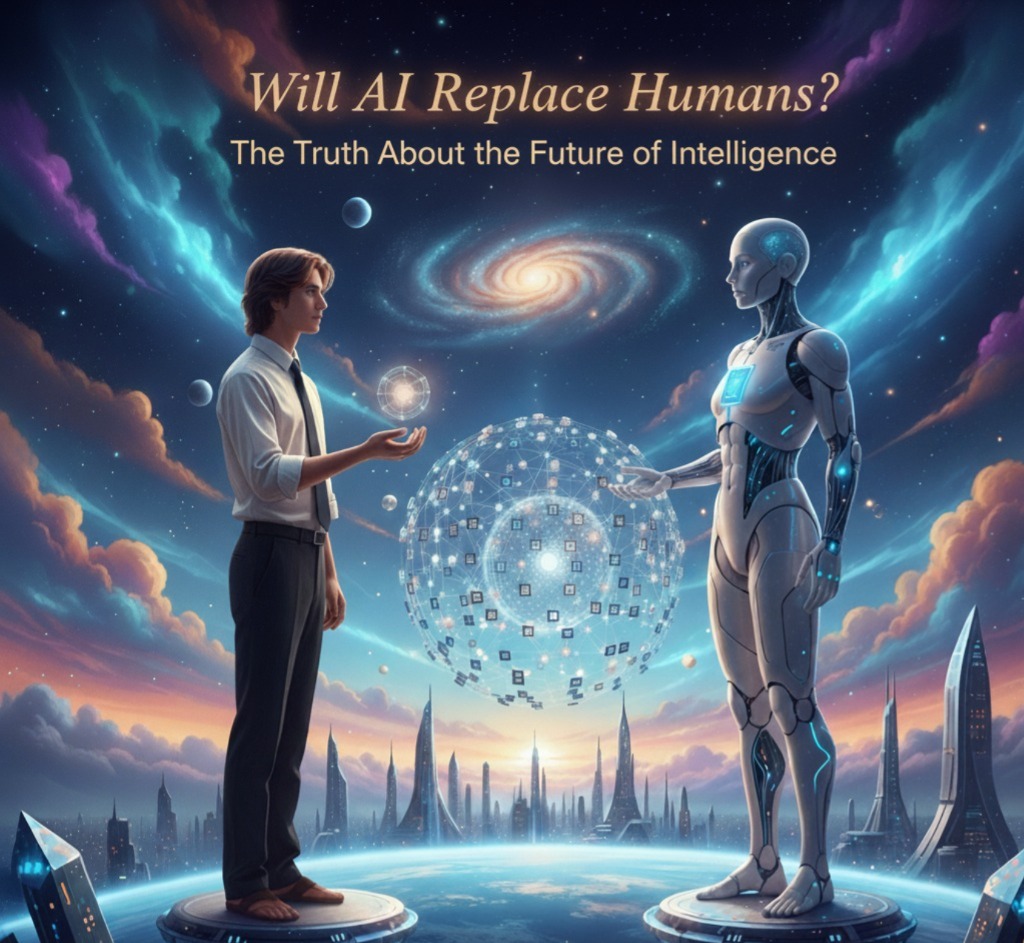
Artificial Intelligence (AI) has rapidly become a part of everyday life. From chatbots and virtual assistants to recommendation systems and automated content creation tools, AI is transforming how we live and work. Its ability to process data, learn patterns, and perform complex tasks has made it one of the most powerful technologies of our time.
With this rapid growth, a common question arises: Will AI replace humans?
The reality is more nuanced than a simple yes or no. AI is not here to replace humans entirely — instead, it is reshaping how humans work, creating a new era of collaboration between human intelligence and machine intelligence.
AI Is Powerful, But Still Limited
AI systems are designed to perform specific tasks with high efficiency. They can analyze large datasets, generate text, recognize images, and even assist in decision-making processes.
However, despite these capabilities, AI has fundamental limitations:
-
It does not have consciousness or self-awareness
-
It cannot experience emotions or empathy
-
It lacks true understanding or intuition
-
It operates based on data and patterns, not human experience
AI can simulate intelligence, but it does not possess the depth of human thought, creativity, or moral judgment.
This makes AI a highly advanced tool — but still just a tool, dependent on human guidance and input.
AI Will Transform Jobs, Not Eliminate Humans
One of the biggest concerns about AI is job displacement. It is true that AI is automating repetitive and rule-based tasks such as:
-
Data entry
-
Customer support (basic queries)
-
Scheduling and administrative work
-
Simple content generation
However, history shows that technological advancements usually transform the job market rather than destroy it.
For example, the rise of computers reduced the need for manual calculations but created entirely new fields such as software development and IT systems management.
Similarly, AI is creating new career opportunities, including:
-
AI engineers and machine learning specialists
-
Data scientists and analysts
-
AI ethics and policy experts
-
Automation and workflow designers
-
Digital creators and AI content strategists
Those who adapt and upgrade their skills will continue to thrive in this evolving environment.
Human–AI Collaboration: The Future of Work
Instead of replacing humans, AI is becoming a collaborative partner that enhances human capabilities.
Healthcare
AI assists doctors by analyzing medical images, predicting diseases, and suggesting treatment options. However, final decisions are always made by medical professionals, who consider patient history and ethical factors.
Education
AI can personalize learning experiences, recommend resources, and track student progress. Still, teachers play a vital role in providing emotional support, motivation, and real understanding.
Business and Industry
AI helps businesses optimize operations, predict trends, and automate processes. Yet strategic decisions, leadership, and innovation remain human-driven.
These examples clearly demonstrate that the most effective results come from combining human intelligence with AI efficiency.
Skills That AI Cannot Replace
Even with rapid advancements, there are core human abilities that remain irreplaceable:
Emotional Intelligence
Humans can understand emotions, build relationships, and show empathy — something AI cannot truly replicate.
Critical Thinking
Humans can evaluate situations, question assumptions, and make complex decisions in uncertain environments.
Creativity and Innovation
While AI can generate content based on patterns, true originality and imagination are uniquely human traits.
Ethical Judgment
Humans are responsible for making moral and ethical decisions, considering social impact and fairness.
Leadership and Communication
Inspiring teams, building trust, and guiding people are deeply human skills.
The Evolution of Work in the AI Era
The future workplace will not be about humans competing with AI — it will be about humans working with AI.
This shift requires:
-
Continuous learning and skill development
-
Adaptability to new tools and technologies
-
Understanding how to use AI responsibly
-
Combining human creativity with AI efficiency
Professionals who embrace AI as a tool rather than a threat will have a significant advantage.
The Real Answer: Will AI Replace Humans?
The answer is clear:
AI will not replace humans.
AI will replace certain tasks and outdated processes.
Humans who refuse to adapt may struggle, but those who evolve with technology will find more opportunities than ever before.
The future belongs to individuals who can combine:
-
Human creativity
-
Critical thinking
-
Emotional intelligence
-
AI-powered tools
Final Thoughts
Artificial Intelligence is not the end of human relevance — it is the beginning of a new phase of human progress.
Instead of fearing AI, we should focus on:
-
Learning how to use it effectively
-
Developing strong human skills
-
Promoting ethical and responsible AI development
When used wisely, AI becomes a powerful partner that helps humanity solve complex problems, improve productivity, and create a better future.
The key takeaway is simple:
AI enhances human potential — it does not replace it.