
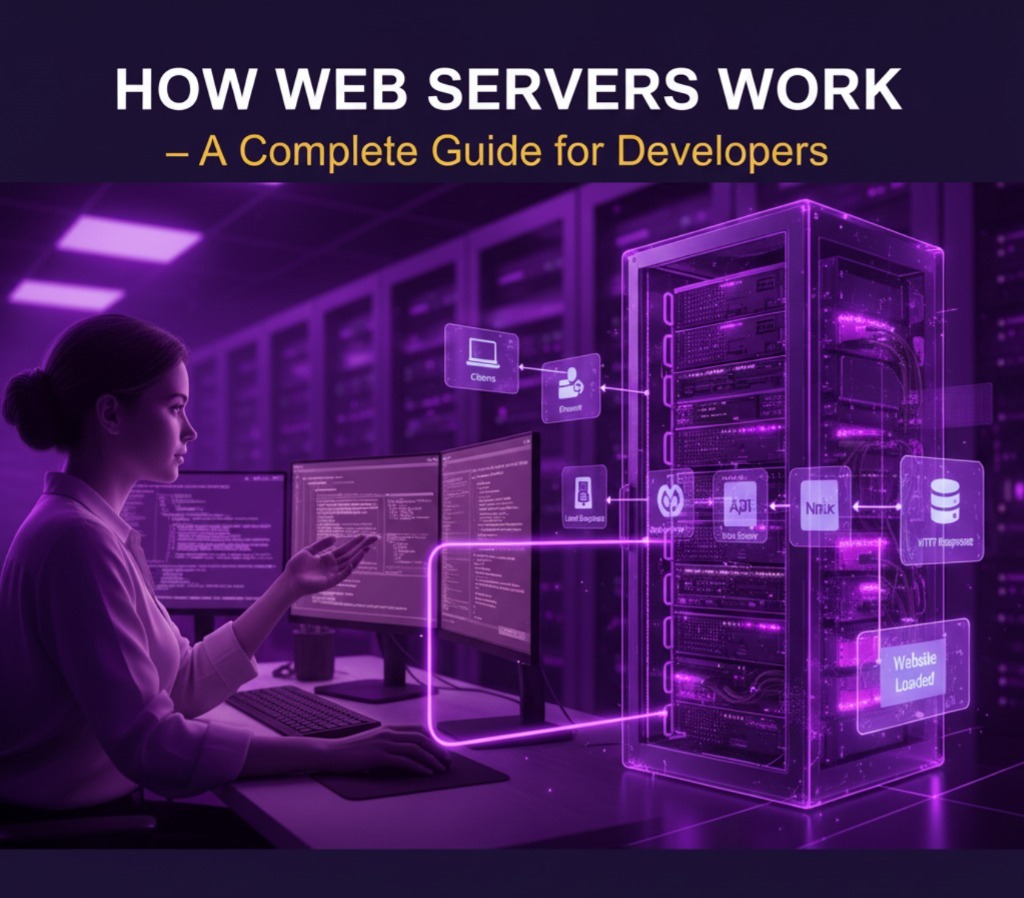
Every time you open a website, a web server is working behind the scenes to deliver that page to your screen. Whether it’s a blog, an e-commerce store, or a streaming platform — all depend on web servers. In this guide, we’ll break down what a web server is, how it works, and which types are most popular among developers in 2025.
What Is a Web Server?
When you type a website address (like infofusionhubs.com), your browser sends a request to the web server, which responds with the page content.
Example
:You → Browser → Request → Web Server → Response → Website Loads
How Does a Web Server Work?
- User Request: A visitor types a URL or clicks a link.
- DNS Resolution: The domain is translated into an IP address.
- Server Processing: The web server fetches the requested data.
- Response Sent: The server delivers the webpage to the user’s browser.
Types of Web Servers (Most Popular in 2025)
- Apache HTTP Server — Open-source, reliable, and easy to configure.
- Nginx — Known for high performance and low resource usage.
- LiteSpeed — Great for WordPress and dynamic sites.
- Microsoft IIS — Common for Windows-based hosting.
- Caddy — Modern and secure, with automatic HTTPS support.
Why Developers Need To Understand Web Servers
- To optimize website speed and performance.
- For better security and data protection.
- To debug errors like 404, 500, or timeout issues.
- To deploy web apps more effectively.
Tips for Managing Web Servers
- Regularly update your server software.
- Enable HTTPS and SSL certificates.
- Use caching to improve load times.
- Monitor server logs for suspicious activity
Conclusion
A strong understanding of web servers is essential for any web developer in 2025. Whether you build websites, web apps, or manage hosting environments, knowing how web servers work will help you create faster, more secure, and more reliable projects