
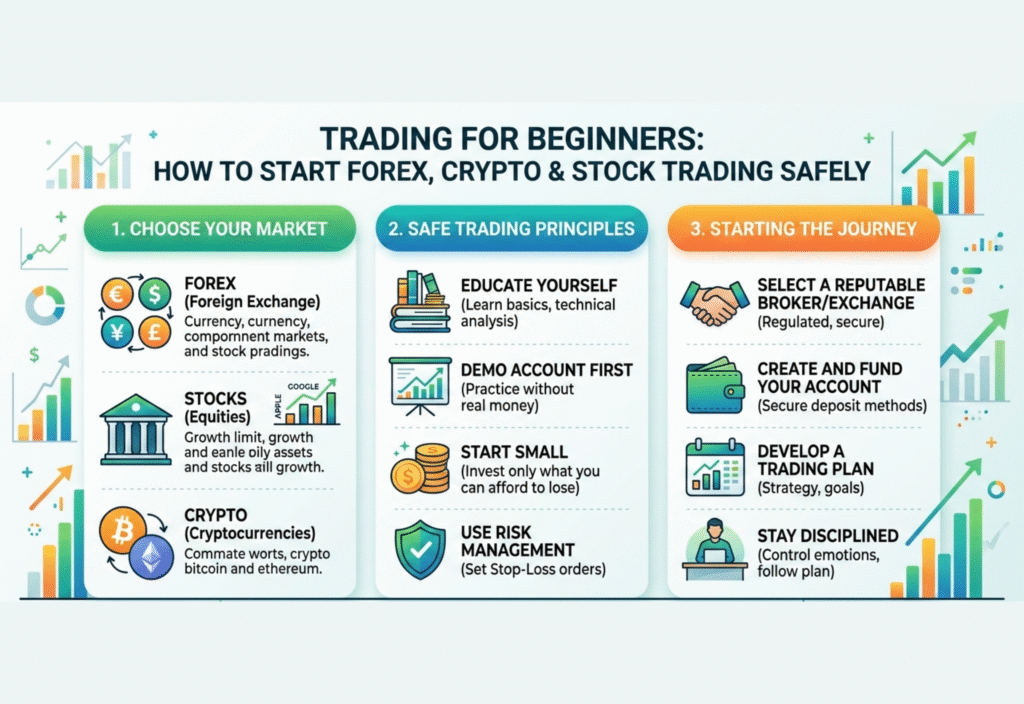
Trading has become an integral part of the modern financial world. With the growth of digital finance, stock markets, and cryptocurrencies, more people are exploring trading as a way to grow their wealth. Whether you are interested in Forex, Crypto, or Stock Market trading, starting safely and with proper knowledge is essential. For beginners, entering the trading world can seem overwhelming, but with the right approach, it is possible to trade responsibly and ethically.
This guide is designed to give you a comprehensive roadmap for starting trading safely, understanding risks, and building long-term financial confidence.
1. Understanding Trading
At its core, trading is the act of buying and selling financial assets to make a profit from their price movements. The key idea is to buy an asset at a lower price and sell it at a higher price—or sell first and buy later (in some markets).
Main Types of Assets to Trade:
Forex (Foreign Exchange): Trading currency pairs like USD/EUR or GBP/JPY.
Stocks: Buying and selling shares of companies like Apple or Microsoft.
Cryptocurrencies: Digital currencies such as Bitcoin, Ethereum, and other altcoins.
The main objective of trading is to capitalize on market fluctuations, but all types of trading carry risks. Understanding these risks and managing them effectively is crucial to becoming a successful trader.
2. Types of Trading Explained
a) Forex Trading
The Forex market is the largest and most liquid financial market globally. In Forex trading, you trade currency pairs, such as EUR/USD, USD/JPY, or GBP/USD.
Key Features:
24-Hour Market: Open all week, allowing flexibility for traders around the world.
High Liquidity: Large volumes make it easier to enter and exit trades.
Leverage Options: Forex brokers often provide leverage to amplify gains—but leverage can also increase losses.
Example:
If you believe the Euro will rise against the U.S. Dollar, you can buy the EUR/USD pair. If the Euro gains value, you can sell it for a profit.
b) Stock Trading
Stock trading involves buying shares of companies. When the stock price increases, traders sell the shares for profit. Long-term investors may also earn dividends, which are a share of the company’s profits.
Key Features:
Regulated Exchanges: e.g., NYSE, NASDAQ, ensuring safer trading environments.
Long-Term Growth Potential: Stocks can increase in value over years.
Dividend Income: Certain stocks provide regular payouts to shareholders.
Example:
Buying 10 shares of a tech company at $100 each and selling them at $120 means a profit of $200, plus any dividends received during holding.
c) Cryptocurrency Trading
Cryptocurrencies are digital, decentralized currencies based on blockchain technology. Trading them is highly volatile, which can result in large profits or losses.
Key Features:
24/7 Market: Cryptocurrency markets never close.
High Volatility: Prices can change dramatically within hours.
Digital Wallets: Secure wallets are necessary to store crypto safely.
Example:
If Bitcoin is $30,000 and you expect it to rise to $35,000, buying now and selling later will earn a profit. But if the price drops, losses occur.
3. Step-by-Step Guide for Beginners to Trade Safely
Step 1: Define Your Goals
Before starting, determine your trading objectives:
Are you aiming for short-term profits or long-term investments?
How much risk are you willing to take?
How much time can you dedicate daily or weekly?
Having clear goals helps you choose the right market and trading style.
Step 2: Learn and Research
Education is the foundation of successful trading. Beginners should focus on:
Technical Analysis: Reading charts, trends, candlestick patterns, and support/resistance levels.
Fundamental Analysis: Understanding market news, company financials, and economic indicators.
Risk Management Techniques: Learn how to protect your capital from major losses.
Tip: Start with free online resources, courses, and tutorials before committing real money.
Step 3: Start with a Demo Account
Many trading platforms offer demo accounts. These accounts use virtual money so you can practice trading without risk.
Benefits of a Demo Account:
Build confidence in trading strategies
Understand market mechanics
Test risk management techniques
Important: Treat demo trading seriously as if it were real money—it builds the right mindset.
Step 4: Use Proper Risk Management
Risk management is critical to prevent major losses:
Never invest all your capital in one trade.
Set Stop-Loss and Take-Profit Levels: Automatically closes your trade to limit losses or secure profits.
Limit Risk per Trade: Only risk 1–2% of your total capital on any single trade.
Example:
If your account balance is $1,000, risk $10–$20 per trade. This keeps your capital safe even if a few trades go wrong.
Step 5: Follow Halal and Ethical Trading Practices
For ethical and Sharia-compliant trading:
Avoid riba (interest) in leveraged trades.
Avoid haram assets, such as alcohol, gambling, or non-compliant companies.
Trade with transparent and fair terms.
Tip: Many brokers offer Islamic trading accounts, which are interest-free and comply with Islamic finance principles.
Step 6: Choose the Right Platform
Selecting a reputable trading platform is crucial:
Forex Platforms:
MetaTrader 4 & 5
eToro
IQ Option
Stock Platforms:
Robinhood
TD Ameritrade
Interactive Brokers
Crypto Platforms:
Binance
Coinbase
Kraken
Always check security, fees, customer support, and reliability before choosing a platform.
4. Common Beginner Mistakes and How to Avoid Them
Overtrading: Making too many trades increases exposure to losses.
Emotional Trading: Avoid making decisions based on greed or fear.
Ignoring Research: Always follow market trends and news updates.
Neglecting Risk Management: Never trade without stop-losses or position sizing.
Chasing Losses: Avoid trying to recover losses quickly—this often leads to bigger losses.
5. Developing a Trading Plan
A trading plan ensures discipline and consistency. It should include:
Market Selection: Forex, stocks, or crypto
Timeframes: Short-term, daily, or long-term
Risk Tolerance: How much of your capital you are willing to risk
Trading Strategy: Entry and exit rules, indicators, and patterns to follow
Review & Adaptation: Regularly assess performance and adjust strategies
Tip: Stick to your plan. Avoid impulsive decisions based on emotions.
6. Summary: Safe Trading Formula for Beginners
Safe trading can be summarized as:
Education + Research + Practice + Risk Management + Halal Approach
By following these steps:
Minimize risks and potential losses
Build confidence gradually
Trade ethically and responsibly
Trading can be profitable and rewarding for beginners if approached carefully. Patience, discipline, and continuous learning are the keys to long-term success.
Final Thoughts
Entering the world of trading as a beginner may seem daunting, but with the right mindset, preparation, and ethical approach, it can become a safe and profitable financial journey. Start small, learn continuously, and gradually build your trading skills. Remember: safe trading is better than fast money.