Technology is evolving faster than ever before. Innovations in artificial intelligence, robotics, energy, and biotechnology are transforming how people live, work, and communicate. By 2030, several breakthrough technologies are expected to reshape industries, improve global sustainability, and solve complex problems that once seemed impossible. From intelligent machines to clean energy solutions, the next decade will bring remarkable progress that will influence every part of society.
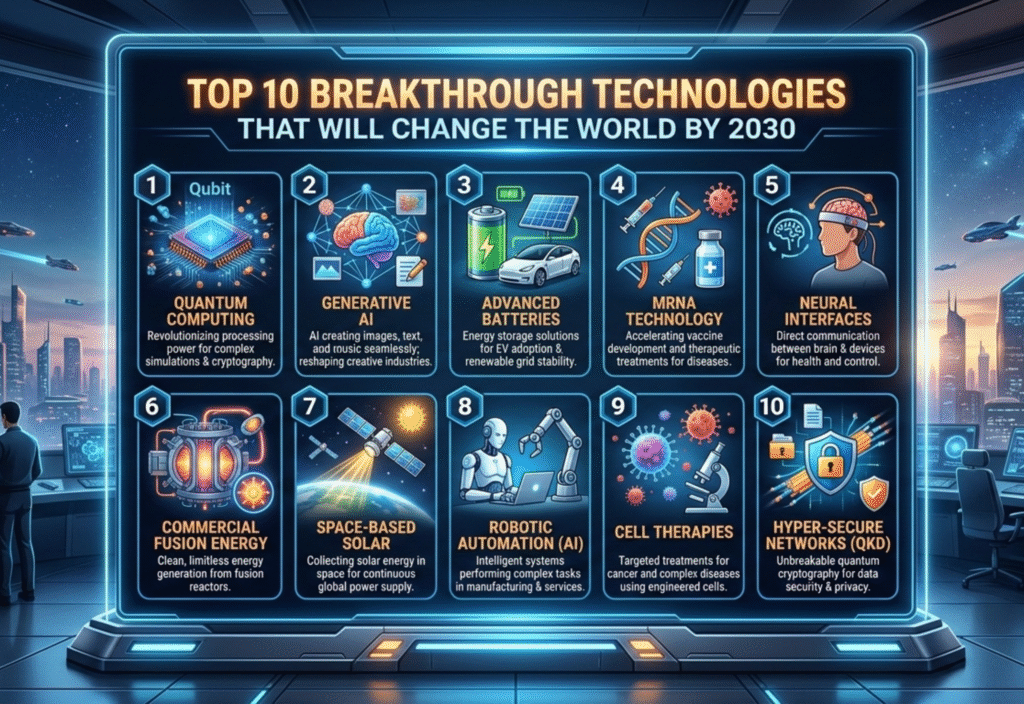
Below are ten powerful technologies that experts believe will significantly change the world by 2030.
1. Artificial Intelligence and Autonomous Systems
Artificial Intelligence (AI) continues to be one of the most influential technologies of the modern era. By 2030, AI systems will become more autonomous, capable of making decisions, learning from experience, and performing complex tasks without human intervention.
Autonomous AI agents will help businesses automate operations, analyze large datasets, and improve productivity. In industries such as finance, healthcare, logistics, and manufacturing, AI will support decision-making and reduce human error. Intelligent assistants, predictive analytics, and AI-driven automation will become a normal part of everyday business operations.
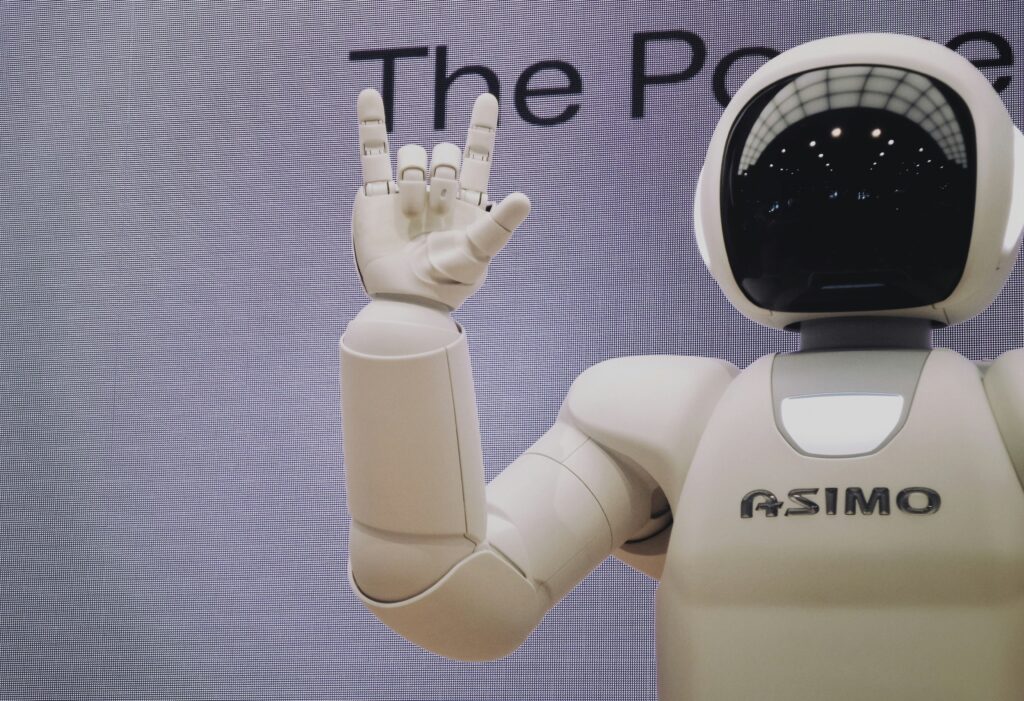
2. Humanoid Robots and Physical AI
Robotics technology is advancing rapidly, especially with the integration of physical artificial intelligence. Humanoid robots designed to operate in human environments will assist with tasks in factories, warehouses, hospitals, and homes.
These robots will be able to recognize objects, understand human instructions, and adapt to changing environments. By combining advanced sensors, AI vision systems, and machine learning, robots will become more capable of working safely alongside humans.
This development could help solve labor shortages and improve efficiency in industries such as logistics, construction, and healthcare.
3. Quantum Computing
Quantum computing has the potential to solve problems that are currently impossible for traditional computers. Unlike classical computers that process information using bits, quantum computers use quantum bits, or qubits, which allow them to perform complex calculations at extremely high speeds.
By 2030, quantum computing could revolutionize fields such as drug discovery, climate modeling, financial forecasting, and cybersecurity. Researchers are already exploring ways to use quantum technology to design new medicines, optimize supply chains, and improve encryption systems.
Although the technology is still developing, its future impact could be enormous.
4. Advanced Biotechnology and Gene Editing
Biotechnology is rapidly transforming medicine and healthcare. Technologies such as gene editing allow scientists to modify DNA in order to treat or prevent genetic diseases.
By 2030, advancements in biotechnology may enable doctors to cure certain inherited disorders, improve personalized medicine, and develop treatments tailored to individual patients. Scientists are also researching new ways to grow tissues, repair damaged organs, and create more effective vaccines.
These developments could significantly increase life expectancy and improve global health outcomes.
5. Next-Generation Renewable Energy
The demand for clean and sustainable energy is increasing worldwide. By 2030, new renewable energy technologies are expected to play a crucial role in reducing carbon emissions and combating climate change.
Innovations in solar power, wind energy, and advanced battery storage will allow countries to produce electricity more efficiently and sustainably. Improved energy storage solutions will help stabilize power grids and ensure reliable energy supply.
The transition toward renewable energy will also create new industries and employment opportunities while protecting the environment.
6. Autonomous Transportation
Self-driving vehicles are becoming increasingly sophisticated. Autonomous transportation systems powered by artificial intelligence could dramatically change how people travel and transport goods.
By 2030, self-driving cars, autonomous trucks, and smart transportation networks may reduce traffic accidents, improve fuel efficiency, and lower transportation costs. Logistics companies could use autonomous vehicles to deliver goods faster and more efficiently.
Smart infrastructure connected through sensors and communication networks will further enhance transportation safety and efficiency.
7. 6G Communication Networks
While many countries are still expanding 5G networks, research into sixth-generation (6G) communication technology is already underway. 6G networks are expected to offer extremely high data speeds, ultra-low latency, and improved connectivity.
This next generation of communication technology could support advanced applications such as immersive virtual environments, real-time remote surgery, and massive Internet of Things (IoT) ecosystems.
With faster and more reliable connectivity, businesses and individuals will be able to interact with digital services in entirely new ways.
8. Neuromorphic Computing
Neuromorphic computing is a new approach to computer design inspired by the structure of the human brain. Unlike traditional computing systems, neuromorphic chips process information using networks that mimic neural activity.
These systems are designed to perform tasks such as pattern recognition, learning, and sensory processing much more efficiently. By 2030, neuromorphic computing could power intelligent devices, robotics systems, and edge computing platforms that require low energy consumption and high performance.
This technology may significantly improve the efficiency of artificial intelligence systems.
9. Sustainable Data Centers
As digital services expand, data centers are consuming increasing amounts of energy. Sustainable data centers aim to reduce environmental impact while supporting the growing demand for computing power.
Future data centers will use advanced cooling systems, renewable energy sources, and energy-efficient hardware to minimize electricity consumption. Technologies such as liquid cooling and AI-based energy management will help optimize performance and reduce waste.
By 2030, greener data centers will become essential to support global digital infrastructure.
10. Space Technology and Commercial Space Stations
The space industry is entering a new era driven by private companies and international collaboration. Advances in reusable rockets, satellite technology, and commercial space stations are opening new opportunities in space exploration and research.
By 2030, commercial space stations may support scientific research, manufacturing, and communication services. Satellite networks will improve global internet coverage and enable better environmental monitoring.
Space technology will also contribute to navigation systems, climate observation, and disaster management on Earth.
The Future of Technology
The technologies emerging today are laying the foundation for a more connected, intelligent, and sustainable future. By 2030, breakthroughs in artificial intelligence, robotics, energy systems, biotechnology, and communication networks will transform industries and improve quality of life.
While these innovations offer tremendous opportunities, they also require responsible development and ethical considerations. Governments, researchers, and businesses must work together to ensure that technological progress benefits society as a whole.