Self-improving technology is quietly transforming the way we interact with digital systems. Unlike traditional tools that only follow instructions, these systems can adapt, learn, and optimize their performance automatically, creating smarter, more efficient workflows across industries.
From Passive Tools to Active Systems
Traditional technology has often functioned in a reactive manner. Early computers and software applications operated strictly according to human instructions. They could process information and execute commands, but they had no understanding of context, no ability to anticipate future needs, and no mechanism to optimize themselves beyond pre-programmed rules.
The new generation of systems, however, behaves differently. These systems are designed to monitor their environment, learn from patterns, and make decisions that improve performance without direct human intervention. Examples include smart manufacturing systems that adjust production schedules in real-time based on supply chain data, traffic management systems that reroute vehicles to prevent congestion, and cloud infrastructures that self-optimize to balance workloads efficiently.
Coordination Across Networks
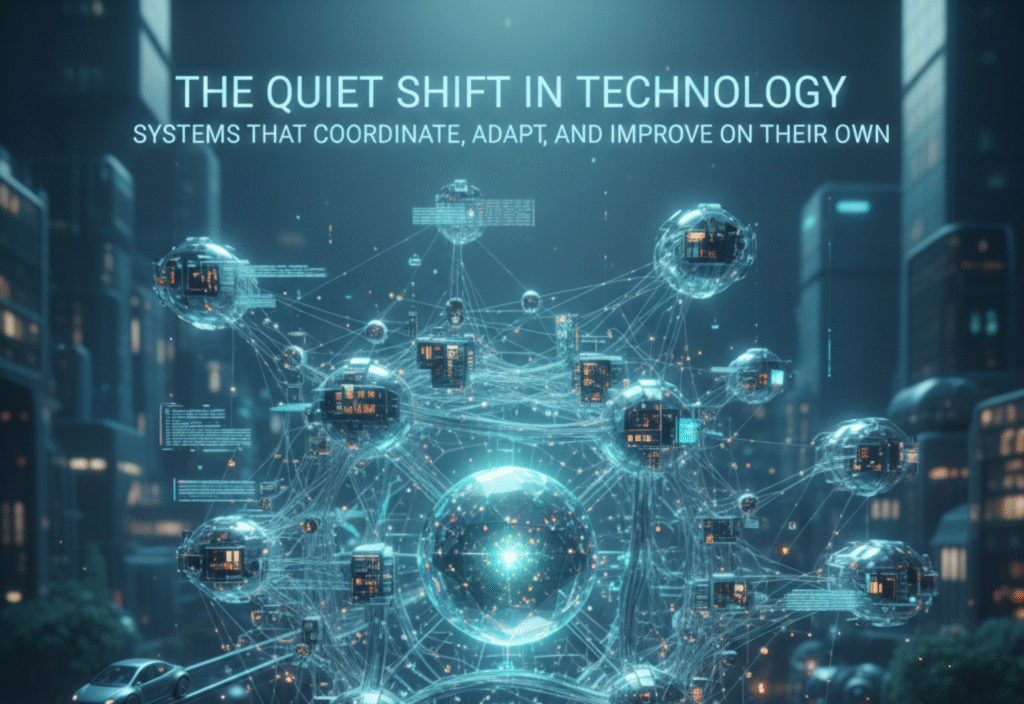
A key feature of these advanced systems is their ability to coordinate across networks. Unlike isolated software applications, modern systems communicate and collaborate with each other to achieve collective goals. For instance, in modern supply chains, multiple AI-driven systems can share data about inventory, transportation, and customer demand. By doing so, they can dynamically optimize production, minimize delays, and reduce waste. This level of coordination extends beyond logistics; it is visible in smart cities, energy grids, and healthcare networks where interconnected systems improve efficiency and resilience.
Adaptive Intelligence
Adaptability is another hallmark of these systems. Adaptive systems can modify their behavior based on feedback from the environment or from internal performance metrics. Machine learning algorithms play a crucial role here, allowing systems to recognize patterns, predict outcomes, and adjust strategies accordingly. This adaptive intelligence is especially valuable in dynamic or unpredictable environments. For example, AI-based cybersecurity systems continuously learn from new threats, evolving their defense mechanisms to stay ahead of attackers. Similarly, financial trading platforms use adaptive models to anticipate market trends and optimize investment strategies in real-time.
Continuous Improvement
Perhaps the most transformative aspect of these technologies is their capacity for continuous improvement. Unlike traditional systems, which degrade over time or require manual updates, modern intelligent systems can enhance their own capabilities. Through techniques such as reinforcement learning, systems can experiment with different approaches, learn from successes and failures, and refine their performance automatically. This not only increases efficiency but also accelerates innovation by allowing technology to evolve independently of human programmers.
Implications for Society
The quiet shift toward self-coordinating, adaptive, and self-improving systems carries profound implications. On the positive side, these technologies can enhance productivity, reduce resource consumption, and improve decision-making across industries. Smart healthcare systems, for example, can predict disease outbreaks, optimize treatment plans, and personalize patient care in ways previously unimaginable. In energy management, adaptive systems help integrate renewable resources efficiently, reducing waste and lowering carbon footprints.
However, this shift also presents challenges. Increased autonomy raises questions about accountability, transparency, and ethics. When systems make decisions on their own, understanding the rationale behind those decisions becomes crucial, especially in critical areas like healthcare, transportation, and finance. Ensuring these systems operate safely and fairly is a growing priority for researchers, policymakers, and technology developers.
The Road Ahead
As technology continues to advance, the distinction between tools and intelligent systems will become increasingly blurred. The quiet revolution of systems that coordinate, adapt, and improve on their own is reshaping industries, workflows, and daily life. While it may be subtle, its impact is profound, creating opportunities for efficiency, innovation, and societal benefit that were once the realm of science fiction.