In 2026, the world of software development is more dynamic than ever. New frameworks, libraries, and tools are shaping how developers build applications, websites, and AI-driven solutions. At the center of this evolution are programming languages — the foundation of digital innovation. Understanding which languages are high-impact and widely adopted can help developers, students, and tech enthusiasts prepare for the future, secure rewarding careers, and create innovative solutions.
This article explores the top programming languages in 2026, their applications, advantages, and why they remain essential in the modern digital landscape.
What Makes a Programming Language “High-Impact”?
A high-impact programming language is not just popular; it offers versatility, efficiency, community support, and relevance to current and future technologies. Factors that make a language valuable include:
Ease of Learning: Simple syntax and clear documentation help beginners get started quickly.
Performance: Fast execution and memory efficiency for demanding applications.
Community & Support: Large, active communities provide libraries, frameworks, and guidance.
Industry Demand: High usage in tech companies, startups, and open-source projects.
Future-Proofing: Compatibility with emerging technologies like AI, IoT, and blockchain.
Top High-Impact Programming Languages for 2026
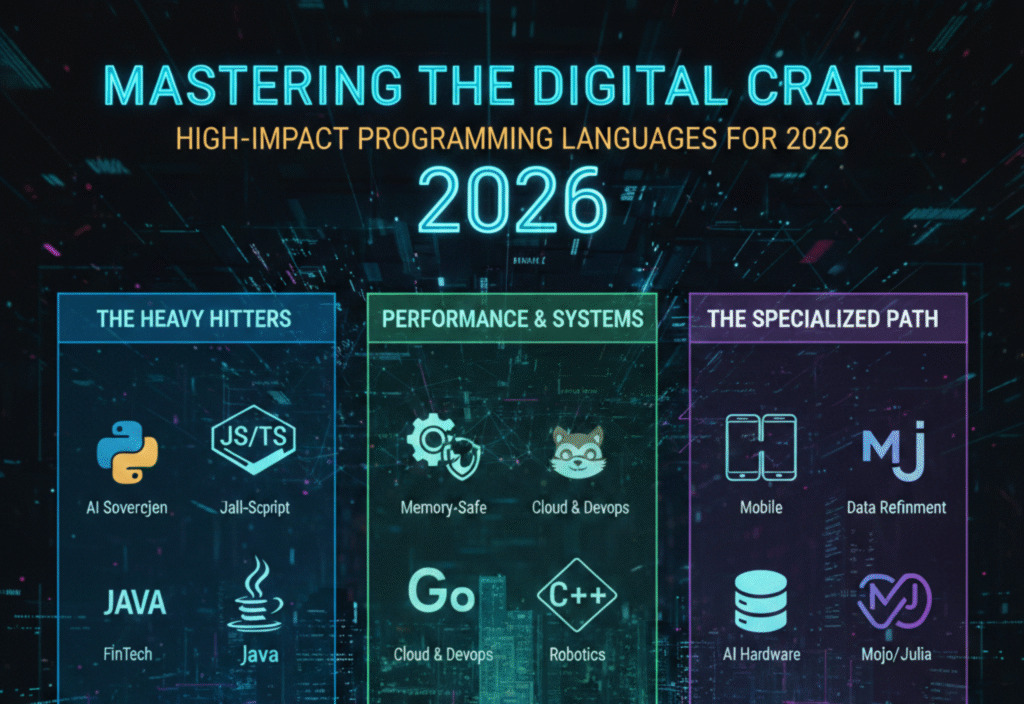
1. Python: The Language of AI and Data
Python remains a cornerstone of programming in 2026 due to its simplicity and versatility. Its vast ecosystem supports web development, machine learning, data analysis, and automation.
Applications:
Artificial Intelligence (AI) and Machine Learning
Data Science and Analytics
Web Applications with frameworks like Django and Flask
Automation and Scripting
Why Python Matters:
Python’s readable syntax and extensive libraries like Pandas, TensorFlow, and PyTorch make it ideal for beginners and professionals alike. Its integration with AI tools ensures Python remains a leader in emerging technology fields.
2. JavaScript: Powering the Web
JavaScript continues to dominate web development, both on the front-end and back-end. With the rise of frameworks like React, Vue, and Node.js, JavaScript enables interactive, high-performance web applications.
Applications:
Front-end Web Development (React, Angular, Vue)
Back-end Development (Node.js)
Mobile App Development (React Native)
Game Development and Interactive Media
Why JavaScript Matters:
Its versatility allows developers to create seamless, interactive experiences. JavaScript is also essential for developers looking to work in web technologies, e-commerce, and SaaS products.
3. Rust: The Language of Safe and Efficient Systems
Rust has gained attention for its performance, safety, and concurrency handling. It is especially popular in system-level programming, web assembly, and blockchain development.
Applications:
System Programming and Operating Systems
High-Performance Web Applications
Blockchain and Cryptocurrency Projects
Embedded Systems
Why Rust Matters:
Rust ensures memory safety without sacrificing performance, making it ideal for critical systems where reliability and speed are key.
4. Go (Golang): Efficiency at Scale
Go, designed by Google, is known for its simplicity, efficiency, and scalability. It excels in cloud computing, microservices, and distributed systems.
Applications:
Cloud Infrastructure and Backend Services
Microservices Architecture
Networking Tools and API Development
DevOps Automation
Why Go Matters:
Its clean syntax, fast compilation, and built-in concurrency model make Go a top choice for startups and enterprises building large-scale, high-performance systems.
5. TypeScript: The Supercharged JavaScript
TypeScript builds on JavaScript by adding static types, which improve code quality and maintainability. It is especially popular for large-scale web projects.
Applications:
Enterprise Web Applications
Front-End Development (React + TypeScript)
Full-Stack Development (Node.js + TypeScript)
Why TypeScript Matters:
By catching errors during development, TypeScript reduces bugs and improves team collaboration, making it ideal for modern web projects.
Emerging Languages to Watch
While the languages above dominate in 2026, other emerging languages are gaining traction:
Kotlin: Popular for Android development and backend projects.
Swift: Essential for iOS and macOS applications.
Julia: Focused on scientific computing and numerical analysis.
Being aware of these languages allows developers to adapt to specific niches and specialized industries.
How to Choose the Right Language
When deciding which language to learn or use, consider:
Career Goals: AI, web development, systems programming, or mobile apps.
Project Requirements: Performance, scalability, and community support.
Learning Curve: Some languages are beginner-friendly; others require more experience.
Future Opportunities: Look for demand in emerging industries like AI, blockchain, and IoT.
Conclusion
Mastering high-impact programming languages in 2026 is essential for anyone looking to thrive in the digital world. Python, JavaScript, Rust, Go, and TypeScript offer powerful tools for innovation, problem-solving, and career growth. By staying updated, continuously learning, and adapting to new technologies, developers can remain competitive and create solutions that shape the future.