
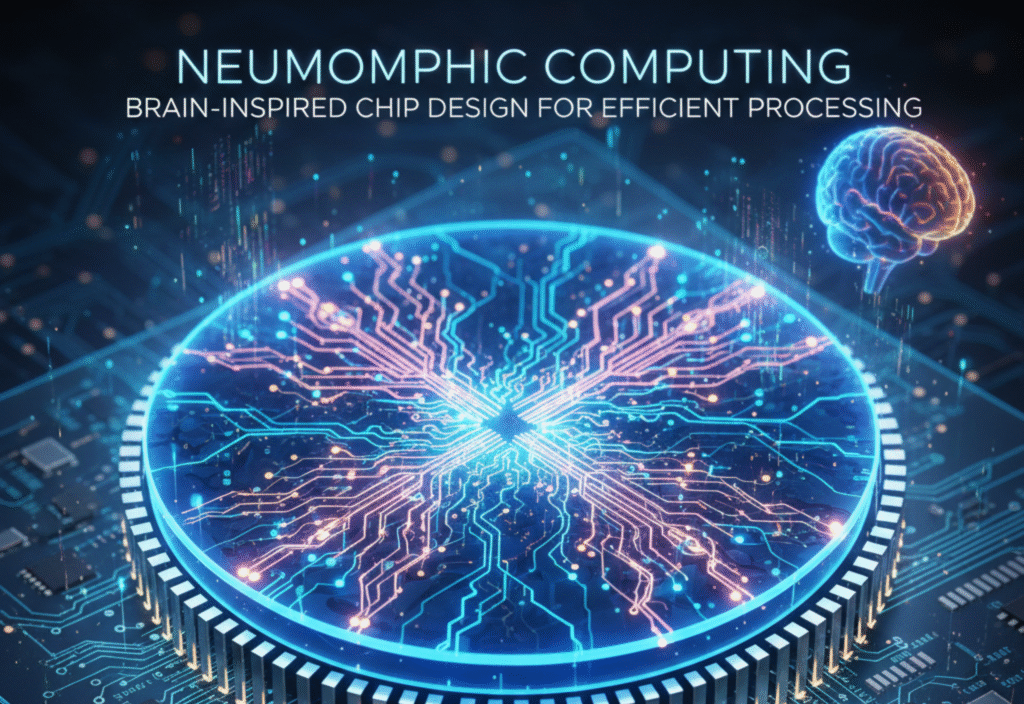
Neuromorphic computing is an emerging field that aims to redesign computer hardware by taking inspiration from the structure and functioning of the human brain. As traditional computing architectures struggle with power consumption, latency, and scalability, neuromorphic chip design offers a promising alternative for efficient and intelligent data processing. Rather than replacing existing systems overnight, this approach complements modern computing by addressing specific challenges where efficiency and adaptability are critical.
In an era where artificial intelligence workloads continue to grow, neuromorphic computing provides a thoughtful and responsible path forward—focusing on performance, energy efficiency, and practical use cases.
What Is Neuromorphic Computing?
Neuromorphic computing refers to the design of hardware systems that mimic biological neural networks. Instead of following the classic von Neumann architecture—where memory and processing are separate—neuromorphic chips integrate computation and memory in a way similar to neurons and synapses in the brain.
These systems process information through interconnected units that operate in parallel, allowing them to handle complex tasks with significantly lower energy usage. Importantly, neuromorphic computing does not attempt to replicate human consciousness; rather, it adopts efficient biological principles for technical problem-solving.
How Brain-Inspired Chips Work
Brain-inspired chips use artificial neurons and synapses to process signals in an event-driven manner. Unlike conventional processors that rely on continuous clock cycles, neuromorphic chips activate only when data is present. This design reduces unnecessary computations and conserves energy.
Key characteristics include:
Parallel processing across many small computing units
Event-based communication instead of constant data polling
Local memory storage near processing elements
Adaptive behavior based on input patterns
Together, these features allow neuromorphic systems to operate efficiently, especially in real-time and resource-constrained environments.
Why Efficiency Matters in Modern Computing
As AI models become larger and more complex, power consumption has become a major concern. Data centers require vast amounts of energy, and edge devices often lack the resources to run advanced models effectively. Neuromorphic chip design addresses this challenge by prioritizing efficiency over raw computational force.
Brain-inspired architectures can perform tasks such as pattern recognition, sensory data processing, and anomaly detection using far less power than traditional GPUs or CPUs. This makes them particularly suitable for applications where sustainability and long-term operation are important.
Key Applications of Neuromorphic Computing
Neuromorphic computing is not a general replacement for all computing systems, but it excels in specific domains:
Edge and Embedded Systems
Low-power neuromorphic chips can process data directly on devices such as sensors, cameras, and wearables, reducing reliance on cloud infrastructure.
Robotics and Autonomous Systems
Brain-inspired processing enables faster reaction times and adaptive behavior, which are essential for safe and reliable robotic systems.
Smart Sensors and IoT
Neuromorphic chips can analyze sensory data locally, improving privacy and reducing network bandwidth usage.
Healthcare and Research
Applications include signal processing for medical devices, brain–computer interface research, and biological data analysis, all handled with care and ethical oversight.
Advantages Over Traditional Architectures
Neuromorphic computing offers several practical benefits:
Reduced energy consumption
Lower latency for real-time tasks
High parallelism and scalability
Improved adaptability to changing inputs
These advantages make it a valuable addition to modern computing ecosystems rather than a disruptive replacement.
Challenges and Limitations
Despite its promise, neuromorphic computing faces several challenges:
Limited software tools and development frameworks
Difficulty integrating with existing systems
Need for specialized expertise
Early-stage hardware availability
Researchers and engineers continue to address these limitations through gradual, responsible innovation.
Ethical and Responsible Development
Neuromorphic computing is a technical advancement, not a philosophical or ideological one. Its purpose is to improve efficiency and functionality in computing systems while remaining under human control. Responsible design ensures transparency, safety, and alignment with societal values. The technology itself is neutral; its impact depends on how thoughtfully it is applied.
The Future of Neuromorphic Chip Design
As demand grows for energy-efficient AI and real-time processing, neuromorphic computing is likely to play a supporting role in the future of technology. Continued research may lead to better tools, broader adoption, and improved collaboration with existing AI systems.
Rather than chasing unrealistic expectations, the field focuses on practical improvements that benefit industries, researchers, and users alike.
Conclusion
Neuromorphic computing represents a meaningful step toward more efficient and adaptable hardware design. By drawing inspiration from the brain’s structure—without imitating consciousness—it offers a responsible approach to handling modern computational challenges. Brain-inspired chip design for efficient processing is not about replacing current systems, but about enhancing them where efficiency, scalability, and sustainability truly matter.