
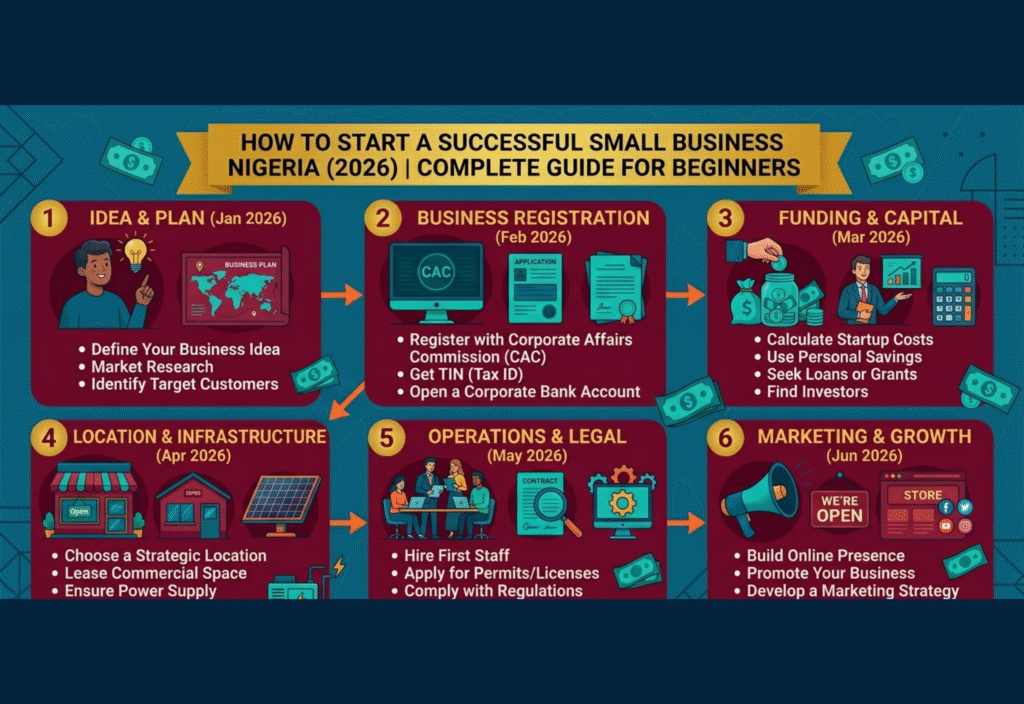
Starting a small business in Nigeria is one of the most powerful ways to build financial independence, create employment, and secure long-term stability. Nigeria, with its large population and growing demand for goods and services, offers countless opportunities for entrepreneurs. However, success does not come by chance—it requires planning, discipline, patience, and consistency.
This comprehensive guide explains everything you need to know to start and grow a successful small business in Nigeria in 2026.
Understanding the Business Landscape in Nigeria
Before starting any business, it is important to understand the environment in which you will operate.
Nigeria is one of the largest economies in Africa, with:
A population exceeding 200 million people
A youthful and energetic workforce
High demand for both basic and luxury goods
A growing digital and mobile economy
At the same time, entrepreneurs may face challenges such as:
Inflation and changing prices
Infrastructure limitations
Access to funding
Competition in urban areas
Despite these challenges, many businesses thrive because entrepreneurs learn how to adapt, innovate, and stay consistent.
Step 1: Identify a Profitable Business Idea
Choosing the right business idea is the foundation of your success. A good business idea solves a problem, meets a demand, or improves people’s lives.
Some profitable business ideas in Nigeria include:
Food processing and catering
Poultry and fish farming
Retail and wholesale trading
Online businesses and freelancing
Fashion design and tailoring
Mobile phone repair services
Logistics and delivery services
Digital marketing and content creation
How to choose the right idea:
Consider your skills and experience
Analyze market demand
Evaluate startup costs
Check competition in your area
Ensure the idea is scalable
A strong idea is not just profitable—it is also sustainable and realistic.
Step 2: Conduct Proper Market Research
Market research helps you understand your customers and competitors before investing money.
What to research:
Customer needs and preferences
Price expectations
Competitor strengths and weaknesses
Market gaps and opportunities
For example, if you plan to open a clothing business:
What styles are trending?
What price range do customers prefer?
What are competitors offering?
Methods of research:
Online research
Surveys and interviews
Observing competitors
Visiting markets and stores
Market research reduces risk and increases your chances of success.
Step 3: Develop a Strong Business Plan
A business plan is your roadmap. It guides your decisions and keeps you focused.
A good business plan includes:
Business name and description
Products or services
Target audience
Marketing strategy
Operational plan
Financial projections
Why it is important:
Helps you stay organized
Makes it easier to get funding
Provides direction for growth
A well-written business plan is essential for long-term success.
Step 4: Register Your Business Legally
Registering your business gives it legal recognition and builds trust.
In Nigeria, business registration is handled by:
Corporate Affairs Commission (CAC)
Benefits of registration:
Legal protection
Business credibility
Access to loans and grants
Ability to open a corporate bank account
Types of business structures:
Sole proprietorship
Partnership
Limited liability company
Choose the structure that best fits your goals and resources.
Step 5: Secure Capital for Your Business
Every business requires capital to start and operate.
Possible funding sources:
Personal savings
Family and friends
Microfinance banks
Government grants and programs
Business loans
Important tips:
Start small if resources are limited
Avoid unnecessary debt
Create a budget and stick to it
Managing your capital wisely is key to survival.
Step 6: Choose a Strategic Location or Online Presence
Your business location can greatly influence your success.
For physical businesses:
Choose a high-traffic area
Ensure accessibility and safety
Consider rent costs and competition
For online businesses:
Create a website
Use social media platforms
Sell through online marketplaces
Digital business is growing rapidly in Nigeria, offering low-cost opportunities with wide reach.
Step 7: Set Up Operations and Systems
After securing capital and location, you need to set up your operations.
This includes:
Purchasing equipment and materials
Hiring staff (if necessary)
Creating workflows and processes
Setting up payment systems
Efficiency tips:
Keep processes simple
Use technology where possible
Train your staff properly
Efficient operations improve productivity and customer satisfaction.
Step 8: Build a Strong Marketing Strategy
Marketing is essential for attracting and retaining customers.
Effective marketing strategies:
Social media marketing (Facebook, Instagram, WhatsApp)
Word-of-mouth referrals
Flyers and local advertisements
Discounts and promotions
Online ads
Key principles:
Know your target audience
Create valuable content
Be consistent with your message
Good marketing helps your business grow faster.
Step 9: Focus on Customer Satisfaction
Customers are the backbone of any business.
How to satisfy customers:
Provide quality products or services
Be polite and professional
Deliver on time
Handle complaints effectively
Build trust and relationships
Satisfied customers:
Return for repeat purchases
Recommend your business to others
Step 10: Manage Your Finances Carefully
Financial management determines whether your business succeeds or fails.
Important practices:
Track all income and expenses
Separate business and personal finances
Avoid overspending
Reinvest profits wisely
Tools you can use:
Simple accounting notebooks
Mobile apps
Professional accountants
Good financial discipline ensures business stability.
Step 11: Stay Consistent and Patient
Success does not happen overnight.
Key mindset:
Be patient
Stay consistent
Keep improving
Learn from mistakes
Many successful businesses took years to grow. Consistency is what separates successful entrepreneurs from unsuccessful ones.
Step 12: Use Technology to Grow Your Business
Technology can help you scale your business faster.
Ways to use technology:
Online advertising
E-commerce platforms
Digital payment systems
Automation tools
Technology reduces costs and increases efficiency.
Common Mistakes to Avoid
Many beginners fail due to avoidable mistakes:
Starting without a plan
Ignoring market research
Poor financial management
Overspending at the beginning
Lack of patience
Poor customer service
Avoiding these mistakes increases your chances of success.
Opportunities in Nigeria’s Economy
Nigeria offers many growing opportunities:
Agriculture and agribusiness
Technology and software services
E-commerce and logistics
Education and training
Renewable energy solutions
Entrepreneurs who identify problems and provide solutions can succeed in these areas.
Tips for Long-Term Success
To build a strong and sustainable business:
Keep learning and improving
Build strong relationships with customers
Adapt to market changes
Stay disciplined with finances
Focus on quality and value
Success requires continuous effort and commitment.
Conclusion
Starting a small business in Nigeria in 2026 is a powerful step toward financial independence and long-term success. While challenges exist, the opportunities are greater for those who are prepared, disciplined, and consistent.
By choosing the right idea, planning carefully, managing finances wisely, and focusing on customer satisfaction, you can build a profitable and sustainable business.
Success takes time, but with determination and the right strategy, it is absolutely achievable.