
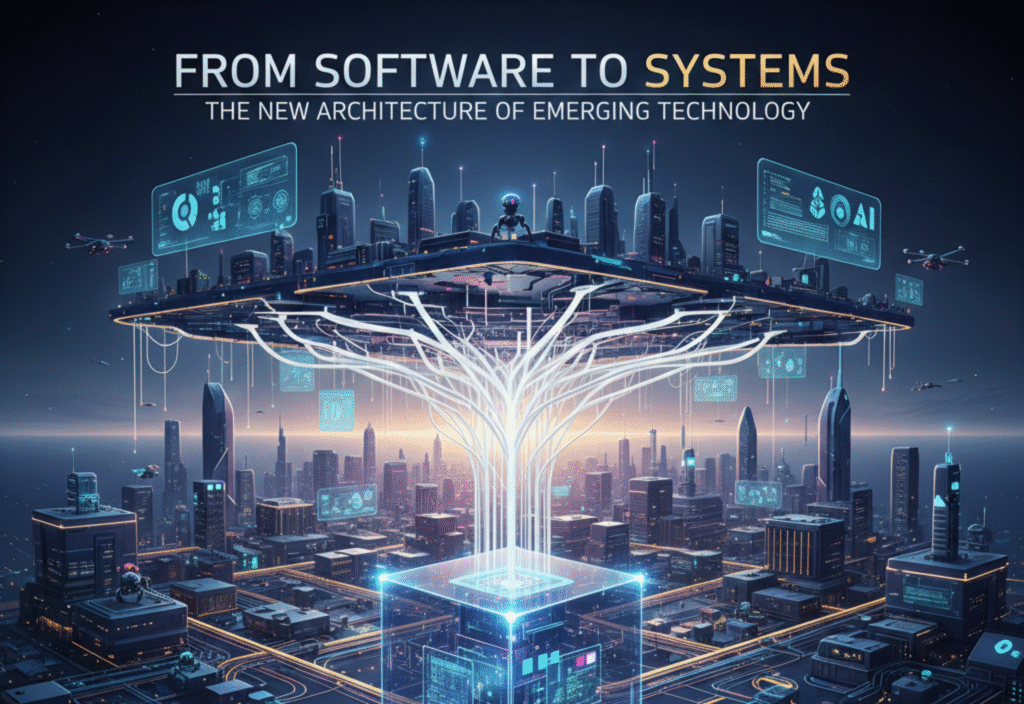
The way we build digital products is changing rapidly. Traditional software development focused on isolated applications designed for specific tasks. Today, the complexity of modern business needs, combined with the scale of data, has shifted the focus from standalone software to fully integrated systems. This new approach, often called emerging technology architecture, is transforming the way organizations design, deploy, and scale their digital infrastructure.
The Shift from Software to Systems
In the past, software was often developed as a single solution with limited interaction with other applications. Developers built programs to perform specific tasks, and updates were handled manually. While this approach worked for simple applications, it struggles under the demands of modern digital ecosystems.
Emerging technology architecture focuses on interconnected systems rather than isolated programs. Instead of thinking in terms of individual applications, organizations now design cohesive digital environments where multiple tools, services, and platforms communicate seamlessly.
Key Components of System-Based Architecture
Transitioning from software to systems requires several critical layers:
1. Integration Layers
Modern systems rely heavily on integration. APIs, messaging protocols, and middleware allow different applications to work together. These integration layers are invisible to end-users but essential for creating a cohesive digital ecosystem.
2. Data Management Layers
Data is the backbone of every modern system. Advanced data management includes:
Real-time data pipelines
Data lakes and warehouses
Automated analytics
These systems allow organizations to extract actionable insights and make data-driven decisions at scale.
3. Automation and Workflow Layers
Automation is no longer optional. Workflow engines and orchestration systems ensure that processes run smoothly across multiple systems. This reduces manual intervention, increases reliability, and improves operational efficiency.
4. Security and Compliance Layers
With interconnected systems, security becomes more critical. Security layers include encryption, authentication, access control, and continuous monitoring. Compliance with global standards ensures trust and protects user data across systems.
5. Observability and Reliability Layers
Monitoring tools and observability frameworks track system performance, detect errors, and ensure uptime. Reliability layers allow organizations to proactively fix issues before they affect users.
Advantages of System-Based Architecture
Transitioning to a systems-based approach provides numerous benefits:
Scalability: Systems can handle millions of users and massive amounts of data effortlessly.
Flexibility: Organizations can add, remove, or update components without breaking the entire system.
Efficiency: Automation and orchestration reduce human error and streamline processes.
Innovation: Developers can focus on creating new features instead of managing infrastructure.
Security: Centralized monitoring and governance make systems more secure.
Real-World Examples
Several companies have already embraced this shift:
Tech Giants: Platforms like Google Cloud and AWS provide integrated services that act as system architectures, rather than individual tools.
Fintech Companies: Modern banking apps rely on interconnected services for transactions, fraud detection, and customer analytics.
Healthcare Systems: Hospitals now use integrated patient management systems, combining diagnostics, scheduling, and electronic health records seamlessly.
Future Trends
The evolution from software to systems is accelerating, driven by several trends:
Agentic AI: Systems where AI agents coordinate workflows autonomously.
Edge Computing: Processing data closer to the source for faster response times.
Digital Twins: Virtual replicas of real-world systems for simulation and optimization.
Composable Architecture: Modular systems where components can be easily swapped or upgraded.
Organizations that adopt these trends will be better positioned to innovate, scale, and maintain competitive advantage in a rapidly changing digital landscape.
Conclusion
The shift from software to systems represents a paradigm change in digital architecture. By focusing on integrated systems rather than isolated applications, organizations can build more resilient, scalable, and intelligent platforms. This approach is essential for navigating the complexity of modern technology and preparing for the future of digital innovation.