Artificial Intelligence (AI) has brought tremendous innovation to the world of creativity. Among the most exciting developments are AI image generators, tools capable of transforming text prompts into visual art, illustrations, or realistic images. While some may use these tools merely for entertainment or trend-driven purposes, AI image generators have significant ethical and meaningful applications.
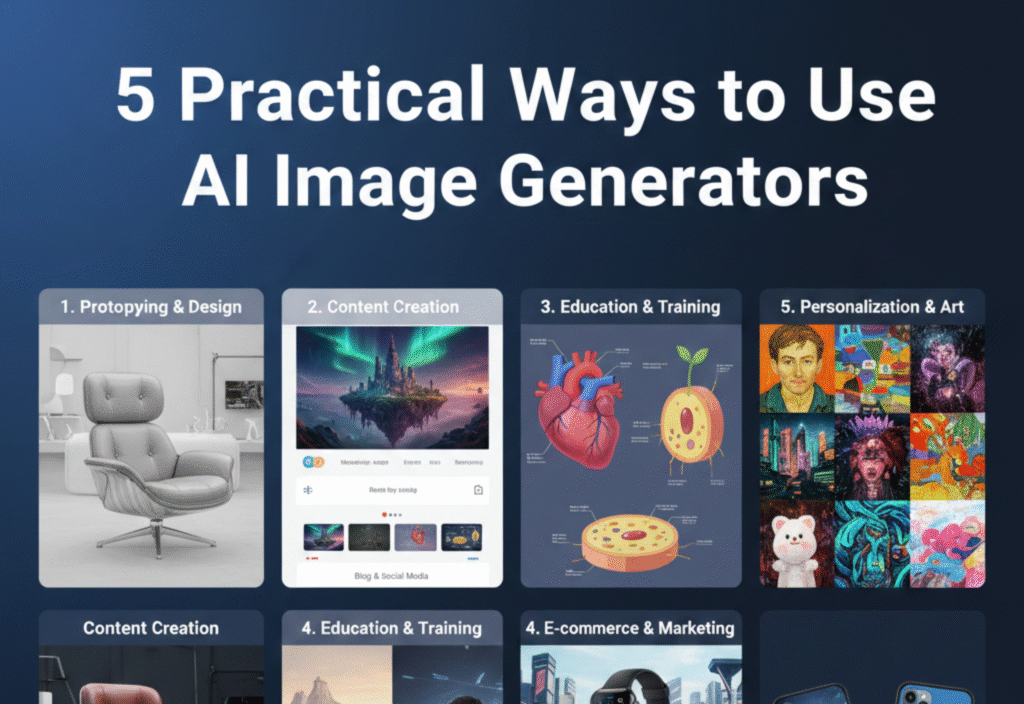
In this article, we explore five practical, creative, and responsible ways to use AI image generators for education, business, and personal growth — ensuring that your AI usage remains safe and valuable.
1. Enhancing Educational Materials
AI image generators can create visuals that enhance learning experiences. Teachers, students, and educational content creators can generate illustrations, infographics, or diagrams to make complex concepts easier to understand.
Applications:
Visual explanations for science or history lessons
Custom graphics for online courses
Diagrams for textbooks or study guides
Benefits:
Makes learning more engaging and accessible
Saves time in designing custom educational visuals
Encourages creative thinking by combining textual explanations with images
Example: An AI-generated illustration of the solar system can help students visualize planetary positions and movements more effectively than text alone.
2. Supporting Small Businesses and Marketing
Small businesses often face challenges creating high-quality visual content for social media, websites, or marketing campaigns. AI image generators allow them to create unique images without hiring expensive designers.
Applications:
Social media posts, banners, and ad creatives
Product mockups for e-commerce listings
Custom illustrations for branding
Benefits:
Cost-effective and efficient solution for businesses
Enables consistent brand visuals across platforms
Encourages innovation and experimentation in marketing campaigns
Example: A small clothing brand can generate seasonal-themed promotional graphics using AI tools, increasing engagement without exceeding their budget.
3. Inspiring Art and Personal Creativity
AI image generators are valuable tools for artists and creative professionals. They allow experimentation with styles, compositions, and ideas without the limits of physical materials.
Applications:
Concept art for games, movies, or books
Mood boards or inspiration collages
Digital artwork for personal projects
Benefits:
Accelerates the creative process
Encourages trying new styles or techniques
Provides a starting point for more detailed manual artwork
Example: An aspiring illustrator can use AI to generate character designs, which they can then refine and customize manually, blending human creativity with AI assistance.
4. Ethical and Accessible Visual Storytelling
AI image generators can help produce visuals for socially meaningful projects, documentaries, or nonprofit initiatives. By creating images without exploiting real individuals, AI promotes ethical content creation.
Applications:
Visual storytelling for awareness campaigns
Illustrations for articles on social issues
Ethical depictions of historical events or cultural stories
Benefits:
Avoids copyright or privacy concerns
Enables creators to share important messages visually
Promotes responsible and respectful use of technology
Example: An NGO focused on environmental awareness can generate compelling images of endangered ecosystems to include in campaigns, ensuring no real animals or humans are harmed or misrepresented.
5. Supporting Accessibility and Communication
AI-generated visuals can assist individuals with disabilities or language barriers by providing visual explanations or supplementary content.
Applications:
Infographics for users with reading difficulties
Visual aids for non-native language speakers
Simplified illustrations for complex topics
Benefits:
Improves understanding and inclusivity
Reduces reliance on specialized tools or professional designers
Expands opportunities for learning and communication
Example: A tutorial for using a software program can include AI-generated step-by-step illustrations, helping users who struggle with textual instructions.
Tips for Ethical Use of AI Image Generators
Avoid Misleading Content: Do not use AI-generated images to deceive or manipulate people.
Respect Copyright: Ensure that outputs are original and do not infringe on existing works.
Keep Content Safe: Avoid generating images of harmful, offensive, or inappropriate nature.
Transparency: When using AI-generated images publicly, clarify that the content was AI-assisted.
Conclusion
AI image generators are not just fun gadgets — they are powerful tools for learning, creativity, business, and social good. By using them responsibly, individuals and organizations can create meaningful, ethical, and visually compelling content. Whether for education, marketing, art, storytelling, or accessibility, the potential for AI-generated visuals is enormous — and it’s best realized when approached with creativity, care, and ethical responsibility.