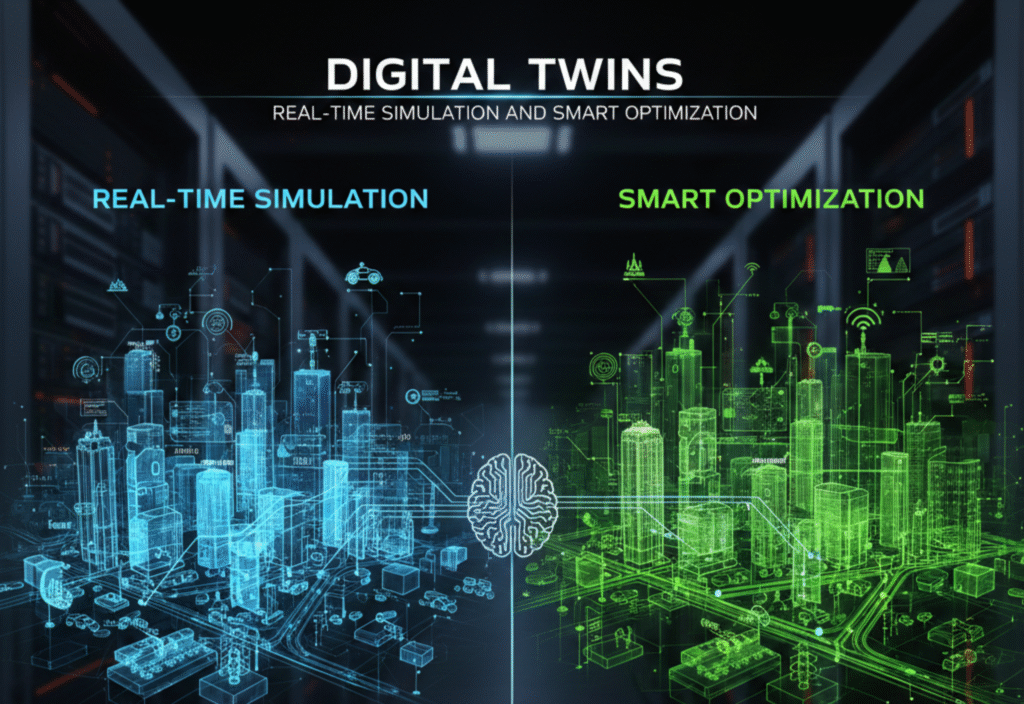
Digital Twins in business are transforming the way organizations operate by enabling real-time simulation, predictive analysis, and smart optimization. This technology allows companies to monitor, test, and improve physical assets and processes virtually, reducing downtime and enhancing efficiency.
This article explores the concept of Digital Twins, their applications across industries, benefits, challenges, and how they are shaping the future of smart businesses.
What Are Digital Twins?
A Digital Twin is more than just a 3D model or digital replica. It is a dynamic, data-driven representation of a real-world system that mirrors its state in real-time. This technology connects the physical and digital worlds, enabling businesses to simulate operations, predict failures, and optimize processes.
Key Components of a Digital Twin:
Physical Entity: The real-world asset, machine, or process.
Digital Model: The virtual replica containing data, geometry, and operational parameters.
Data Connection: Real-time data collected via IoT sensors, GPS, or other monitoring systems.
Analytics and AI: Tools that analyze the data to generate insights, simulate scenarios, and suggest optimizations.
Major technology providers like Siemens, General Electric, and IBM have developed platforms that make Digital Twin deployment scalable across multiple industries.
Real-Time Simulation: Predict, Test, and Prevent
One of the most important advantages of Digital Twins is real-time simulation. Unlike traditional models, Digital Twins constantly receive live data, which allows organizations to monitor conditions, run virtual experiments, and predict potential failures.
Benefits of Real-Time Simulation:
Predictive Maintenance: Detect possible failures before they occur, saving costs and avoiding downtime.
Operational Testing: Run “what-if” scenarios to see the effect of changes without disrupting the physical system.
Risk Reduction: Anticipate and mitigate hazards in manufacturing, transportation, or energy systems.
Improved Decision-Making: Managers and engineers can make informed choices based on real-time insights.
For instance, a Digital Twin of a wind turbine can simulate different environmental conditions, predict component fatigue, and schedule maintenance before breakdowns occur.
Smart Optimization Through Digital Twins
Beyond monitoring and simulation, Digital Twins also allow smart optimization, using AI and analytics to enhance operations continuously.
Key Areas of Optimization:
Energy Management: Reduce energy consumption in factories, buildings, or vehicles.
Process Efficiency: Improve production workflows and reduce bottlenecks.
Resource Allocation: Optimize inventory, raw materials, and manpower usage.
Product Design: Test and refine products digitally before physical production.
Industries that leverage smart optimization can improve profitability, sustainability, and operational performance simultaneously.
Industry Applications of Digital Twins
1. Manufacturing
Digital Twins simulate production lines, track equipment health, and optimize operations. Companies can identify bottlenecks, prevent unplanned downtime, and enhance overall output.
2. Healthcare
Hospitals and medical device manufacturers use Digital Twins to simulate patient care workflows, monitor critical equipment, and even test new treatments or devices virtually.
3. Automotive and Transportation
Vehicles, including autonomous cars, can have Digital Twins to monitor performance, optimize fuel or battery efficiency, and predict maintenance needs.
4. Energy and Utilities
Digital Twins help power plants, renewable energy systems, and grids optimize performance, reduce energy waste, and improve reliability.
5. Smart Cities
City planners use Digital Twins to simulate traffic patterns, monitor infrastructure, and plan urban development more efficiently. This leads to better resource management and enhanced citizen services.
Benefits of Implementing Digital Twins
Reduced Costs: Lower maintenance expenses and minimized downtime.
Enhanced Productivity: Optimized operations and faster workflows.
Improved Quality: Early detection of design or operational flaws.
Innovation Acceleration: Virtual testing speeds up product development.
Sustainability: Optimized energy usage and reduced material waste.
Challenges of Digital Twin Deployment
While Digital Twins provide immense value, their implementation is not without challenges:
Data Integration: Combining data from multiple sources can be complex.
Technical Expertise: Requires specialists in AI, IoT, and analytics.
Cybersecurity: Digital Twins must be protected from data breaches or cyber attacks.
High Initial Investment: Infrastructure, sensors, and software may involve significant costs.
Change Management: Organizations must adapt processes and train staff for AI-driven systems.
With careful planning, proper training, and gradual integration, businesses can overcome these hurdles to gain maximum benefits.
The Future of Digital Twins
The future of Digital Twins is closely tied to Industry 4.0, AI advancements, and IoT connectivity. Upcoming developments include:
Autonomous Digital Twins: AI will allow systems to self-optimize with minimal human intervention.
Integration with AR/VR: Engineers and planners will interact with Digital Twins in immersive environments.
Cross-Industry Digital Twins: Linking supply chains, factories, and cities for holistic simulation.
Predictive and Prescriptive Analytics: Digital Twins will not only predict issues but also suggest the best solutions.
Organizations adopting Digital Twins early will gain a competitive advantage, achieving better operational efficiency, faster innovation, and more sustainable outcomes.
Conclusion
Digital Twins represent a paradigm shift in how businesses monitor, analyze, and optimize operations. By enabling real-time simulation, predictive insights, and smart optimization, they help companies reduce costs, improve efficiency, and innovate faster.