
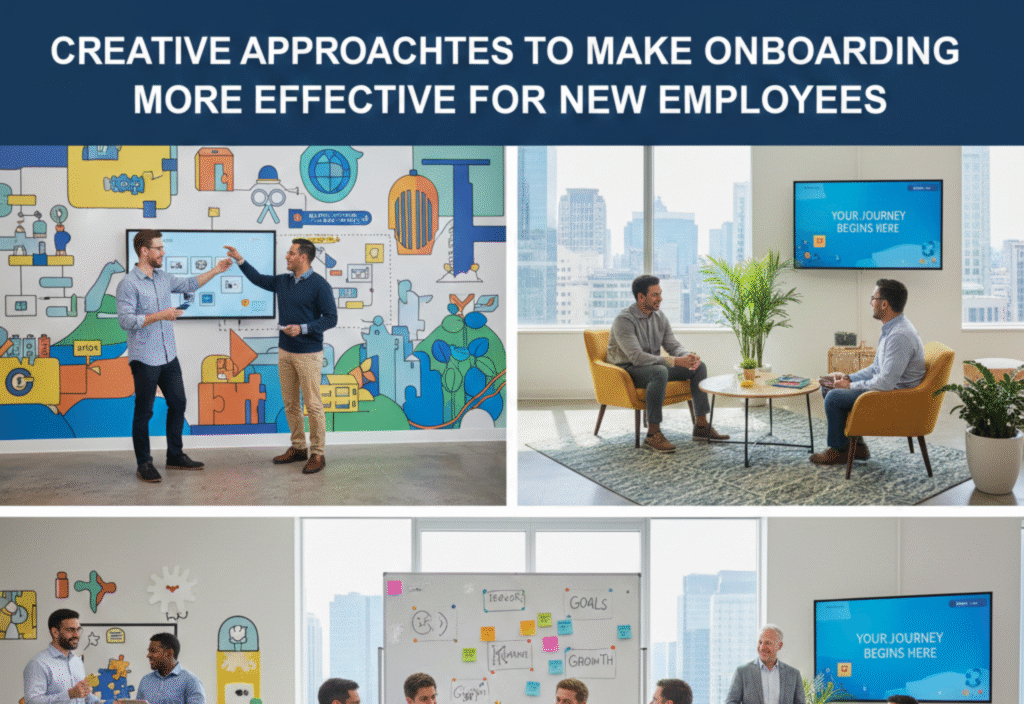
Creative employee onboarding is essential for helping new hires feel welcomed, engaged, and prepared to contribute from day one. Traditional onboarding methods often fail to fully engage employees, leaving them overwhelmed or disconnected. By using innovative and creative approaches, organizations can make onboarding more effective, improve retention, and boost overall productivity.
In today’s competitive business environment, companies need creative approaches to make onboarding effective, engaging, and memorable. These strategies ensure employees feel welcomed, supported, and prepared to contribute from day one.
1. Personalize the Onboarding Experience
Every new hire is unique, and their onboarding should reflect that. Personalization can include:
Tailoring orientation materials based on the employee’s role and department
Assigning a mentor or buddy who matches their professional background
Customizing learning paths for different skill levels
When employees feel the program is designed specifically for them, they are more likely to stay engaged and absorb the information effectively.
2. Use Interactive Digital Platforms
Digital tools can transform onboarding from a passive process into an interactive experience:
Learning management systems (LMS): Provide courses and quizzes to help employees learn about company policies, systems, and values
Gamification: Use badges, rewards, and progress tracking to motivate learning
Virtual reality (VR) or simulations: Offer hands-on experiences, such as virtual tours of the workplace or role-specific tasks
Interactive platforms make learning engaging and help employees retain information better.
3. Encourage Early Social Connections
Building relationships early is critical for long-term employee satisfaction. Strategies include:
Organizing informal meet-and-greets or virtual coffee sessions
Creating team introduction games
Encouraging cross-departmental collaboration from the start
When employees feel connected to their peers, they are more comfortable asking questions, sharing ideas, and integrating into the company culture.
4. Set Clear Expectations and Goals
Uncertainty can cause stress and reduce productivity. Effective onboarding clarifies:
Job responsibilities and key performance indicators (KPIs)
Short-term and long-term goals
Company policies, procedures, and reporting structures
Providing clarity helps new hires focus on what matters most and contributes to early success.
5. Make Learning Continuous
Onboarding shouldn’t end after the first week or month. Continuous learning approaches include:
Ongoing training sessions and workshops
Access to e-learning modules or company knowledge bases
Regular check-ins with mentors or managers to address challenges
Continuous support ensures employees keep developing skills, stay aligned with company expectations, and remain motivated.
6. Incorporate Feedback Loops
Feedback is essential for improvement and engagement. Companies can:
Collect feedback from new hires on their onboarding experience
Adjust programs based on suggestions
Encourage managers to provide regular, constructive feedback
By listening to employees, organizations demonstrate that they value their input and are committed to improving the onboarding process.
7. Highlight Company Culture and Values
New employees should quickly understand what the company stands for. Creative approaches include:
Storytelling sessions about the company’s journey, mission, and values
Interactive workshops to experience core values in action
Sharing success stories from employees who embody the culture
When employees connect emotionally with the company, they are more likely to feel motivated and loyal.
8. Leverage Technology for Efficiency
Automation and AI tools can streamline repetitive onboarding tasks:
Automate document submissions and compliance training
Use chatbots for answering frequently asked questions
Provide dashboards for tracking onboarding progress
Technology allows HR teams to focus on human interactions, mentorship, and personalized guidance rather than administrative tasks.
9. Create a Welcoming Environment
The first impression matters. Tips for making the workplace welcoming include:
Preparing a personalized welcome kit (swag, notes, or essential tools)
Ensuring the workspace is ready before arrival
Celebrating milestones, such as the completion of the first week or first project
A positive start fosters engagement and builds enthusiasm.
10. Foster a Sense of Purpose
Employees who understand how their work contributes to the company’s mission are more engaged. Strategies include:
Explaining how roles align with organizational goals
Showcasing impact stories of past employees
Encouraging participation in meaningful projects early on
A strong sense of purpose motivates employees to give their best from the beginning.
Conclusion
Effective onboarding goes beyond forms and orientation sessions. By adopting creative approaches—personalization, interactive tools, social connection, continuous learning, and a focus on culture and purpose—companies can ensure new employees feel welcomed, prepared, and motivated.