Digital

GenAI 2.0 generating text, images, audio, and code with AI technology

GenAI 2.0: The Future of Generative Artificial Intelligence Explained

The field of artificial intelligence has evolved rapidly, and GenAI 2.0 represents the next stage in generative AI technology. Unlike earlier AI models that primarily replicated patterns from data, GenAI 2.0 emphasizes creativity, contextual understanding, and adaptability. This generation of AI can generate text, images, audio, and even code with minimal human intervention while maintaining […]

GenAI 2.0: The Future of Generative Artificial Intelligence Explained Read More »
AI-Native Development Platforms connecting AI with app development

AI-Native Development Platforms: Transforming App Development with AI

The software development industry is witnessing a profound transformation with the emergence of AI-Native Development Platforms. These platforms integrate artificial intelligence directly into the development lifecycle, enabling faster, smarter, and more efficient application creation. By automating repetitive coding tasks, identifying potential issues before they occur, and suggesting intelligent improvements, AI-native platforms allow developers to focus

AI-Native Development Platforms: Transforming App Development with AI Read More »

Cyberkannadig and Future Technology connecting culture with digital innovation

Cyberkannadig: Building a Bridge to the Future of Technology

Cyberkannadig and Future Technology represent the fusion of digital innovation with cultural preservation. This approach empowers communities to embrace modern tools while safeguarding Kannada language, heritage, and knowledge for future generations. As technology continues to expand, communities that actively engage with digital transformation tend to benefit the most. The Cyberkannadig concept encourages not only technological

Cyberkannadig: Building a Bridge to the Future of Technology Read More »

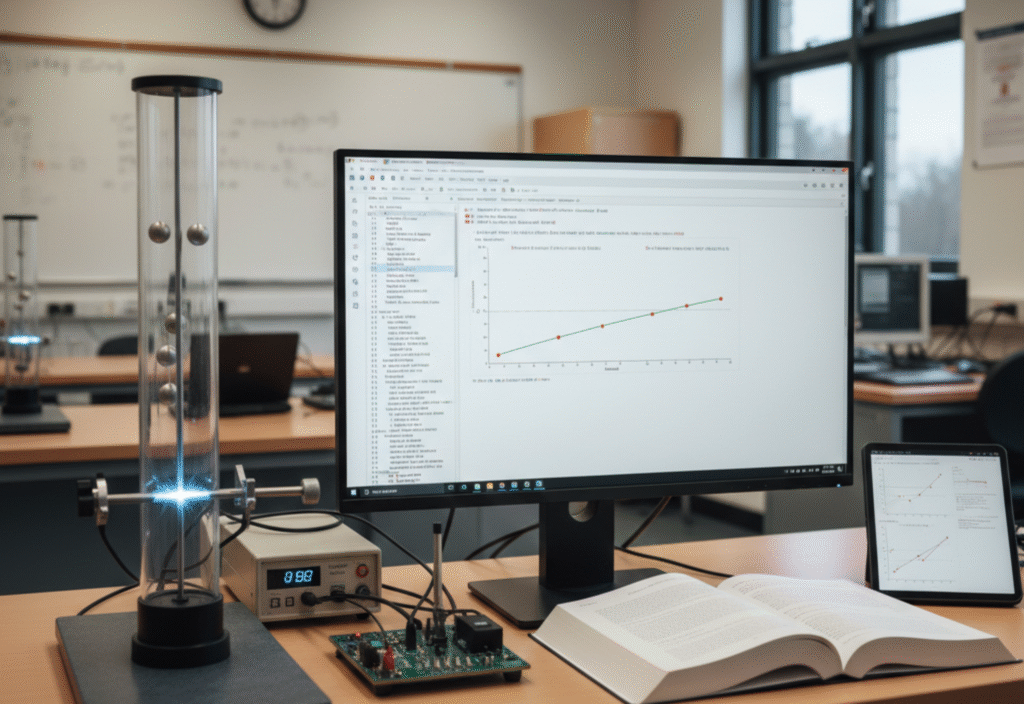
Charged rod electric field simulation in Python showing step-by-step physics calculations and field visualization

Python Physics Lab: Exploring Electric Field Calculations for a Charged Rod

Physics experiments often involve mathematical modeling to understand how forces behave in the real world. One interesting example is calculating the electric field produced by a charged rod. With modern programming tools, students and researchers can simulate such physical systems using Python. This approach combines theoretical physics with computational analysis, making complex concepts easier to

Python Physics Lab: Exploring Electric Field Calculations for a Charged Rod Read More »

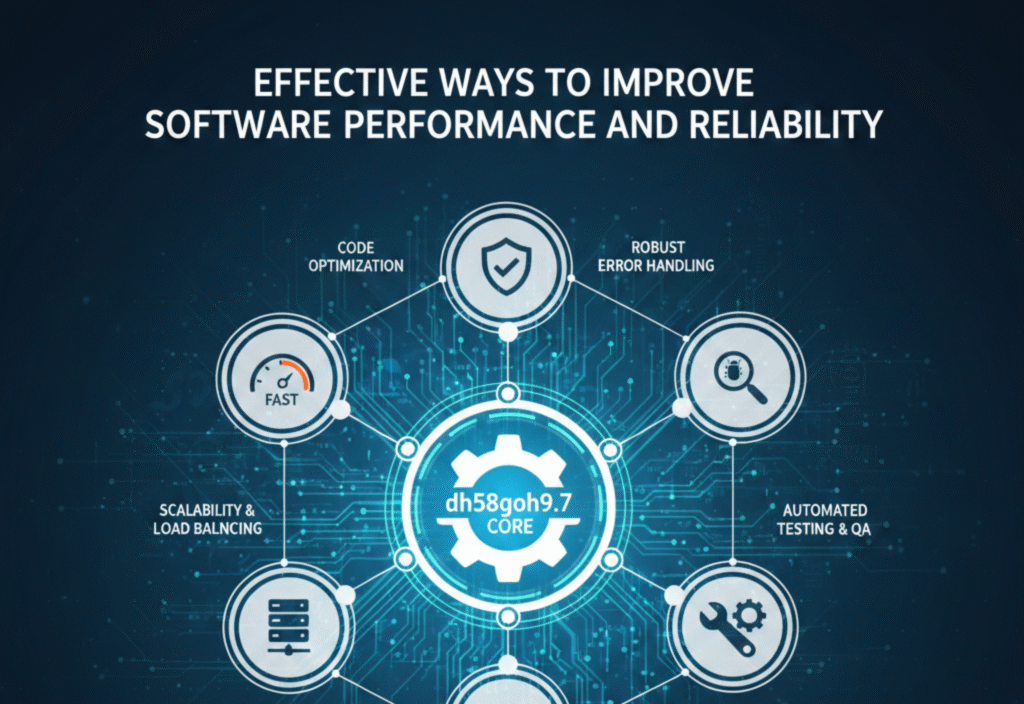
dh58goh9.7 software performance and reliability concept showing optimization, testing, and stable operation

Effective Ways to Improve dh58goh9.7 Software Performance and Reliability

dh58goh9.7 software performance and reliability are critical for ensuring smooth operation and user satisfaction. Optimizing this software requires a combination of efficient coding, systematic testing, database optimization, and proactive maintenance strategies. By following these methods, developers can enhance speed, stability, and overall software quality. This article provides practical strategies to enhance dh58goh9.7 software performance while

Effective Ways to Improve dh58goh9.7 Software Performance and Reliability Read More »

Digital data safety concept showing secure online data protection and cybersecurity practices

Practical Strategies for Digital Safety and Secure Data Protection

Digital data safety has become extremely important in today’s technology-driven world. People store personal, financial, and professional information online, which makes secure data protection essential. Understanding practical safety strategies helps individuals and organizations protect their digital assets, maintain privacy, and reduce cybersecurity risks. Digital safety is not just about installing antivirus software — it requires

Practical Strategies for Digital Safety and Secure Data Protection Read More »

Autonomous digital systems coordinating and operating without human control

The Hidden Operating Layer: How Modern Digital Systems Run Without Human Control

In the digital age, much of the technology we interact with daily feels seamless and effortless. From search engines predicting what we want to online systems managing global logistics, the work behind the scenes often goes unnoticed. This invisible backbone of technology is what can be called the hidden operating layer—the systems and processes that

The Hidden Operating Layer: How Modern Digital Systems Run Without Human Control Read More »

Self-improving technology system coordinating and adapting autonomously

The Quiet Shift in Technology: Systems That Coordinate, Adapt, and Improve on Their Own

Self-improving technology is quietly transforming the way we interact with digital systems. Unlike traditional tools that only follow instructions, these systems can adapt, learn, and optimize their performance automatically, creating smarter, more efficient workflows across industries. From Passive Tools to Active Systems Traditional technology has often functioned in a reactive manner. Early computers and software

The Quiet Shift in Technology: Systems That Coordinate, Adapt, and Improve on Their Own Read More »

Illustration of self-managing digital platforms optimizing and automating software operations

When Software Stops Being the Product: Inside the Era of Self-Managing Digital Platforms

The world of software is evolving rapidly. In the past, software was primarily a tool — like a word processor, accounting program, or a simple website. But today, we have entered a new era where software is no longer just a product. Instead, it has become a platform that can manage, optimize, and evolve itself.

When Software Stops Being the Product: Inside the Era of Self-Managing Digital Platforms Read More »

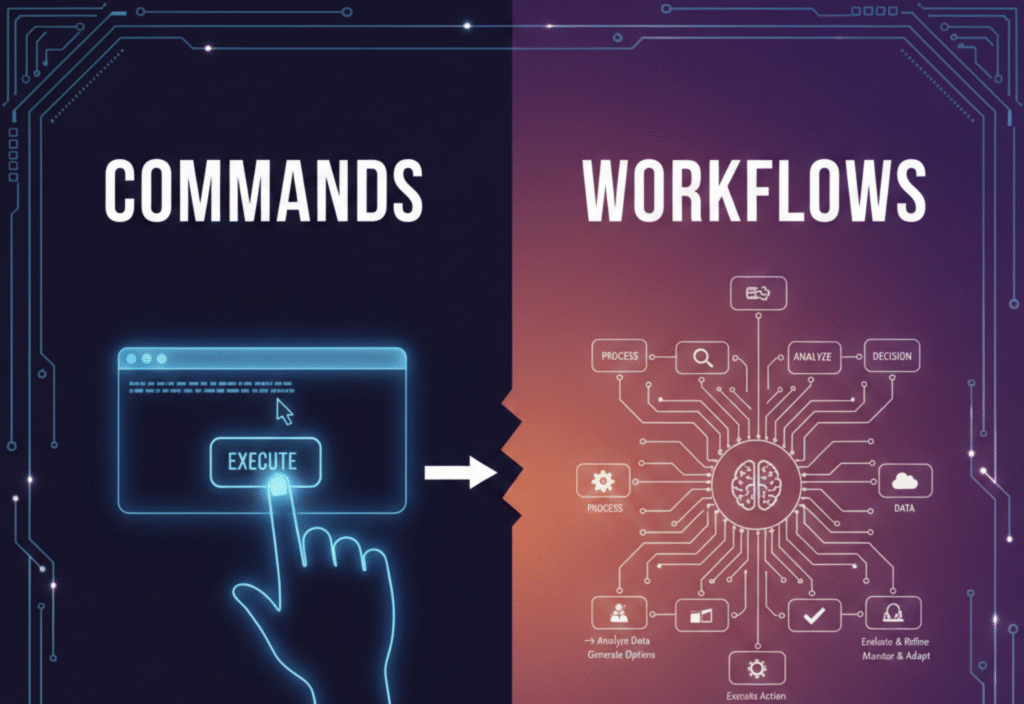
Workflow-oriented AI coordinating tasks and automating processes in modern digital systems

Why AI Systems Are Starting to Think in Workflows, Not Commands

Artificial Intelligence (AI) has evolved rapidly over the past decade. Early AI systems were designed to execute specific commands—simple instructions given by humans to perform tasks. These systems were effective for structured, predictable problems but struggled with complexity, scalability, and real-world variability. Today, a new paradigm is emerging: AI systems thinking in workflows rather than

Why AI Systems Are Starting to Think in Workflows, Not Commands Read More »