
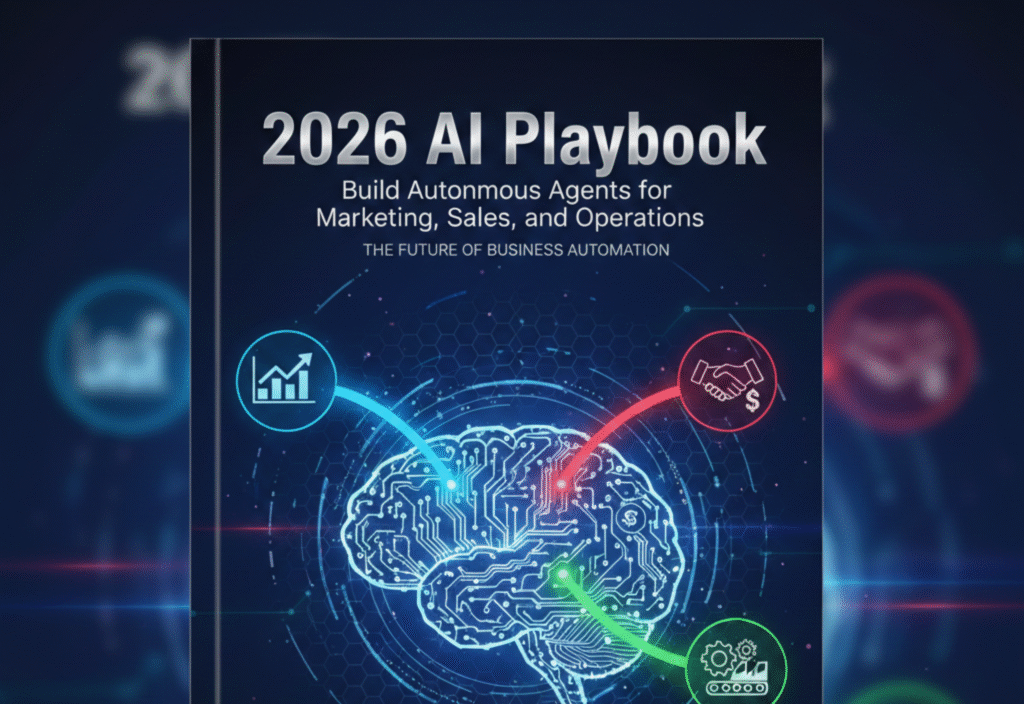
The year 2026 marks a turning point in how businesses operate. Companies are no longer relying solely on human-led workflows — they are deploying autonomous AI agents that manage marketing campaigns, sales pipelines, and operational tasks with minimal human intervention.
Autonomous agents are software programs capable of decision-making, learning from data, and executing actions independently. By combining artificial intelligence with automation frameworks, businesses can achieve unprecedented efficiency, scalability, and precision.
This playbook explores how to build and deploy autonomous AI agents for marketing, sales, and operations, providing practical insights, real-world examples, and step-by-step guidance.
What Are Autonomous AI Agents?
Autonomous AI agents are intelligent programs designed to perform tasks without continuous human supervision. Unlike traditional software, they can:
Make decisions based on real-time data
Learn from past actions to improve outcomes
Execute complex workflows across multiple systems
Adapt to changing business conditions
Key characteristics of autonomous agents include:
Decision-making: Ability to choose the best action among multiple options
Learning: Continuous improvement via machine learning
Automation: Executing tasks automatically across digital platforms
Integration: Connecting to CRM, marketing, and operational systems
By deploying autonomous agents, businesses reduce manual labor, improve response times, and create systems that operate continuously around the clock.
Building AI Agents for Marketing
Marketing operations are often repetitive yet data-intensive, making them ideal for AI agents. Autonomous marketing agents can:
Generate and schedule social media posts
Create email campaigns personalized to customer segments
Analyze engagement metrics and optimize campaigns in real-time
Perform competitor analysis automatically
Example Workflow: Social Media Marketing Agent
Data Collection: Pull trending topics, hashtags, and competitor content from social media platforms
Content Generation: Use AI models to write posts, captions, or visual prompts
Scheduling & Posting: Automatically post on LinkedIn, X (Twitter), Instagram, and other platforms
Monitoring & Optimization: Analyze engagement and adjust posting strategy autonomously
Benefits: Increased reach, consistent posting, and reduced marketing overhead.
Autonomous AI Agents for Sales
Sales teams face challenges such as lead qualification, follow-ups, and pipeline management. Autonomous AI agents can handle these tasks efficiently.
Key Capabilities:
Lead Scoring: Automatically classify leads based on behavior, engagement, and intent
Personalized Outreach: Send emails or messages tailored to each prospect
Follow-up Scheduling: Create tasks and reminders for the sales team
Pipeline Insights: Predict opportunities and risks using AI analytics
Example Workflow: Lead Management Agent
Capture leads from website forms, ads, or email campaigns
Use AI to analyze engagement patterns and classify leads as hot, warm, or cold
Automatically send personalized follow-up emails
Update CRM records with AI insights and schedule next actions
Outcome: Faster response times, higher conversion rates, and smarter sales pipelines.
Streamlining Operations with AI Agents
Operational tasks such as order processing, inventory tracking, and customer support are repetitive and time-consuming. AI agents can automate these processes while improving accuracy.
Example: Customer Support Agent
Monitor incoming support tickets via email, chat, or social media
Classify requests by urgency and category using AI
Suggest solutions or auto-respond to routine inquiries
Escalate complex issues to human agents
Other operational tasks can include:
Automating invoice generation and financial reporting
Managing supply chain alerts
Synchronizing inventory across platforms
By handling these tasks autonomously, businesses reduce errors, speed up processes, and allow human teams to focus on strategic work.
Designing Effective AI Agents
Building autonomous AI agents requires careful planning:
Define Objectives: Clearly specify what tasks the agent should handle
Select AI Models: Choose appropriate AI models for natural language processing, data analysis, or predictive tasks
Integrate Systems: Connect AI agents to CRMs, marketing platforms, databases, and operational tools
Set Guardrails: Implement rules to prevent mistakes and ensure ethical operation
Monitor & Improve: Continuously track performance, collect feedback, and update agent behaviors
Tools and Platforms for AI Agent Development
Several platforms simplify the creation of autonomous agents:
n8n: Automates workflows and connects AI models to multiple systems
OpenAI GPT-4/5: Generates content, analyzes data, and provides decision-making capabilities
Zapier/Make: Integration automation for connecting apps
RPA Tools (UiPath, Automation Anywhere): Automate repetitive operational tasks
These tools can be combined to build fully autonomous agents for marketing, sales, and operations.
Real-World Use Cases
Marketing Agency
AI agents generate and post content across multiple social channels
Analyze engagement metrics to optimize campaigns
Reduce team workload while maintaining consistency
E-commerce Brand
AI agents monitor inventory and trigger restock alerts
Automate abandoned cart emails and personalized promotions
Provide real-time sales analytics
SaaS Company
AI agents onboard new users, provide product tips, and track engagement
Predict churn and trigger retention strategies
Optimize subscription offers automatically
Best Practices for Autonomous AI Agents
Start Small: Deploy agents for a few tasks and gradually scale
Ethical AI: Ensure decisions comply with company policies and regulations
Continuous Learning: Use feedback loops to improve agent performance
Security: Protect sensitive data and restrict agent access to critical systems
Monitoring: Track agent actions to prevent errors and optimize outcomes
The Future of Business Operations
By 2026, autonomous AI agents will be integral to digital business operations. Companies using these agents will benefit from:
Higher productivity and reduced human workload
Faster decision-making and real-time response
Scalable marketing, sales, and operational processes
Data-driven insights guiding strategic decisions
The adoption of autonomous AI agents represents a fundamental shift — businesses that master them early will gain a significant competitive advantage.
Conclusion
Autonomous AI agents are no longer futuristic concepts — they are practical tools transforming marketing, sales, and operations in 2026. By building intelligent agents that learn, decide, and act independently, businesses can:
Automate repetitive workflows
Increase efficiency and accuracy
Scale operations without proportionally increasing headcount
Make data-driven decisions in real-time
The 2026 AI Playbook demonstrates that integrating autonomous AI agents into your business strategy is not just optional — it’s essential for staying competitive in the modern digital economy.