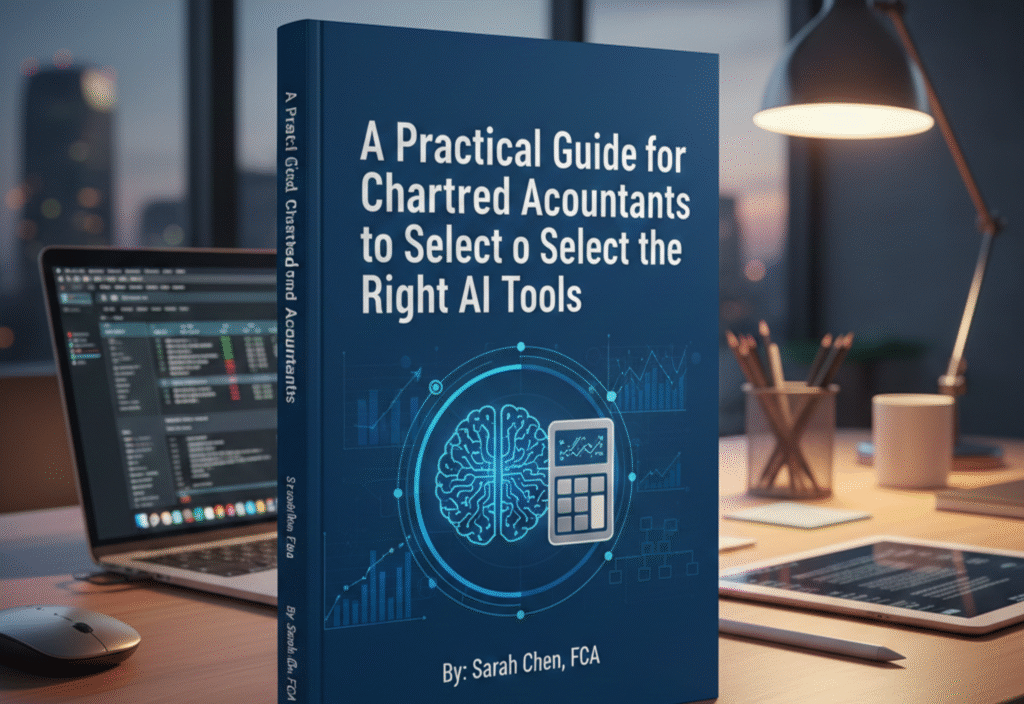
Artificial Intelligence (AI) is no longer a futuristic concept—it is a reality reshaping the accounting and finance landscape. For Chartered Accountants (CAs), embracing AI tools can streamline workflows, enhance accuracy, and provide strategic insights. However, selecting the right AI solution can be challenging given the multitude of options available. This guide provides a practical roadmap for CAs to evaluate, select, and implement AI tools effectively.
Why AI Matters for Chartered Accountants
The accounting profession traditionally involves repetitive, data-intensive tasks such as bookkeeping, reconciliations, tax calculations, and audits. AI can significantly reduce the time and effort required for these processes while improving accuracy. Key benefits include:
Automation of Routine Tasks: AI-powered software can handle repetitive tasks like invoice processing, data entry, and reconciliations.
Enhanced Accuracy: Machine learning algorithms minimize human error by detecting anomalies, duplications, and inconsistencies in financial data.
Advanced Analytics: AI tools can analyze large datasets to provide actionable insights, predictive analytics, and scenario planning.
Regulatory Compliance: Automated compliance checks and risk assessment tools help ensure adherence to tax laws and accounting standards.
Step 1: Identify Your Needs
Before exploring AI solutions, CAs should clearly define their requirements. Consider:
Type of Tasks: Are you looking to automate routine bookkeeping, audit procedures, or financial reporting?
Business Size: The scale of your practice or organization may influence the complexity and cost of AI tools.
Integration Needs: Determine if the AI tool needs to integrate with existing accounting software like Tally, QuickBooks, Xero, or SAP.
Regulatory Requirements: Ensure the tool complies with local and international accounting standards.
Creating a detailed requirement checklist will streamline your search and prevent unnecessary investments.
Step 2: Explore AI Solutions
There are several categories of AI tools relevant to accounting:
Accounting Automation Tools
Tools like Botkeeper and ScaleFactor automate bookkeeping, bank reconciliations, and invoice management.Audit and Compliance Tools
AI-powered audit software such as MindBridge Ai Auditor and CaseWare IDEA can identify unusual transactions, detect fraud patterns, and ensure compliance.Taxation and Regulatory Tools
Platforms like Avalara and Vertex simplify tax calculations, filing, and reporting using AI algorithms.Analytics and Forecasting Tools
Tools such as Fathom and Kepion help in predictive analytics, cash flow forecasting, and scenario modeling.
Step 3: Evaluate Tool Capabilities
When assessing AI tools, consider the following:
Accuracy and Reliability: Examine case studies or trials to ensure the tool produces reliable results.
User-Friendliness: The interface should be intuitive for finance professionals without technical backgrounds.
Customization: Look for tools that can be tailored to your accounting processes and business needs.
Data Security: Ensure that the AI software adheres to strict data privacy and cybersecurity protocols.
Scalability: The tool should be capable of growing with your business and handling increasing volumes of financial data.
Step 4: Test Before Investing
Many AI providers offer free trials or demo versions. Take advantage of these to:
Run sample tasks to evaluate accuracy.
Assess the time saved compared to manual processes.
Gather feedback from your team on usability.
A small pilot project can reveal whether the tool aligns with your practice’s workflow and goals.
Step 5: Consider Costs and ROI
AI tools vary significantly in pricing, from subscription-based SaaS solutions to enterprise-grade platforms with higher upfront costs. To justify investment:
Calculate the potential time and cost savings.
Factor in reduced errors and improved compliance.
Consider the long-term scalability benefits.
Remember, the cheapest tool may not be the most effective; prioritize value over price.
Step 6: Ensure Proper Training
Even the best AI tool will underperform if staff are not trained. Implement:
Training sessions for staff on tool usage.
Guidelines for data input and interpretation of AI outputs.
Regular updates on new features and compliance changes.
Empowered staff can leverage AI effectively to improve accuracy and productivity.
Step 7: Monitor and Optimize
AI adoption is not a one-time event. Regularly evaluate:
Performance Metrics: Accuracy, speed, and efficiency improvements.
Compliance Alignment: Ensure ongoing adherence to regulations.
User Feedback: Identify pain points or opportunities for optimization.
Updates and Upgrades: Stay current with software improvements and AI enhancements.
Continuous monitoring ensures that the tool remains aligned with your evolving business needs.
Conclusion
For Chartered Accountants, AI is not just a technological trend—it is a powerful enabler for efficiency, accuracy, and strategic decision-making. By carefully identifying needs, evaluating tools, testing solutions, and investing in proper training, CAs can harness AI to transform their practice. Selecting the right AI tool requires thoughtful consideration, but the benefits—time savings, reduced errors, enhanced insights, and competitive advantage—are well worth the effort.