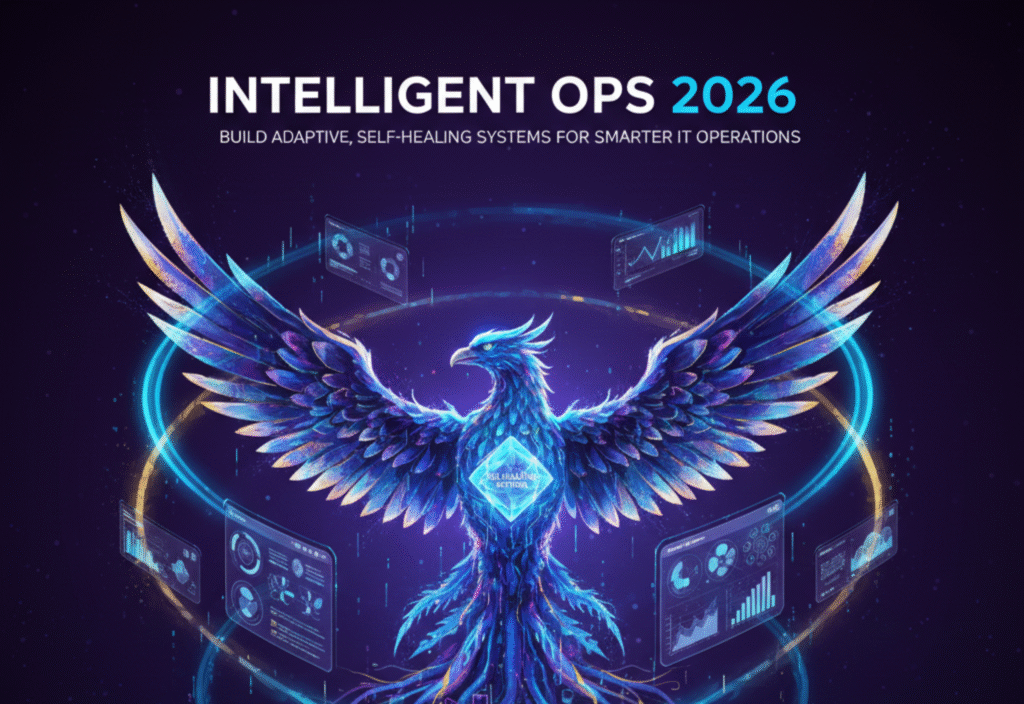
The landscape of IT operations is changing faster than ever. Traditional methods of monitoring, troubleshooting, and maintaining IT infrastructure are no longer sufficient in a world dominated by cloud computing, hybrid architectures, and highly distributed applications. Enter Intelligent Ops 2026, a new approach that leverages artificial intelligence (AI), machine learning (ML), and automation to build adaptive, self-healing systems. These systems not only detect and resolve issues before they impact end-users but also continuously optimize operations to maximize efficiency and reduce costs.
In this article, we explore the principles behind Intelligent Ops, the technologies that make it possible, real-world applications, and best practices for implementing adaptive, self-healing IT systems.
What Is Intelligent Ops?
Intelligent Operations (Intelligent Ops) is a modern IT strategy that combines AI, automation, and data analytics to make IT systems more autonomous and resilient. Unlike traditional operations that rely heavily on manual intervention, Intelligent Ops uses predictive insights and automated workflows to detect anomalies, prevent outages, and optimize resources in real time.
Key components of Intelligent Ops include:
Adaptive Monitoring – Continuous monitoring of applications, infrastructure, and user behavior, dynamically adjusting thresholds based on context.
Predictive Analytics – Leveraging historical data and AI algorithms to anticipate failures before they occur.
Self-Healing Automation – Automatically resolving detected issues without human intervention.
Continuous Optimization – Constantly improving performance, scalability, and cost-efficiency across IT systems.
The result is a system that not only reacts to incidents faster but often prevents them altogether, freeing IT teams to focus on strategic initiatives instead of firefighting.
Why Intelligent Ops Is Critical in 2026
The complexity of IT environments is increasing dramatically. Organizations now manage hybrid clouds, containerized applications, microservices, edge computing, and AI workloads. Manual monitoring and reactive support cannot keep up with these dynamic systems. Intelligent Ops addresses several critical challenges:
Reducing Downtime – Self-healing systems can resolve incidents automatically, reducing Mean Time to Recovery (MTTR).
Lowering Operational Costs – AI-driven automation eliminates repetitive tasks, freeing up IT staff for higher-value work.
Enhancing User Experience – By preventing outages and performance bottlenecks, end-users enjoy smoother, uninterrupted services.
Scaling Efficiently – Adaptive systems optimize resource usage in real time, preventing over-provisioning or underutilization.
Supporting AI Workloads – Modern applications increasingly rely on AI/ML, which require highly reliable and optimized infrastructure.
By 2026, organizations that fail to adopt Intelligent Ops may struggle to maintain uptime, control costs, and deliver competitive digital experiences.
Core Technologies Behind Self-Healing Systems
Building adaptive, self-healing IT systems requires a combination of cutting-edge technologies. Key enablers include:
1. Artificial Intelligence & Machine Learning
AI algorithms analyze massive volumes of operational data to detect patterns, predict incidents, and recommend or trigger automated fixes. For example, ML models can detect unusual spikes in server latency and predict potential outages before they affect users.
2. Observability Platforms
Observability goes beyond monitoring. It provides a holistic view of the system’s health by collecting metrics, logs, traces, and events. Platforms like this enable Intelligent Ops systems to understand root causes and act proactively.
3. Automation & Orchestration
Automation tools execute predefined workflows or dynamically generated actions to resolve issues. Orchestration ensures that complex, multi-step procedures across distributed environments happen reliably and consistently.
4. Event-Driven Architectures
Event-driven systems respond to changes in real time, enabling rapid incident detection and remediation. This architecture is critical for self-healing processes that must react immediately to anomalies.
5. Cloud-Native & Container Technologies
Cloud-native architectures, microservices, and containers support rapid scaling and isolation of workloads. They make automated recovery more effective because services can restart, migrate, or replicate seamlessly.
Building a Self-Healing IT System
Designing self-healing systems requires careful planning and structured implementation:
Step 1: Establish a Baseline
Before automation, you must understand what “normal” operations look like. Collect comprehensive metrics and logs, then analyze them to define baselines and thresholds for anomalies.
Step 2: Implement Predictive Analytics
Use AI and ML to predict potential incidents. Start with high-impact areas like database performance, server health, and network latency.
Step 3: Define Automated Responses
Create workflows that automatically resolve common issues, such as restarting services, reallocating resources, or rolling back faulty deployments.
Step 4: Integrate Observability
Ensure your system can continuously monitor itself. Observability provides feedback loops that are critical for continuous improvement.
Step 5: Continuously Optimize
Analyze outcomes of automated actions. Refine predictive models, update workflows, and optimize resource allocation based on real-world results.
Real-World Applications of Intelligent Ops
Several industries are already benefiting from self-healing IT systems:
Financial Services: Banks use AI to automatically detect transaction failures, latency issues, and cybersecurity threats, reducing downtime and improving compliance.
Healthcare: Hospitals rely on self-healing systems to ensure critical applications, like electronic health records (EHR), are always available.
E-Commerce: Retailers implement Intelligent Ops to prevent outages during high-traffic events, optimizing customer experience and sales.
Telecommunications: Networks dynamically reroute traffic and resolve hardware failures without human intervention, ensuring uninterrupted connectivity.
Benefits of Adopting Intelligent Ops
Proactive Problem Resolution – Issues are addressed before they impact operations.
Improved Reliability – Reduced downtime and enhanced performance across applications and infrastructure.
Operational Efficiency – Automation lowers repetitive tasks, allowing IT teams to focus on innovation.
Faster Incident Response – AI-powered detection and response minimize disruptions.
Scalable IT Infrastructure – Adaptive systems automatically adjust resources to meet demand.
Best Practices for 2026 and Beyond
Start Small, Scale Gradually – Begin with critical systems, then expand self-healing capabilities.
Combine AI with Human Expertise – AI enhances human decision-making; don’t fully eliminate human oversight.
Ensure Security and Compliance – Automation must comply with industry regulations and data privacy standards.
Continuously Train ML Models – Keep predictive models updated with the latest operational data for accuracy.
Invest in Observability – The better you can see your system, the better your automation and self-healing strategies will perform.
The Future of Intelligent Ops
By 2026, Intelligent Ops will become the standard for enterprise IT operations. As AI models become more sophisticated and infrastructure becomes increasingly complex, adaptive, self-healing systems will no longer be a luxury—they will be essential. Organizations that embrace these systems will achieve higher uptime, lower operational costs, and superior digital experiences, giving them a competitive advantage in the rapidly evolving IT landscape.