
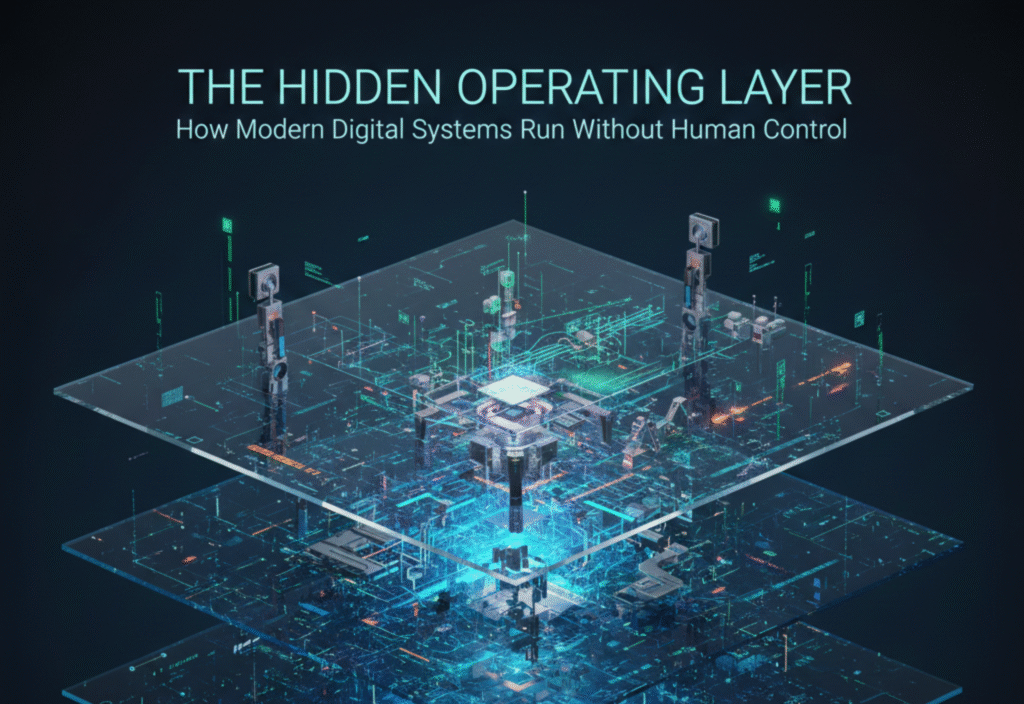
In the digital age, much of the technology we interact with daily feels seamless and effortless. From search engines predicting what we want to online systems managing global logistics, the work behind the scenes often goes unnoticed. This invisible backbone of technology is what can be called the hidden operating layer—the systems and processes that operate autonomously, coordinating, adapting, and making decisions without direct human control. Understanding this layer is essential to grasp how modern technology is reshaping industries, services, and our daily lives.
The Rise of Autonomous Systems
Traditionally, digital systems required constant human input to function. Early software applications and computer systems operated strictly according to pre-defined instructions. Users needed to monitor, manage, and correct processes manually. Any optimization or improvement depended entirely on human intervention.
Modern systems, however, are built differently. Autonomous digital systems are capable of monitoring themselves, learning from data, and making decisions to improve efficiency and outcomes. These systems leverage advanced technologies such as artificial intelligence (AI), machine learning, and cloud computing to manage processes with minimal human oversight. For example, cloud infrastructure can automatically balance server loads, detect failures, and reallocate resources in real time, all without human intervention.
How the Hidden Layer Works
The hidden operating layer functions as the intelligent backbone of digital ecosystems. It comprises algorithms, automated workflows, and adaptive networks that continuously process data and respond to changes. Key features include:
Real-Time Monitoring: Systems constantly track performance metrics, user activity, and environmental conditions to detect anomalies or opportunities for optimization.
Autonomous Decision-Making: Algorithms evaluate available data and select the best course of action without human input. For instance, e-commerce platforms use autonomous recommendation engines to personalize customer experiences.
Self-Optimization: These systems continuously refine their own performance. A cloud database might restructure itself for faster queries, or a traffic management system may reroute vehicles to prevent congestion.
Coordination Across Systems
One of the most remarkable aspects of the hidden operating layer is its ability to coordinate across multiple systems. Individual autonomous processes rarely work in isolation. Instead, they form interconnected networks that communicate and collaborate to achieve larger goals.
Take supply chains as an example. Modern logistics platforms integrate data from warehouses, transportation networks, and customer orders. Autonomous systems can predict demand, reroute shipments, and adjust production schedules in real time. This level of coordination would be impossible to manage manually and illustrates how the hidden layer silently orchestrates complex operations.
Adaptive Intelligence
Adaptive intelligence allows systems to learn from experience and respond to changing conditions. Machine learning models enable digital systems to identify patterns, anticipate outcomes, and make decisions that improve over time.
In cybersecurity, for instance, adaptive systems detect new threats as they emerge and modify defense strategies automatically. Similarly, financial trading platforms use predictive analytics to optimize investment strategies dynamically. These systems can react faster than human operators and handle vast amounts of data that would be impossible to process manually.
Implications for Society and Industry
The hidden operating layer brings enormous benefits:
Efficiency and Productivity: Automation reduces human error, accelerates workflows, and optimizes resource allocation.
Scalability: Autonomous systems can manage massive networks and datasets that humans could never oversee alone.
Innovation: Continuous learning and optimization drive technological innovation at an unprecedented pace.
However, there are challenges. Increased autonomy raises questions about transparency, accountability, and control. When critical decisions are made by algorithms, understanding their reasoning becomes crucial. Industries such as healthcare, finance, and transportation must ensure that autonomous systems operate ethically, safely, and reliably.
The Future of Autonomous Digital Systems
The hidden operating layer is evolving rapidly. As AI, machine learning, and cloud technologies advance, these systems will become even more sophisticated. Future developments may include fully autonomous infrastructures that manage themselves end-to-end, intelligent networks that self-repair, and systems that collaborate seamlessly across industries.