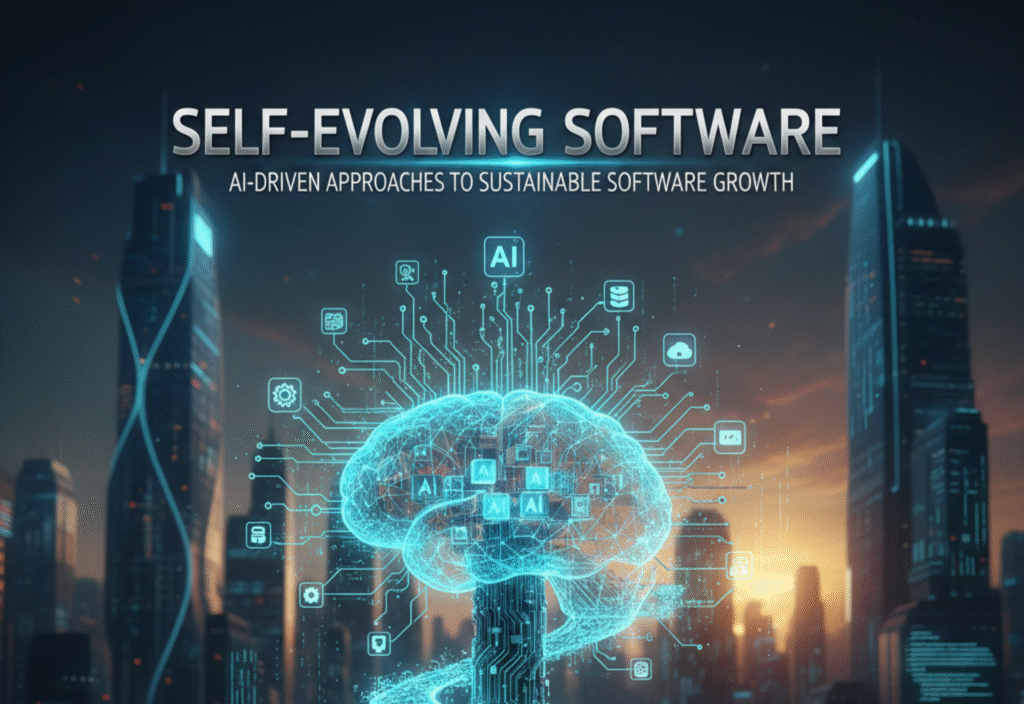
In 2026, software systems are no longer static products that require constant manual updates to stay relevant. Instead, modern applications are increasingly designed to improve, adapt, and optimize themselves over time. This shift has given rise to self-evolving software, a new approach where artificial intelligence supports long-term, sustainable software growth while reducing maintenance complexity.
Rather than replacing human decision-making, this model focuses on assisting developers and organizations in building reliable, ethical, and adaptable systems that respond intelligently to real-world changes.
What Is Self-Evolving Software?
Self-evolving software refers to applications that can learn from usage patterns, system feedback, and performance data to improve functionality over time. These systems rely on AI-driven insights to recommend enhancements, optimize workflows, and detect issues before they become critical.
Unlike traditional software updates that depend entirely on manual intervention, adaptive systems support gradual improvement while remaining under human supervision.
Why Software Evolution Matters in 2026
Software environments today face constant change. User expectations shift rapidly, security threats evolve, and data volumes grow at an unprecedented pace. As a result, maintaining long-term performance has become a major challenge.
AI-assisted software evolution helps organizations address these challenges by enabling systems to:
Adapt to user behavior changes
Improve efficiency without frequent rewrites
Maintain stability as complexity increases
This approach supports sustainability by extending the useful life of applications while minimizing resource waste.
The Role of Artificial Intelligence in Software Growth
Artificial intelligence plays a supportive role in modern software development. Instead of acting independently, AI tools analyze system behavior and provide actionable insights to development teams.
Key AI contributions include:
Performance monitoring and optimization suggestions
Predictive maintenance and anomaly detection
Intelligent testing and bug identification
Data-driven feature improvement recommendations
Through these capabilities, AI helps software grow responsibly and consistently.
Benefits of Adaptive and Intelligent Software Systems
Organizations that adopt AI-driven development models experience several long-term benefits. These include improved reliability, reduced downtime, and better alignment with user needs.
Additionally, intelligent systems support:
Lower operational costs through automation
Improved security awareness
Faster response to market changes
More efficient use of development resources
When implemented carefully, these benefits enhance both technical performance and organizational stability.
Ethical and Responsible Software Evolution
Ethical responsibility remains a critical factor in AI-supported software growth. Systems must be transparent, explainable, and aligned with human values. Decisions affecting users should always remain understandable and accountable.
Developers must ensure:
Human oversight remains central
Data privacy is respected
AI recommendations are reviewed before implementation
Software behavior aligns with societal and ethical standards
Responsible design ensures that intelligent systems serve people rather than control them.
Practical Applications in Real-World Systems
Adaptive software models are already influencing many industries. From enterprise platforms to educational tools, intelligent systems help organizations improve services while maintaining control.
Examples include:
Business platforms optimizing workflows
Monitoring systems improving reliability
Customer support tools enhancing response quality
Educational software adjusting content delivery
These applications demonstrate how intelligent growth can be achieved without sacrificing trust or transparency.
Future Outlook of Sustainable Software Development
Looking ahead, sustainable software growth will depend on balance. AI will continue to support evolution, but human judgment will remain essential. Organizations that combine technical innovation with ethical awareness will build systems capable of long-term success.
Rather than chasing rapid automation, the focus will shift toward thoughtful, explainable, and resilient development practices.
Final Thoughts
Self-evolving software represents a practical and responsible approach to modern development. By using AI as a supportive tool rather than a replacement for human expertise, organizations can create systems that grow sustainably, adapt intelligently, and remain trustworthy over time.