
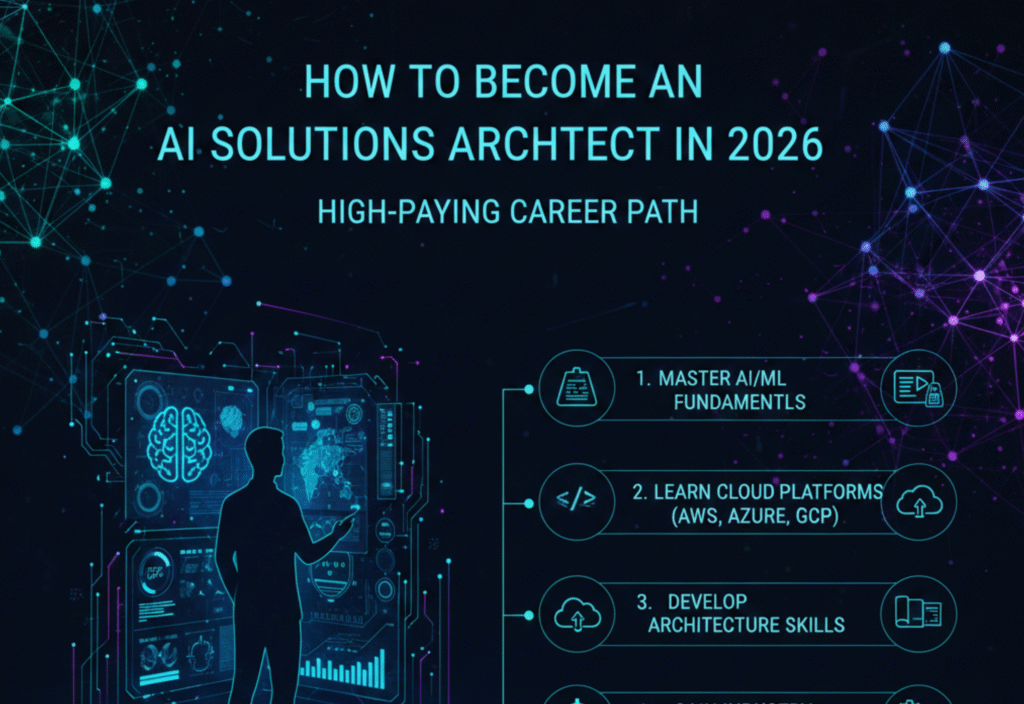
In 2026, the demand for an AI Solutions Architect is growing rapidly as companies shift toward advanced artificial intelligence systems. Businesses are no longer just experimenting with AI—they are now building full production-level AI systems for real-world use.
An AI Solutions Architect plays a key role in this transformation by designing scalable, secure, and efficient AI systems. This role is becoming one of the most important and high-paying careers in the technology industry.
If you want to enter a future-proof tech career, learning how to become an AI Solutions Architect in 2026 can be a smart decision.
What Is an AI Solutions Architect?
An AI Solutions Architect is responsible for designing complete AI systems that solve real business problems. This role is different from a data scientist or machine learning engineer because it focuses on the full system design instead of only models.
An AI Solutions Architect connects business needs with technical AI solutions and ensures that systems work at scale in real environments.
Key Responsibilities of an AI Solutions Architect
An AI Solutions Architect handles multiple important tasks, including:
- Designing AI system architecture for enterprises
- Selecting appropriate models and frameworks
- Building scalable AI pipelines
- Integrating AI into business systems
- Managing cloud infrastructure for AI deployment
- Ensuring security, compliance, and performance
- Optimizing cost and system efficiency
This role requires both technical and strategic thinking.
Why AI Solutions Architects Are in High Demand in 2026
The demand for AI Solutions Architects is increasing due to several major trends.
1. Rapid Enterprise AI Adoption
Companies are now using AI in real business operations such as customer support, HR automation, marketing, and data analysis.
2. Growth of LLM and AI Systems
Large Language Models (LLMs) and Retrieval-Augmented Generation (RAG) systems require proper architecture to work efficiently.
3. Focus on Business Value
Companies now want AI systems that provide real ROI instead of experimental demos.
Because of these changes, the role of AI Solutions Architect has become critical.
Salary of an AI Solutions Architect in 2026
The salary varies depending on skills and location:
- United States: $160,000 – $230,000 per year
- Remote roles: $90,000 – $160,000 per year
- Freelance consulting: $80 – $200 per hour
Professionals with strong cloud and AI architecture skills earn higher salaries.
Skills Required to Become an AI Solutions Architect
To become successful in this field, you need a combination of technical and design skills.
1. AI and Machine Learning Knowledge
- Understanding ML concepts
- Model evaluation
- NLP and computer vision basics
- LLM behavior and limitations
2. Generative AI Systems
- Prompt engineering
- RAG architecture
- Vector databases
- AI agents and workflows
3. Cloud Computing Skills
- AWS, Azure, or Google Cloud
- Containers (Docker, Kubernetes)
- Serverless architecture
4. Data Engineering Skills
- SQL and NoSQL databases
- Data pipelines
- Data lakes and warehouses
- Vector search systems
5. System Design Skills
- Scalable architecture design
- Security and performance optimization
- Cost control strategies
Step-by-Step Roadmap to Become an AI Solutions Architect
Step 1: Build Strong Technical Foundations
Start with Python, APIs, and basic software development skills. Learn how backend systems and cloud platforms work.
Step 2: Learn Modern AI Tools
Focus on practical tools used in 2026:
- LLM APIs
- RAG systems
- AI orchestration frameworks
- Real-world AI projects
Step 3: Learn System Thinking
Start designing complete AI systems instead of only models. Focus on:
- End-to-end pipelines
- Business use cases
- Scalability and cost optimization
Step 4: Build Portfolio Projects
Create real projects such as:
- AI chatbot systems
- Enterprise search systems
- AI copilots
Include architecture diagrams and explanations.
Step 5: Improve Communication Skills
AI Solutions Architects must explain ideas clearly to:
- Business leaders
- Developers
- Technical teams
Communication is a key career skill.
Certifications That Can Help
Optional but useful certifications include:
- AWS Solutions Architect Certification
- Google Professional ML Engineer
- Azure AI Engineer Certification
These help build credibility but real projects matter more.
Career Opportunities After Becoming an AI Solutions Architect
After gaining experience, you can move into roles like:
- Senior AI Architect
- Head of AI Engineering
- AI Consultant
- Startup Founder
- CTO in AI companies
This role offers strong long-term career growth.
Conclusion
Becoming an AI Solutions Architect in 2026 is one of the most valuable career paths in technology. It combines technical knowledge, system design skills, and business understanding.
If you develop the right skills and build real-world experience, you can secure a high-paying and future-proof career in the AI industry.