
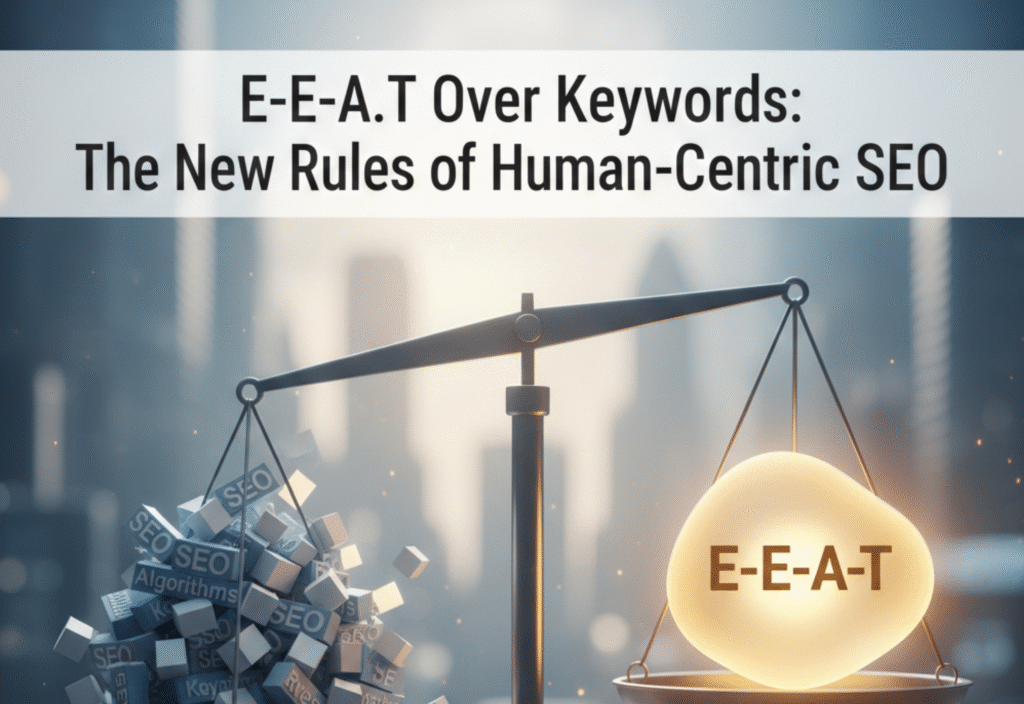
In the ever-evolving world of digital marketing, SEO is no longer just about stuffing keywords into content. Today, search engines like Google are prioritizing E-E-A-T—Experience, Expertise, Authoritativeness, and Trustworthiness—over traditional keyword optimization. This shift signals a new era of human-centric SEO, where providing real value to users matters more than chasing algorithmic shortcuts. In this article, we will explore why E-E-A-T has become the cornerstone of modern SEO and how businesses can adapt to these new rules.
What Is E-E-A-T and Why It Matters
E-E-A-T stands for:
-
Experience – Demonstrating first-hand knowledge and practical understanding of a topic.
-
Expertise – Showcasing professional credentials or deep knowledge in a specific field.
-
Authoritativeness – Being recognized as a reliable source within your industry or niche.
-
Trustworthiness – Building confidence with users through accurate, safe, and transparent content.
Google introduced the E-A-T concept in its Search Quality Evaluator Guidelines in 2018, but the addition of Experience in 2022 reflects a deeper commitment to human-centric evaluation. Unlike keywords, which can be easily manipulated, E-E-A-T measures real value, ensuring that the content serves readers rather than search engines.
Why Keywords Alone Are No Longer Enough
For years, SEO strategies focused heavily on keyword research, placement, and density. While these tactics still play a role, they are no longer sufficient. Search engines now use sophisticated algorithms to evaluate:
-
Content depth – Is the content comprehensive, accurate, and actionable?
-
Author credibility – Does the author have demonstrable knowledge or credentials?
-
User engagement – Are users spending time on the page, sharing it, or returning for more?
In short, Google wants to rank content that humans genuinely find useful, not just content optimized for bots. Over-reliance on keywords without authority or credibility can now harm rankings rather than help.
How to Implement E-E-A-T in Your SEO Strategy
Transitioning from a keyword-centric approach to an E-E-A-T approach requires intentional changes at multiple levels:
1. Highlight Author Credentials
Include author bios, professional qualifications, or personal experience relevant to the topic. For example, a finance article should ideally be written by a certified financial planner or someone with verifiable industry experience.
2. Provide Evidence-Based Content
Support claims with credible sources, research studies, or real-world examples. Linking to authoritative sites and citing statistics demonstrates reliability.
3. Focus on User Experience
A human-centric SEO approach prioritizes readability, design, and accessibility. Clean navigation, fast-loading pages, and clear formatting improve engagement and trust.
4. Update Content Regularly
Freshness signals expertise. Regularly revising content to include the latest trends, updates, or statistics reinforces your authority.
5. Build a Trustworthy Online Presence
Encourage reviews, testimonials, and social proof. Ensure your site has secure protocols (HTTPS), transparent policies, and responsive customer support.
The Future of SEO: Human-Centric Optimization
E-E-A-T represents a paradigm shift in digital marketing. Rather than focusing solely on keywords, the future of SEO emphasizes:
-
Valuable content creation – Content must answer real user questions.
-
Authentic authority – Expertise must be verifiable and respected.
-
User-first experiences – Design, usability, and trust factor into rankings.
Brands that embrace E-E-A-T not only improve their search engine visibility but also foster long-term user loyalty, which is increasingly valuable in a competitive digital landscape.
Key Takeaways
-
Keywords are no longer the main driver of SEO success.
-
E-E-A-T prioritizes real human value over algorithmic manipulation.
-
Experience, expertise, authority, and trustworthiness build credibility that search engines and users alike recognize.
-
Human-centric SEO requires a holistic approach, including content quality, author credibility, site usability, and transparency.
-
Investing in E-E-A-T today positions your brand for long-term digital success.
In 2026 and beyond, SEO is no longer a numbers game. By putting human users first and aligning your strategy with E-E-A-T principles, businesses can not only rank higher but also build meaningful connections with their audience. The era of keyword obsession is over—E-E-A-T is the new SEO currency.