
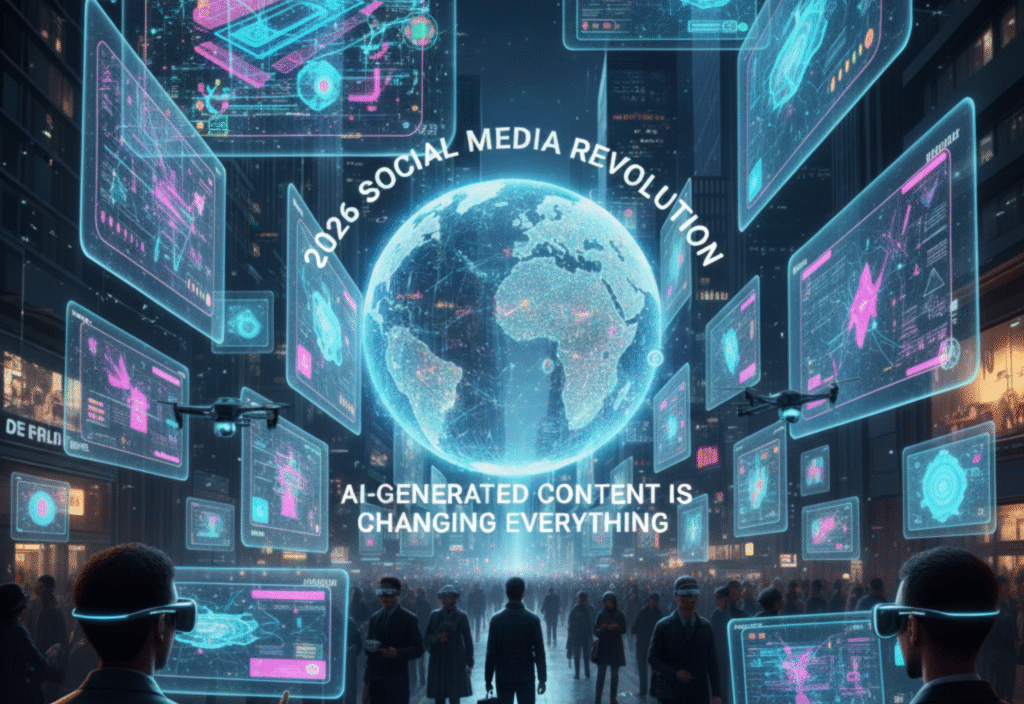
Social media has always been a dynamic space, evolving rapidly with technology. From the early days of Facebook and Twitter to TikTok’s viral video phenomenon, platforms have consistently adapted to new trends and innovations. But as we approach 2026, a seismic shift is underway—one that could fundamentally redefine the way we consume, create, and interact with content. At the heart of this transformation lies AI-generated content, a technological breakthrough that’s moving social media beyond human limits and into an era of hyper-personalized, automated, and immersive experiences.
Understanding AI-Generated Content
AI-generated content is any form of digital content—text, images, videos, audio, or even interactive experiences—produced by artificial intelligence rather than humans. While AI content creation is not entirely new, the tools available today are far more sophisticated than a few years ago. By 2026, AI systems will be capable of producing content that’s virtually indistinguishable from human work, including:
-
Text: Social media captions, blogs, micro-stories, and even long-form posts generated automatically based on trends, audience preferences, and engagement data.
-
Images and Art: AI tools like DALL·E, MidJourney, or Leonardo.ai create visually stunning graphics or photos on demand. Users and brands can generate content that fits their unique aesthetic instantly.
-
Video and Audio: Platforms like Runway and ElevenLabs allow AI to create realistic video scenes, voiceovers, and even deepfake-quality virtual presenters for advertisements, social campaigns, or entertainment.
The result? A world where anyone—creators, brands, or businesses—can generate high-quality content faster, cheaper, and at scale.
Personalized Social Media Experiences
One of the most revolutionary effects of AI-generated content is hyper-personalization. By analyzing user behavior, engagement patterns, and even emotional responses, AI can tailor feeds that feel custom-built for each individual. For example:
-
AI-curated content feeds: Instead of a one-size-fits-all feed, your timeline will adjust dynamically based on your preferences, interactions, and mood.
-
Adaptive storytelling: Platforms may deliver interactive stories or videos where plotlines and content change depending on how a user interacts with posts.
-
Predictive engagement: AI can anticipate what type of content you are likely to engage with next and generate it proactively, keeping you continuously entertained and engaged.
This level of personalization means social media will no longer be passive scrolling—it will feel like a bespoke, interactive experience.
Virtual Influencers and AI Personalities
The influencer marketing landscape is being redefined by virtual influencers—fully AI-generated personas that engage audiences, promote products, and maintain an online presence 24/7. Unlike human influencers, virtual personalities:
-
Never miss a post or campaign deadline.
-
Can be scaled for multiple campaigns across different markets simultaneously.
-
Engage audiences with interactive chat, personalized content, and AI-driven live streams.
Brands are already experimenting with AI-generated personalities, and by 2026, these virtual influencers are expected to become mainstream, blending entertainment, marketing, and social interaction seamlessly.
Ethical Challenges and Authenticity
With AI-generated content becoming ubiquitous, ethical concerns are rising. Deepfakes, fake news, and misleading content could become more convincing than ever. Users may struggle to differentiate between real and AI-generated content. Key challenges include:
-
Authenticity: How can users trust what they see and hear online if AI can replicate human behavior perfectly?
-
Misinformation: AI can generate highly persuasive yet false content, potentially influencing opinions, elections, and social trends.
-
Intellectual property: Who owns content created by AI—the creator, the AI tool developer, or the platform itself?
Social media platforms will need to implement robust AI detection, labeling systems, and transparency protocols to maintain trust and credibility.
Business Opportunities and Marketing Transformation
AI-generated content will reshape social media marketing completely. Companies and creators can leverage AI to:
-
Automate campaigns: AI can schedule, generate, and optimize posts, reducing manual effort and increasing engagement.
-
Predict trends: Predictive AI models can forecast viral topics, helping brands position themselves ahead of the curve.
-
Tailor messaging: Personalized content ensures that each audience segment receives messages that resonate deeply, increasing conversions and loyalty.
Small businesses, independent creators, and entrepreneurs will benefit immensely. AI lowers the barrier to entry for high-quality content creation, making it possible to compete with large corporations on a global scale.
Social Media as an Interactive Universe
By 2026, social media will evolve beyond traditional scrolling. AI will enable platforms to offer immersive, interactive experiences, such as:
-
Virtual events: Live concerts, product launches, and conferences powered entirely by AI-generated avatars and interactive experiences.
-
Interactive storytelling: Choose-your-own-adventure-style posts and videos, where AI adapts the story in real-time based on user decisions.
-
Intelligent communities: AI-driven chatbots and virtual companions that facilitate discussion, connect like-minded users, and even moderate communities effectively.
The distinction between digital and physical interaction will blur, creating a social media ecosystem that feels alive, responsive, and uniquely tailored to each user.
Preparing for the AI Social Media Era
As AI continues to transform social media, adapting will be crucial for both individuals and businesses:
-
Embrace AI tools: Learn to use AI for content creation, analytics, and engagement optimization.
-
Prioritize authenticity: Even in an AI-driven world, users value real human connection. Balance automation with genuine interaction.
-
Focus on ethics: Develop content responsibly, ensuring transparency and truthfulness.
-
Invest in skills: Understanding AI, digital marketing, and interactive media will be critical for staying relevant in the 2026 social media landscape.
Conclusion
The social media revolution in 2026 is more than a trend—it’s a fundamental shift in how we communicate, consume, and create content. AI-generated content will redefine personalization, creativity, and engagement, ushering in a new era where social media becomes an intelligent, interactive, and highly immersive experience.