
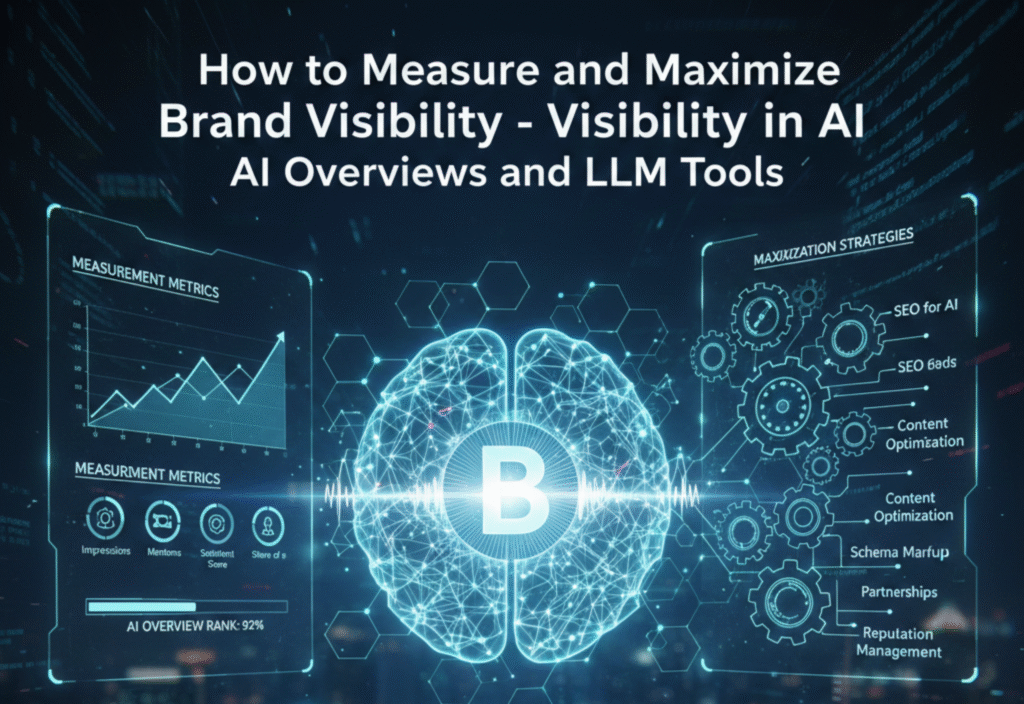
In today’s digital world, Artificial Intelligence (AI) and Large Language Models (LLMs) are changing how businesses connect with audiences. Companies that use AI tools can increase their brand visibility, reach more customers, and gain valuable insights. However, measuring and improving brand visibility in AI overviews and LLM platforms requires planning, clear strategies, and smart use of AI capabilities.
What is Brand Visibility in AI?
Brand visibility is how easily people can find, recognize, and interact with your brand online. With AI and LLM tools, visibility includes:
-
AI-generated content: How often your brand is mentioned in summaries, insights, or reports produced by AI.
-
AI search results: How AI-powered search tools surface information about your brand.
-
AI assistants and chatbots: How your brand appears in AI conversations or automated responses.
-
Industry overviews: How AI platforms mention your brand in competitive or market reports.
Visibility in AI tools can shape awareness, trust, and engagement.
Step 1: Identify Important AI Platforms
Start by finding the AI platforms where your brand may appear. Focus on:
-
Search-oriented LLMs: Tools like ChatGPT, Google Bard, and Bing AI generate answers that may include your brand.
-
AI content aggregators: Platforms like Feedly with AI summaries or UpContent create brief summaries from blogs and news.
-
AI analytics platforms: Tools like Brandwatch, Sprinklr, or Crayon track mentions and measure visibility.
-
Conversational AI: Chatbots or virtual assistants on your site or other platforms that interact with users and mention your brand.
Knowing where your brand appears helps you measure visibility effectively.
Step 2: Measure Brand Visibility
Use both numbers and quality checks to measure your brand presence.
Quantitative Metrics
-
Mentions and References: Count how often AI-generated content mentions your brand.
-
Search Rankings: Track your brand’s position in AI-powered searches.
-
Reach and Impressions: Measure how widely AI content about your brand spreads.
-
Engagement Metrics: Check clicks, shares, or interactions from AI-generated content.
Qualitative Metrics
-
Sentiment Analysis: Examine whether AI mentions show a positive, neutral, or negative tone.
-
Accuracy of Representation: Make sure AI describes your brand correctly.
-
Relevance: Ensure AI mentions align with your audience and goals.
Combining both types of metrics gives a full picture of your visibility.
Step 3: Optimize Your Content for AI
To increase visibility, your content should be easy for AI and LLMs to understand:
-
Use structured data and metadata: Add schema markup, meta tags, and clear headings.
-
Include relevant keywords naturally: Focus on phrases your audience searches for.
-
Create high-quality content: AI tools prefer accurate, detailed, and helpful content.
-
Build authority: References from reputable sources make AI recognize your brand as credible.
-
Maintain consistent messaging: Keep your brand voice and key messages uniform across content.
Step 4: Use AI Tools to Boost Visibility
Several AI tools can help monitor and enhance your brand:
-
AI SEO tools: SurferSEO, MarketMuse, or Clearscope optimize content for AI discovery.
-
AI writing tools: Jasper, Writesonic, or Copy.ai generate AI-friendly content.
-
Brand monitoring tools: Brand24, Mention, or Talkwalker track mentions and analyze sentiment.
-
Analytics dashboards: Visualize visibility metrics and trends in real time.
These tools save time and give actionable insights for your brand strategy.
Step 5: Engage and Amplify Your Brand
Visibility improves when you actively engage audiences:
-
Publish AI-optimized articles: Blogs, case studies, and whitepapers that AI can summarize or highlight.
-
Work with AI content platforms: Collaborate with aggregators for more mentions.
-
Create AI experiences: Branded chatbots or virtual assistants can interact with users and promote your brand.
-
Use AI social insights: Monitor trending topics and adjust content to increase visibility.
Step 6: Monitor, Analyze, and Improve
AI tools and algorithms change often, so ongoing monitoring is important:
-
Generate regular reports on mentions, search rankings, and content performance.
-
Track audience engagement and feedback from AI platforms.
-
Adjust content strategies based on trends and algorithm changes.
-
Explore new AI tools that can boost your visibility further.
Conclusion
In an AI-driven world, brand visibility goes beyond websites and social media. Businesses that measure, optimize, and actively manage their presence in AI overviews and LLM tools gain a clear advantage. By tracking metrics, optimizing content, using AI tools wisely, and engaging with audiences, companies can increase recognition, trust, and customer engagement.