
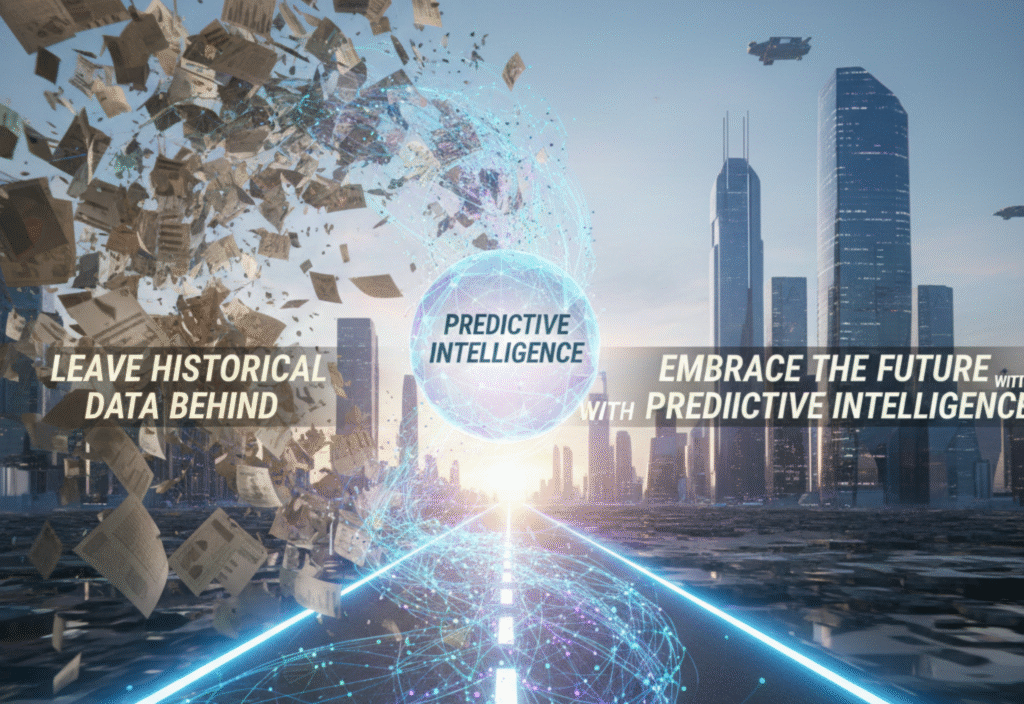
In today’s fast-paced digital world, relying solely on historical data to make business decisions is no longer enough. While past performance can provide useful context, it often falls short in predicting future trends. Predictive intelligence, a combination of advanced analytics, AI, and machine learning, offers businesses the ability to forecast outcomes, anticipate risks, and optimize strategies proactively.
Why Historical Data Alone Isn’t Enough
Traditionally, organizations have depended on historical metrics, sales figures, and past market trends. However, this approach has limitations:
-
Reactive Decisions: Historical data explains what happened but not what will happen. Businesses relying only on the past often find themselves a step behind competitors.
-
Limited Adaptability: Market conditions and consumer behavior change rapidly. Past trends don’t always capture sudden shifts or emerging opportunities.
-
Missed Opportunities: Focusing solely on historical outcomes may overlook innovation potential, new customer segments, or untapped revenue streams.
While historical insights are valuable, they are insufficient in a dynamic, competitive environment.
What is Predictive Intelligence?
Predictive intelligence leverages machine learning, AI algorithms, and real-time analytics to anticipate future outcomes. Unlike traditional analytics, it doesn’t just describe what has already happened—it provides actionable recommendations for what is likely to happen next.
Businesses using predictive intelligence can:
-
Forecast customer behavior for more personalized marketing.
-
Identify emerging trends ahead of competitors.
-
Optimize inventory and supply chains to reduce waste.
-
Detect potential risks before they escalate.
By shifting from reactive to proactive decision-making, organizations gain a strategic advantage in both efficiency and innovation.
The Advantages of Predictive Intelligence
1. Handling Data Growth
Organizations today generate massive amounts of data—from online interactions to IoT devices. Predictive intelligence helps filter this data to uncover meaningful patterns and actionable insights.
2. Personalized Customer Experiences
Modern customers expect tailored experiences. Predictive intelligence enables businesses to anticipate individual preferences, recommend products, and deliver highly relevant interactions that increase loyalty.
3. Improved Operational Efficiency
Predictive models can anticipate demand, identify bottlenecks, and optimize processes. This reduces costs, improves productivity, and enhances overall operational performance.
4. Staying Ahead of Competitors
Organizations leveraging predictive intelligence can respond faster to market changes, innovate efficiently, and maintain a competitive edge over companies still relying solely on historical data.
Industries Benefiting from Predictive Intelligence
Predictive intelligence is reshaping multiple sectors:
-
Finance: Banks and investment firms use AI forecasting to detect fraud, predict credit risk, and optimize portfolios.
-
Healthcare: Hospitals use predictive models to forecast patient readmissions and treatment outcomes.
-
Retail: Retailers forecast trends, personalize marketing, and manage inventory more efficiently.
-
Manufacturing: Manufacturers predict equipment failures, reduce downtime, and streamline production processes.
These examples show how predictive approaches, rather than relying solely on the past, can drive innovation and efficiency.
Overcoming Implementation Challenges
While the benefits are clear, implementing predictive intelligence can be challenging:
-
Data Quality: Inaccurate or incomplete data can lead to unreliable predictions.
-
Expertise Required: Skilled data scientists and analysts are needed to develop and maintain models.
-
Cost & Infrastructure: Building predictive systems requires investment in technology and resources.
-
Organizational Change: Shifting from a historical data mindset to predictive decision-making requires cultural adaptation.
Despite these obstacles, the advantages far outweigh the initial investment.
How to Get Started
-
Assess Your Data: Ensure access to high-quality, relevant datasets.
-
Define Objectives: Identify goals—whether improving customer retention, increasing revenue, or reducing operational risk.
-
Select Tools & Platforms: Choose AI-powered analytics platforms suitable for your industry.
-
Invest in Expertise: Hire or train personnel to manage predictive models effectively.
-
Start Small & Scale: Begin with pilot projects, measure results, and expand gradually.
Conclusion
The era of depending solely on historical data is ending. Businesses that embrace predictive intelligence gain the power to anticipate trends, optimize decision-making, and maintain a competitive advantage. By combining historical insights with AI-driven forecasts, organizations can transition from reactive strategies to proactive growth.