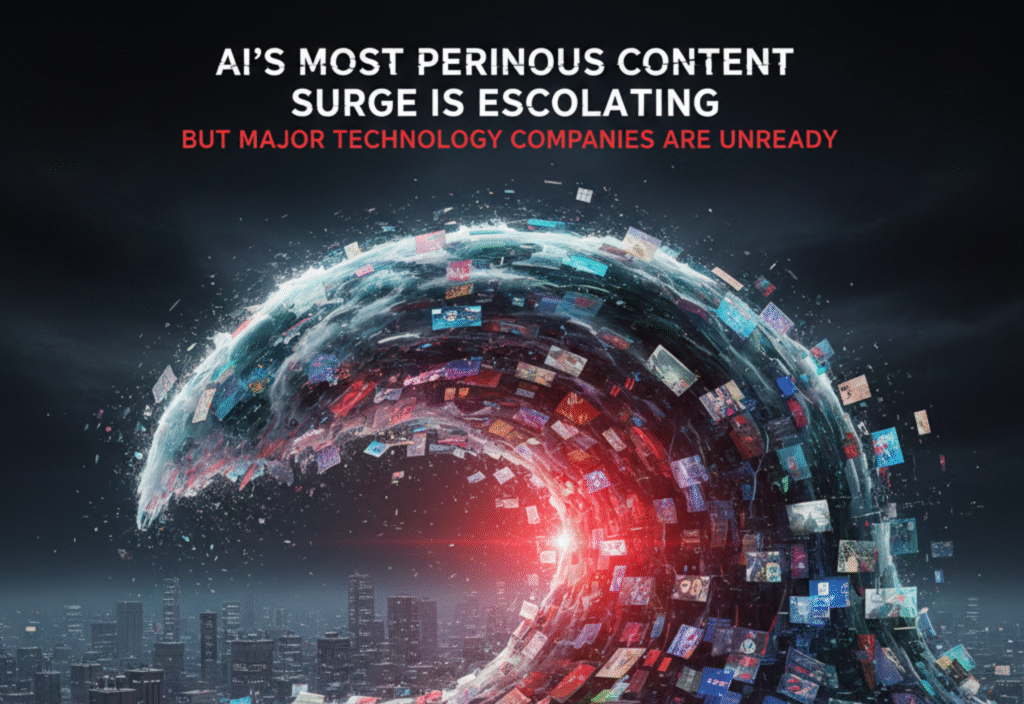
Artificial Intelligence (AI) is advancing faster than ever, creating a new era of content that is both powerful and risky. The AI Dangerous Content Wave is spreading across the internet, producing deepfakes, fake news, and misleading material. While AI tools improve creativity and productivity, they also create serious risks, and Big Tech is struggling to keep up.
The Rise of AI-Generated Content Wave
The AI-generated content wave includes content that can mislead, manipulate, or harm users. AI tools now generate:
-
Deepfakes: Videos and images that impersonate real people.
-
Fake news articles: Text that looks real but is false.
-
Automated scams and phishing: AI-crafted emails or messages that trick users.
-
Biased or harmful messages: AI content that unintentionally spreads offensive material.
As a result, anyone with access to AI tools can produce large volumes of content quickly, making moderation extremely difficult.
Why Big Tech Isn’t Ready for This Dangerous AI Content Surge
Many tech companies are still behind when it comes to managing the dangerous AI content surge. Challenges include:
-
Huge Volume: Millions of AI-generated content pieces are created in minutes.
-
High Realism: AI mimics human tone, making detection hard.
-
Cross-Platform Spread: Content moves across social media, websites, and apps.
-
Rapid Evolution: AI models improve faster than detection systems.
Consequently, even advanced AI monitoring systems often lag behind, leaving platforms exposed to misuse.
Societal and Security Risks
Unchecked AI-generated content can cause:
-
Political and Social Manipulation: Misinformation can influence elections and public policy.
-
Reputation Damage: False depictions of individuals or companies.
-
Cybersecurity Threats: AI-generated phishing and scams.
-
Erosion of Trust: People may lose faith in media and platforms.
-
Psychological Impact: Exposure to misleading content affects decision-making and social cohesion.
How to Respond to the AI Content Threat
A multi-layered strategy is essential:
-
Regulation and Policy: Governments must set clear rules for AI content.
-
Advanced Detection Tools: Real-time detection of deepfakes and fake news is crucial.
-
Platform Responsibility: Social media and websites must flag or remove harmful AI content.
-
Public Awareness: Users should learn to spot AI-generated misinformation.
-
Ethical AI Development: Developers must prioritize transparency and safety.
The Future of AI Content Threats
In the next few years, we will see:
-
AI integrated into daily workflows for education, research, and customer service.
-
Personalized AI content targeted at individuals or communities.
-
Stronger global regulations on AI usage.
-
Collaboration between Big Tech, governments, and researchers to set safe AI standards.
Therefore, understanding and managing AI-generated content risks will be critical for individuals and organizations alike.
Conclusion
The AI Dangerous Content Wave is a major technological challenge. AI offers incredible opportunities, but it also creates risks that Big Tech and society are not fully prepared for. With proactive policies, ethical AI development, and public awareness, AI can become a tool for progress instead of a source of harm.