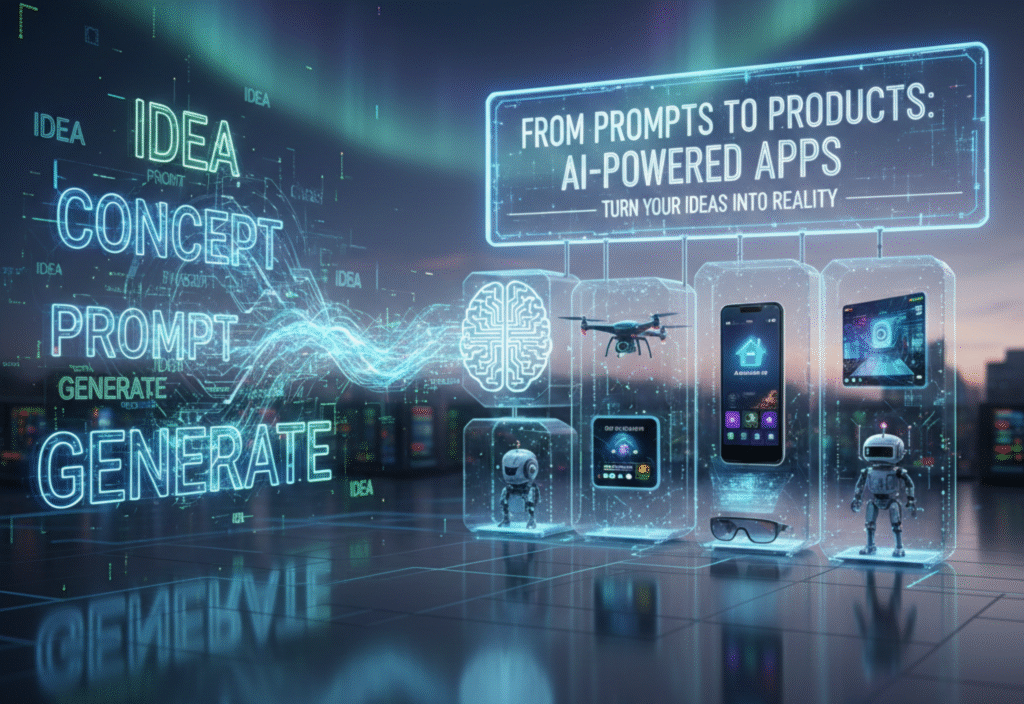
Turning ideas into AI-powered apps is the real breakthrough behind modern AI tools like ChatGPT. While these tools have made it incredibly easy to generate text, code, and ideas in seconds, most people are still stuck in the same loop: copy, paste, repeat. Although this is useful for quick tasks, it doesn’t unlock the real power of artificial intelligence.
The real transformation happens when you turn your ideas and prompts into fully functional AI-powered applications.
This guide will show you how to move beyond basic prompt usage and convert your ideas into scalable AI products.
Why Copy-Pasting into ChatGPT Is Holding You Back
Using ChatGPT only through copy-pasting limits your potential.
Here’s why:
• No automation
• No scalability
• No brand building
• No monetization
• No unique product
You’re just consuming AI — not building with it.
To create real value, you need to integrate AI into tools, apps, and systems that solve problems automatically.
That’s where AI-powered apps come in.
Step 1: Turn Your Idea into a Clear AI Use Case
Before building anything, ask yourself:
What problem am I solving?
Who am I solving it for?
How can AI help?
Examples:
Instead of: “I want an AI app”
Try: “I want an app that generates Instagram captions for small business owners”
Instead of: “I want a writing tool”
Try: “I want a tool that rewrites blogs into LinkedIn posts for content creators”
Clarity of purpose = stronger AI app.
Step 2: Convert Your Prompt into a System Prompt
Most people write random prompts each time.
AI apps use system prompts — fixed instructions that control how AI behaves.
Example:
Instead of typing every time:
“Write an SEO blog about crypto for beginners”
Your system prompt could be:
“You are an expert crypto content writer who writes SEO-optimized blogs for beginners in simple language. Keep tone friendly and include examples.”
This becomes the brain of your AI app.
Step 3: Choose the Right Platform to Build Your AI App
You don’t need to be a coding expert.
Here are beginner-friendly options:
No-Code Platforms:
• Bubble
• Glide
• Softr
• Tilda
• Zapier
Low-Code Tools:
• Replit
• Peltarion
• Retool
Full-Code Frameworks:
• Next.js
• Streamlit
• Python Flask
• Node.js
For beginners, I recommend:
Streamlit for AI web apps
Bubble for SaaS platforms
Step 4: Connect AI API (The Brain of Your App)
Instead of copy-pasting into ChatGPT, you connect your app directly to an AI model using an API.
Example flow:
User enters text
→ Your app sends prompt to AI API
→ AI generates response
→ Your app shows the result
This means:
Fully automated
Works 24/7
Can handle unlimited users
Now you are building systems, not just using tools.
Step 5: Design Simple User Interface (UI)
A good AI app doesn’t need to be complicated.
Focus on:
Simple text input
Clear output area
Fast loading
Mobile responsiveness
Minimal design
Users care about speed and results, not complex design.
Step 6: Add Real-World Use Cases
Here are some AI-powered app ideas:
• AI blog writer for niche websites
• AI resume builder
• AI product description generator
• AI email writing assistant
• AI social media content generator
• AI YouTube script creator
• AI customer support chatbot
Pick one problem and solve it really well.
Step 7: Monetize Your AI App
Once your AI product works, you can monetize it through:
• Monthly subscriptions
• Credit-based usage
• Pay-per-download
• Business packages
• API access
Even a simple AI tool can become a profitable SaaS product.
Step 8: Stop Being a User, Start Being a Creator
The difference between average users and successful builders is simple:
Users consume AI.
Creators build on AI.
If you keep copy-pasting into ChatGPT, you limit your income, brand, and future opportunities.
But when you build AI-powered apps, you create:
Scalable products
Digital assets
Passive income
Personal brand
Business opportunities
Conclusion
AI is not just for chatting anymore.
The future belongs to people who transform ideas into applications.
By moving from prompts to products, you go from being a consumer of AI to a creator in the AI economy.
And the best part?
You don’t need to be a genius programmer.
You just need a clear idea, the right tools, and the decision to start.