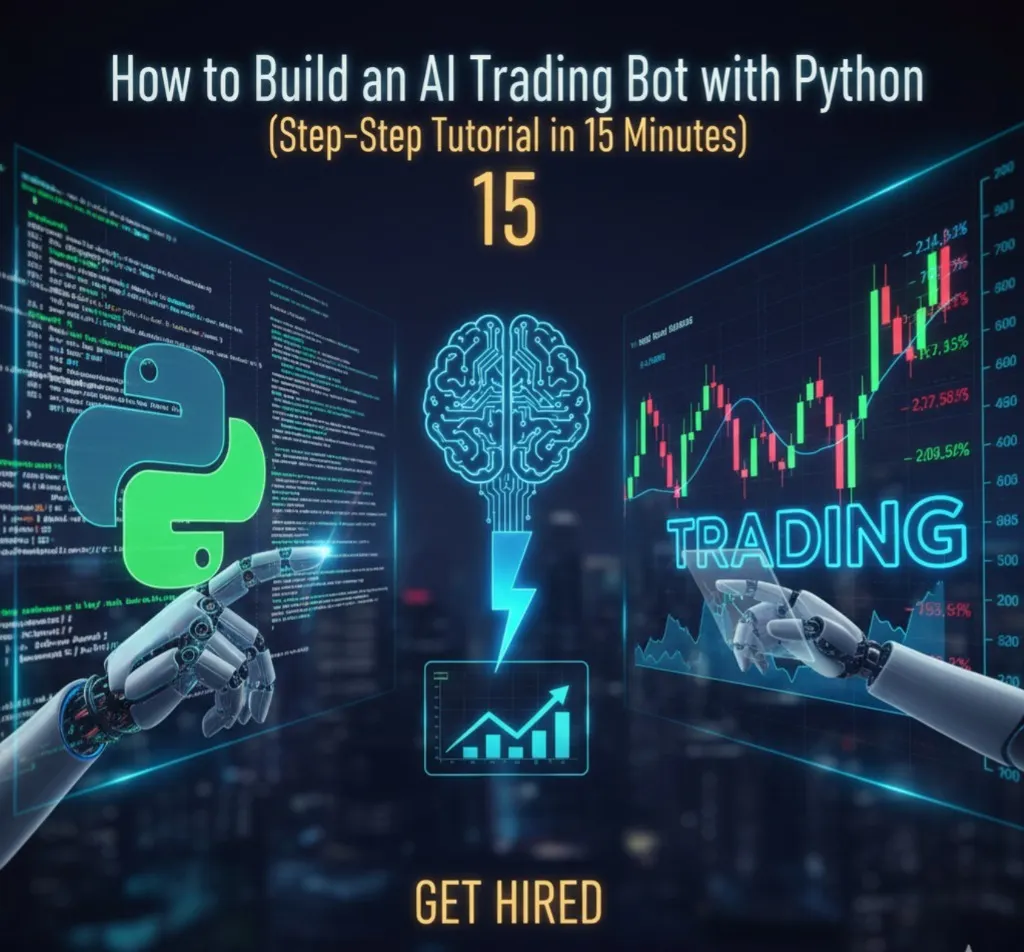
In today’s fast-paced financial world, traders are turning to artificial intelligence (AI) to gain a competitive edge. AI trading bots have become a powerful tool for automating trades, analyzing data, and making smart decisions faster than humans ever could.
In this tutorial, you’ll learn how to build an AI trading bot using Python and Perplexity AI — all in just 15 minutes.
What Is an AI Trading Bot?
An AI trading bot is a computer program that uses algorithms and machine learning to buy or sell assets automatically.
It can:
- Analyze live market data
- Detect profitable trading signals
- Execute trades instantly without emotional bias
These bots are widely used for crypto, stock, and forex trading, helping traders make data-driven decisions 24/7.
Tools You’ll Need
Before we start coding, let’s get your environment ready.
- Python 3.10+ (Download from python.org)
- Libraries:
pip install pandas numpy requests matplotlib scikit-learn
Perplexity AI — for generating AI trading insights or even helping you write your trading logic faster.
Step 1: Plan the Trading Logic
Before coding, decide:
- Which market you’ll target (e.g., Bitcoin, stocks, forex)
- Your trading strategy (moving averages, RSI, sentiment data)
- How your bot will make decisions (buy/sell/hold)
Example:
“Buy when price crosses above 50-day moving average, sell when it crosses below.”
Step 2: Write the Python Code
Here’s a simple AI-powered trading bot structure:
import pandas as pd import numpy as np import requests from sklearn.linear_model import LinearRegression # Step 1: Fetch historical data (example: Bitcoin) url = "https://api.coindesk.com/v1/bpi/historical/close.json" data = requests.get(url).json()["bpi"] df = pd.DataFrame(list(data.items()), columns=["Date", "Price"]) df["Date"] = pd.to_datetime(df["Date"]) df["Price"] = df["Price"].astype(float) # Step 2: Feature engineering df["MA5"] = df["Price"].rolling(window=5).mean() df["MA20"] = df["Price"].rolling(window=20).mean() # Step 3: Train a simple regression model df.dropna(inplace=True) X = df[["MA5", "MA20"]] y = df["Price"] model = LinearRegression().fit(X, y) # Step 4: Predict next price next_pred = model.predict([[df["MA5"].iloc[-1], df["MA20"].iloc[-1]]])[0] print(f"Predicted next price: ${next_pred:.2f}") # Step 5: Basic trading logic if next_pred > df["Price"].iloc[-1]: print("Signal: BUY
") else: print("Signal: SELL
")
Pro Tip:
You can use Perplexity AI to refine your code or generate more complex strategies — just ask it to “generate a reinforcement learning trading bot in Python.”
Step 3: Test and Optimize
- Backtest your strategy on historical data.
- Use
matplotlibto visualize profits or trade points. - Add stop-loss or take-profit rules to control risk.
Example visualization:
import matplotlib.pyplot as plt plt.plot(df["Date"], df["Price"], label="Actual Price") plt.plot(df["Date"], df["MA5"], label="MA5") plt.plot(df["Date"], df["MA20"], label="MA20") plt.legend() plt.show()
Step 4: Add AI Power with Perplexity
Perplexity AI can help you:
- Generate optimized trading logic
- Summarize market news instantly
- Suggest code improvements for automation
Try this prompt in Perplexity:
“Generate a Python trading bot using LSTM to predict Bitcoin prices.”
Then simply copy, test, and refine.
Step 5: Deploy Your Bot
You can deploy your bot on:
- Google Cloud / AWS (for live trading)
- Streamlit / Flask (for a web interface)
- Binance API / Alpaca API (for real trades)
Example to connect with Binance API:
# pip install python-binance from binance.client import Client client = Client("API_KEY", "SECRET_KEY")
Final Thoughts
Building an AI trading bot with Python is easier than ever — especially with the help of AI tools like Perplexity. In just a few lines of code, you can:
- Automate trading
- Reduce emotional decisions
- Test multiple strategies quickly
Whether you’re a beginner or an experienced trader, this project can be your first step toward AI-powered trading in 2025.