
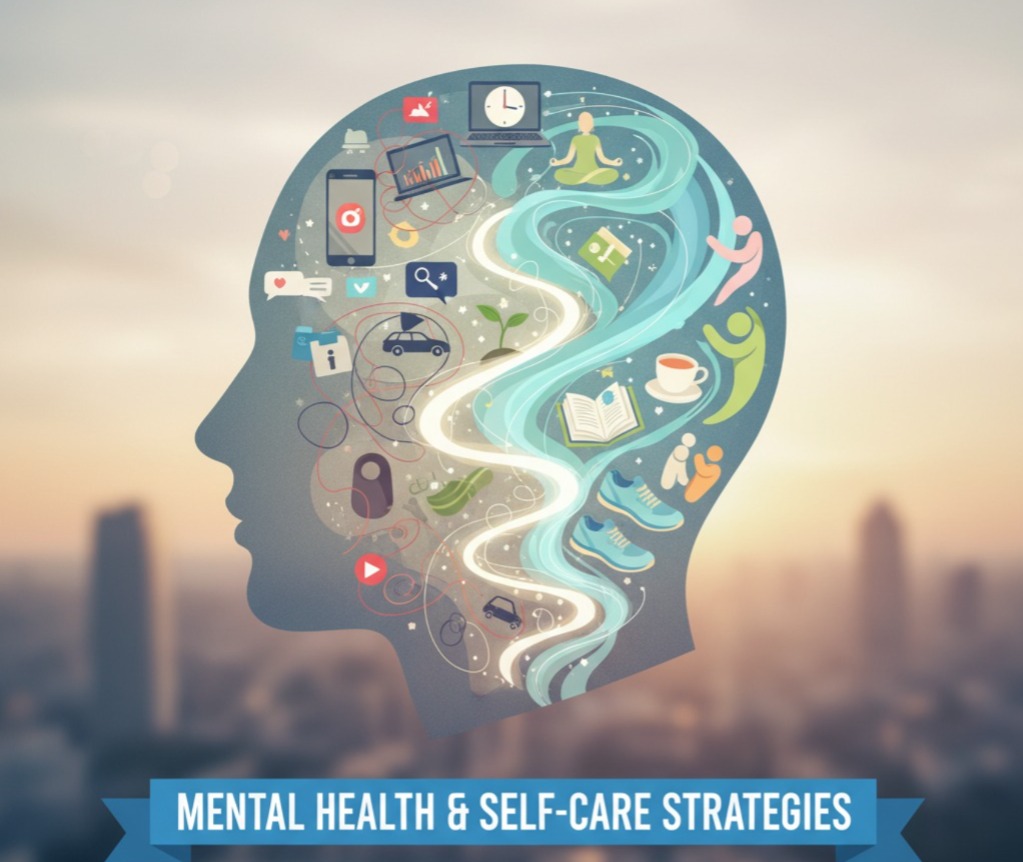
In today’s busy world, mental health and self-care strategies have become essential for living a balanced and peaceful life. Many people struggle to manage stress and maintain emotional well-being in modern times.
1. Understanding the Importance of Mental Health
Mental health affects how we think, feel, and behave. It influences our relationships, decision-making, and productivity. When we neglect mental well-being, even small tasks feel overwhelming. In contemporary life, awareness is the first step toward prevention. Recognizing signs of stress, anxiety, or burnout early helps us respond with care rather than avoidance.
2. Common Mental Health Challenges Today
Modern life brings many benefits, but it also increases emotional strain. Social media comparison, lack of rest, long working hours, and constant online presence can lead to mental exhaustion. People often experience anxiety, depression, or low self-esteem because of unrealistic expectations. Acknowledging these challenges allows us to find balance before problems grow deeper.
3.Building Effective Mental Health and Self-Care Strategies”
Self-care means taking intentional steps to nurture your body and mind. It’s not selfish—it’s essential. A good routine should match your lifestyle and personal needs.
Try these simple steps:
Start the morning with meditation or deep breathing.
Take short breaks during work to relax your eyes and stretch.
Limit screen time, especially before bed.
Practice gratitude journaling or positive affirmations.
Get 7–8 hours of sleep every night.
Small habits, practiced consistently, bring big emotional rewards.
4. Physical Health and Its Role in Mental Wellness
Your body and mind are deeply connected. Regular exercise boosts endorphins—the “happy hormones”—that reduce stress and improve mood. Eating nutritious food and staying hydrated also support brain function. Activities like yoga, walking, or dancing not only keep the body active but also clear the mind.
5. Managing Digital Stress
Technology is helpful, but too much exposure leads to fatigue. Scrolling for hours, comparing lives online, or reading constant news updates can increase anxiety. Setting screen-time limits and taking regular breaks helps your brain recharge. Try a short “digital detox” each week—unplug from devices and connect with nature or loved ones.
6. Social Connections and Emotional Support
Human connection is vital for mental stability. Talking openly with friends or family reduces feelings of isolation. Building a supportive community allows us to share experiences and gain perspective. When needed, don’t hesitate to seek professional help—therapists and counselors provide valuable tools to manage emotions effectively.
7. Balancing Work and Personal Life
Burnout happens when work consumes too much mental space. Learn to set boundaries, delegate tasks, and take time off. Remember: productivity improves when your mind is rested. Achieving work-life balance doesn’t mean doing less—it means doing things at the right time and with full focus.
Conclusion
Mental health and self-care are lifelong commitments, not quick fixes. In the rush of modern living, taking time to care for yourself is a form of strength, not weakness. By practicing mindfulness, maintaining healthy relationships, and creating balance, anyone can build resilience and peace of mind. Remember—your mental health deserves as much care as your career or ambitions.