
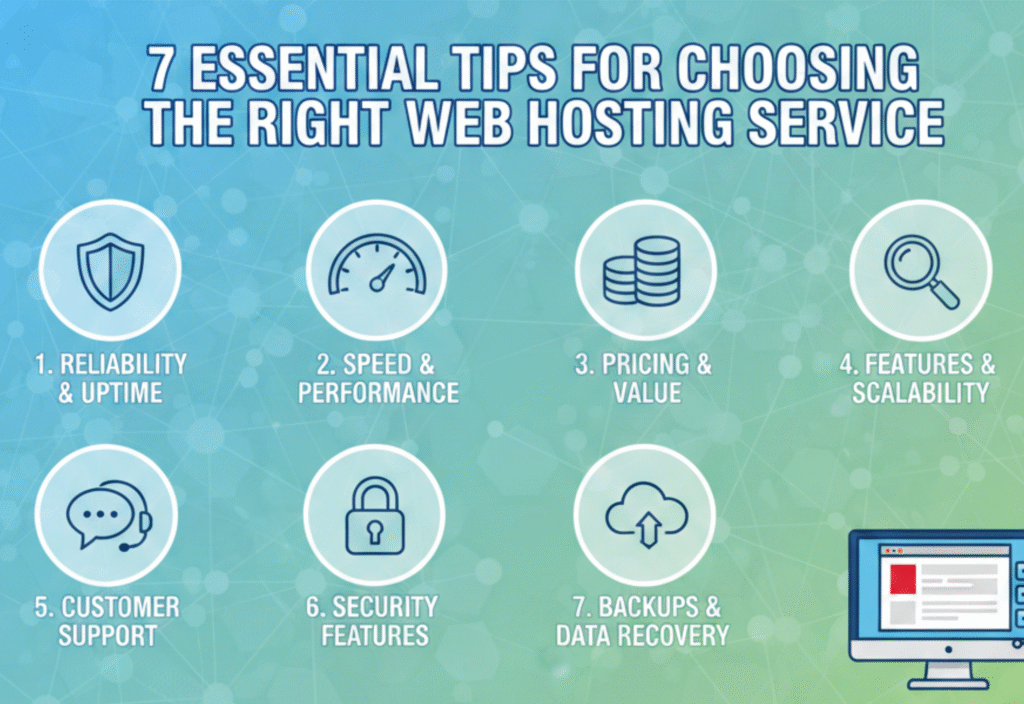
Web hosting tips are essential for anyone looking to create a successful website. Choosing the right hosting service affects your site’s speed, security, and overall performance. Whether you are running a personal blog, an e-commerce store, or a business website, following the right strategies ensures your website runs smoothly and efficiently.
1: Determine Your Website Needs
Before selecting a host, understand your website requirements. Small blogs, large business sites, and online stores have different needs. Knowing the purpose of your website will help you choose a hosting plan that provides the right resources without overspending.
2: Understand Hosting Types
Different hosting types offer varying levels of performance, control, and price:
Shared Hosting: Budget-friendly, suitable for small websites.
VPS Hosting: Offers more control and better performance for growing websites.
Dedicated Hosting: Provides an entire server for high-traffic sites.
Cloud Hosting: Scalable and reliable, perfect for fluctuating traffic.
Choosing the correct type ensures your site is optimized for speed and reliability.
3: Check Reliability and Uptime
A reliable host guarantees your website is accessible at all times. Look for 99.9% uptime or higher. Frequent downtime can harm your reputation, frustrate users, and negatively affect SEO rankings.
4: Consider Speed and Performance
Website speed is critical for both users and search engines. Opt for hosts with SSD storage, CDN integration, and optimized servers to keep your website fast and responsive during traffic surges.
5: Ensure Security Features
Security is vital, especially for sites handling sensitive data. Good hosting providers offer SSL certificates, automatic backups, firewalls, and malware protection to keep your website safe from cyber threats.
6: Evaluate Customer Support
Responsive support saves time and prevents issues from escalating. Look for 24/7 support via chat, phone, or email. Reading customer reviews can help you assess the quality of support.
7: Compare Pricing and Value
Price shouldn’t be the only deciding factor. Extremely cheap hosting may compromise speed, security, and support. Compare plans based on features, scalability, and value to make a long-term investment in your website’s success.
Conclusion
Following these guidelines will help you select a hosting service that keeps your website fast, secure, and reliable. By evaluating your needs, hosting types, security, and support, you set the foundation for a successful online presence. Implementing these web hosting tips ensures your website performs optimally while providing a smooth experience for your visitors